
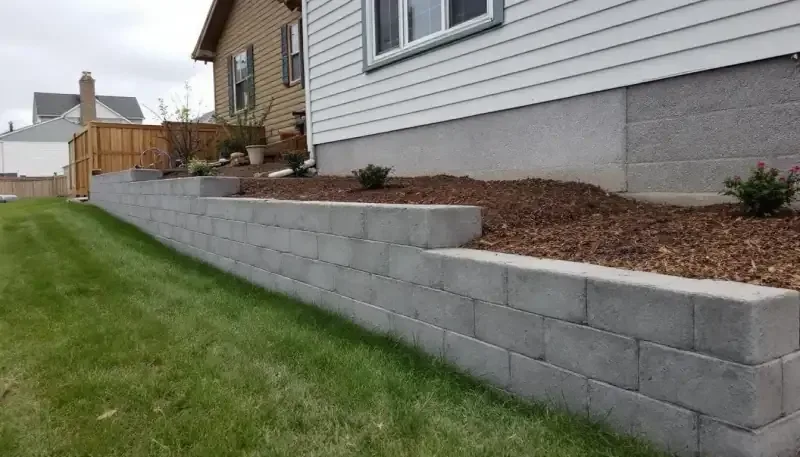
Retaining Walls in Saint Joseph, MO
That hillside isn't going to hold itself together forever. We build retaining walls in Saint Joseph that stop erosion, reclaim usable yard space, and handle Missouri River valley soil like it was designed for it.
Is your Saint Joseph yard slowly sliding downhill?
You've seen it getting worse every spring. The slope behind your house in Wyatt Park or Museum Hill loses another inch of topsoil after every hard rain. Mulch washes into the neighbor's yard. That exposed root system near your patio wasn't visible two years ago. The ground beneath your fence posts feels soft. You keep telling yourself you'll deal with it next year, but the hill keeps moving whether you act or not.
Saint Joseph sits on river bluffs and rolling terrain that looked beautiful when you bought the house. But decades of water runoff, freeze-thaw cycles, and Buchanan County's silty clay loam have a way of turning gentle slopes into genuine structural problems. Homes along the bluffs near Krug Park and neighborhoods south of Frederick Avenue deal with this constantly.
A properly engineered retaining wall stops the slide. It holds soil in place, redirects water where it should go, and gives you back flat, usable yard space you forgot you had. We've completed over 377 projects since 2015, and a significant number involve exactly this scenario — homeowners who waited a little too long and wished they'd called sooner.
We build both poured concrete and concrete block retaining walls for Saint Joseph homeowners. Every wall we install includes engineered drainage, proper footings below frost line, and reinforcement matched to the actual load your slope creates. No guesswork. No cookie-cutter solutions pulled from a catalog.
How Retaining Walls Solve Saint Joseph's Toughest Terrain Problems
Saint Joseph's geography is defined by the Missouri River bluffs and the rolling terrain east of I-29. Neighborhoods like Northside and South Side were built on grades that made sense for mid-century construction but weren't engineered for long-term soil retention. Over decades, water finds paths downhill through your yard, carrying soil, undermining patios, and threatening foundations. A retaining wall intercepts that force and puts it to work through controlled drainage instead of destructive erosion.
We design walls for the specific conditions on your lot. A 2-foot decorative wall near a patio requires different engineering than a 5-foot structural wall holding back a hillside along US-169. Poured concrete walls deliver maximum strength for taller applications and severe loads. Concrete masonry block walls offer design flexibility and work well for terraced systems on moderate slopes. Both options include gravel backfill, perforated drain pipe, and weep holes to prevent hydrostatic pressure buildup.
Most residential retaining walls in Saint Joseph range from 2 to 6 feet tall. Walls over 4 feet typically require engineered drawings, and we handle that process for you. Our crew understands Buchanan County's permitting requirements and builds to exceed code minimums. The result is a wall that performs through spring floods, summer storms, and the relentless freeze-thaw cycle that punishes this part of Missouri every winter.
Saint Joseph-Specific Retaining Walls Considerations
Missouri River Bluff Soil and Hydrostatic Pressure
Buchanan County soil ranges from silty clay loam on the bluffs to alluvial deposits closer to the river bottom. Both types hold water aggressively. When saturated soil sits behind a retaining wall, hydrostatic pressure builds and can push even heavy walls forward over time. Every wall we build includes a drainage system — crushed stone backfill, perforated pipe at the footing, and filter fabric to prevent soil migration. This isn't optional in Saint Joseph. It's the difference between a wall that lasts 40 years and one that tilts within five.
Slope Runoff Patterns in Older Neighborhoods
Neighborhoods like Hall Park and Museum Hill were graded decades ago without modern stormwater management. Runoff from higher lots cascades through multiple yards before reaching the street. Installing a retaining wall on your property changes that flow pattern, which means we need to account for where water goes after it leaves your wall's drainage system. We route discharge to appropriate swales or tie into existing storm infrastructure so your solution doesn't create a new problem for your neighbor downhill.
Frost Depth and Footing Requirements
Saint Joseph's frost line sits around 30 to 36 inches below grade. Footings that don't reach below frost depth will heave during winter and settle unevenly in spring. This cycle cracks block walls and tilts poured walls within a few seasons. We excavate footings to a minimum of 36 inches and pour reinforced concrete bases sized to the wall's height and soil load. This foundation work is invisible once the wall is finished, but it's the single most important factor in long-term wall performance.
From Your First Call to a Finished Wall That Holds
It usually starts with a phone call about a slope that's getting worse. You describe what you're seeing — soil washing out behind the garage, a fence leaning downhill, water pooling against the foundation after every storm. We schedule a site visit within a few days. When we arrive at your Saint Joseph property, we walk the slope with you, check the grade with a level, probe the soil type, and identify where water is entering and leaving your yard. We take measurements and photos, then talk through what a wall needs to accomplish on your specific lot.
Within a week, you receive a detailed proposal. It includes wall type, height, length, footing specifications, drainage plan, and a clear price. If your wall exceeds 4 feet, we include the cost of engineered drawings. We explain every line item so you know exactly what you're paying for. No vague allowances. No surprise add-ons later. You pick a start date that works for your schedule, and we lock it in.
On build day, our crew arrives with excavation equipment and materials staged for your site. We dig the footing trench to full frost depth, set forms or lay the first course of block on a leveled gravel base, and install the drainage system as we build upward. Depending on wall height and length, most residential retaining walls in Saint Joseph take three to seven working days. We compact backfill in lifts to prevent settling and grade the area behind the wall for proper surface drainage.
When the wall is finished, you see the difference immediately. That eroded hillside is now a clean, solid structure. The ground behind it is stable and graded. Water drains through the system instead of across your yard. We walk you through everything we built — footings, reinforcement, drainage — so you understand exactly what's holding that slope in place for the next several decades.
How Much Does Retaining Walls Cost in Saint Joseph?
| Type | Cost / Sq Ft Face | Typical 200 Sq Ft |
|---|---|---|
| Poured Concrete (Structural) | $20–35 | $4,000–$7,000 |
| Decorative Block / Segmental | $25–45 | $5,000–$9,000 |
| Short Wall (Under 3 ft) | $15–25 | $1,500–$3,000 |
Retaining wall costs in Saint Joseph typically range from $45 to $85 per square foot of wall face, depending on height, material, and soil conditions. Properties on steeper bluff lots near Krug Park or along the river hills often require deeper footings and more drainage work, which increases the investment compared to flatter lots on the east side of town.
Retaining Walls FAQ for Saint Joseph, MO
Does Saint Joseph require a permit for residential retaining walls?
Saint Joseph generally requires a building permit for retaining walls over 4 feet tall measured from the bottom of the footing to the top of the wall. Walls closer to property lines or near public right-of-way may have additional setback requirements. We handle the permit application and any required engineered drawings as part of your project. Our crew is familiar with Buchanan County building department processes, so this doesn't slow your timeline significantly. We'll confirm exact requirements during your site assessment.
How do you deal with the clay soil on my Northside lot?
Buchanan County clay expands when wet and shrinks when dry. This movement creates lateral pressure against retaining walls that sandy soils don't produce. We size footings and reinforcement based on actual soil conditions rather than generic tables. Behind the wall, we install a minimum 12-inch zone of crushed stone that acts as both a drainage layer and a buffer against soil pressure. Perforated drain pipe at the footing base carries water to a daylight outlet or storm connection. This system keeps saturated clay from pushing directly against the wall face.
Poured concrete or block — which is better for my Saint Joseph property?
It depends on wall height and purpose. Poured concrete walls handle taller heights and heavier soil loads more efficiently. They're monolithic, meaning no joints to separate over time. Block walls offer more design options — different textures, colors, and curved layouts. They work well for walls under 4 feet and terraced systems. For walls between 4 and 6 feet, either material works if properly reinforced. We'll recommend the best option during your site visit based on your slope, soil, and budget.
My yard near Belt Highway floods every spring — will a retaining wall help?
A retaining wall alone won't stop flooding, but it can be part of the solution. If water flows downhill across your yard and pools against your house or patio, a wall with an integrated drainage system redirects that water before it reaches the problem area. We often combine retaining walls with surface grading adjustments and French drain connections to manage the full water path. During your assessment, we trace where water enters your property and where it needs to go. The wall becomes the structural anchor for a broader drainage strategy.
Can you build a terraced wall system instead of one tall wall?
Absolutely. Terraced systems work well on longer slopes common in Saint Joseph's bluff neighborhoods. Instead of one 6-foot wall, we might build two 3-foot walls with a planted terrace between them. This reduces the soil load on each wall, often eliminates the need for engineered drawings, and creates usable planting beds on the slope. The tradeoff is a larger footprint — terraced systems need more horizontal space. We'll measure your slope during the site visit and show you where terraces would sit versus a single wall.
What kind of warranty do you provide on retaining walls?
We warranty our retaining wall installations against structural failure, footing settlement, and wall displacement. The specific warranty period depends on wall type and height, and we detail it in your contract before work begins. Proper drainage maintenance on your end is part of the deal — if drain outlets get blocked by landscaping debris and hydrostatic pressure builds up, that's not a construction defect. We show you where your drain outlets are and how to keep them clear. With 377 completed projects since 2015, our track record speaks to the durability of what we build.
Other Concrete Services in Saint Joseph, MO
Schedule Your Free Saint Joseph Property Assessment
We'll walk your slope, check soil conditions, measure the grade, and identify exactly where water is causing damage. You'll get a clear recommendation and honest pricing within a week — no surprises, no runaround.