
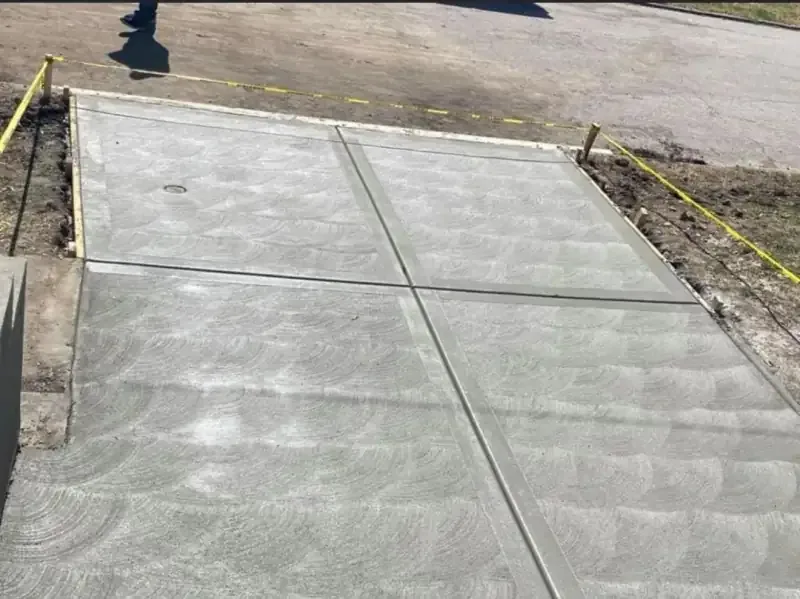
Concrete Overlays & Resurfacing in Saint Joseph, MO
That cracked, spalled driveway doesn't need a jackhammer. A properly bonded overlay gives you a brand-new surface at roughly half the cost of tearing it out and starting over.
What Does Concrete Resurfacing Actually Cost in Saint Joseph?
Let's talk dollars first, because that's what matters. A full concrete tear-out and repour on a typical Saint Joseph driveway runs $8 to $14 per square foot. An overlay? You're looking at $3 to $7 per square foot, depending on the condition of your existing slab and the finish you choose. That gap is real money — often $2,000 to $4,000 saved on a standard two-car driveway. Buchanan County's relatively affordable labor market helps keep our crew's pricing competitive compared to what you'd pay across the river or down in KC.
But cost isn't just about the price tag. It's about what you're avoiding. Demolition creates noise, dust, dumpster fees, and days of unusable space. Most Saint Joseph homes built along Frederick Avenue or in Wyatt Park sit on slabs from the 1950s through 1970s. Those slabs are often structurally sound despite surface damage. Resurfacing lets you keep that foundation and skip the demolition headache entirely.
Material costs in Saint Joseph track closely with regional concrete pricing, but hauling aggregates and polymer-modified mixes into town adds a small premium. We source materials through suppliers along the Belt Highway corridor, which keeps delivery charges reasonable. The polymer-modified overlays we use bond chemically to your old slab and resist Buchanan County's freeze-thaw punishment far better than basic thin-set products.
The real cost question isn't overlay versus replacement. It's overlay now versus full replacement in five years when that crumbling surface finally becomes a tripping hazard. Resurfacing a driveway or patio today buys you 15 to 25 years of solid performance. Waiting usually means the damage spreads beneath the surface, and then you lose the overlay option altogether.
How Concrete Overlays Rescue Aging Slabs Across Saint Joseph
A concrete overlay is a new layer of engineered material bonded directly to your existing slab. We use polymer-modified cementitious mixes that range from a feather-edge skim up to a full 3/4-inch structural overlay. The process starts with aggressive surface preparation — diamond grinding, shot-blasting, or acid etching — to create a mechanical bond profile. In Saint Joseph, where many driveways and patios show decades of freeze-thaw spalling, that prep work is the single most important step. Skip it, and the overlay peels. We never skip it.
Resurfacing options in Saint Joseph go well beyond a flat gray finish. Stamped overlays can mimic flagstone, slate, or brick — a popular choice in Museum Hill where homeowners want to complement older architectural styles without the maintenance headaches of real masonry. Spray-down knockdown textures work well for pool decks and covered patios. Broom-finish overlays give driveways the look and grip of freshly poured concrete. Color is integrated into the mix or applied as a broadcast hardener, and we can match nearly any tone to your home's exterior.
Saint Joseph's infrastructure reality makes overlays especially practical here. The city's mature pavement lifecycle means most residential concrete is 30 to 60 years old. Full replacement on every aging slab would be enormously wasteful. Overlays extend the useful life of structurally sound concrete while fixing surface-level problems — crazing, minor cracks, discoloration, shallow spalling, and staining. For homeowners along US-169 and throughout the South Side, this approach saves money and keeps usable concrete out of the landfill.
Saint Joseph-Specific Concrete Overlays & Resurfacing Considerations
Missouri River Basin Soil Movement and Bond Integrity
Saint Joseph sits on Missouri River alluvial deposits — silty clay soils that expand when wet and contract during dry spells. This seasonal movement stresses concrete slabs from below, and it's the primary reason you see so many cracked driveways in neighborhoods like Hall Park and Northside. Before we overlay, we evaluate every slab for active settlement. Hairline cracks from normal shrinkage are no problem — we route and fill them before applying the overlay. But if a slab section has dropped more than a quarter inch, we address the subgrade first with mudjacking or polyfoam injection. Ignoring soil movement underneath a fresh overlay is a recipe for cracking within two years.
Historic-Era Slab Conditions in Older Saint Joseph Neighborhoods
Homes in Wyatt Park and Museum Hill often have original 1940s and 1950s concrete — thinner pours with less reinforcement than modern standards. These slabs sometimes lack proper control joints or have hand-mixed sections with inconsistent aggregate ratios. We see a lot of delamination where the surface paste has separated from the aggregate underneath. Our crew tests for this using a chain drag method before committing to an overlay. If more than 15 percent of the slab area is delaminated, we remove those sections and patch with bonded repair mortar first. This extra step is common on Saint Joseph projects and adds a day to the schedule, but it's the difference between an overlay that lasts decades and one that fails in a few seasons.
What Your Concrete Overlay Timeline Looks Like in Saint Joseph
Day 1 — Assessment and Surface Preparation: Our crew arrives, marks off the work zone, and begins mechanical surface preparation. In Saint Joseph, most residential overlay projects don't require a building permit since we're not altering the footprint or grade. We confirm this with the Buchanan County codes office before every project. Day one is noisy — diamond grinders and shot blasters aren't quiet. We typically start by 8 AM and wrap prep work by mid-afternoon. Your cars need to be off the driveway, and we'll protect adjacent landscaping with plastic sheeting.
Day 2 — Crack Repair, Priming, and Overlay Application: We route and fill any cracks, apply a bonding primer, then mix and pour the overlay material. Application takes 3 to 6 hours depending on square footage and the finish you've selected. Stamped or textured finishes require more working time than a standard broom finish. Weather matters here — we schedule around Saint Joseph's unpredictable spring and fall rain windows. Ideal application temperatures fall between 50°F and 85°F, which gives us solid working conditions from late April through mid-October.
Day 3 — Curing and Detail Work: The overlay needs 24 hours before foot traffic and 48 to 72 hours before vehicle traffic. On day three, we return to inspect the cure, cut control joints if needed, and clean up the site. If you chose a colored or stamped finish, we apply the initial cure-and-seal coat. This is the day your driveway starts looking finished, but patience matters — parking on it too soon can leave tire marks in the sealer.
Days 4-7 — Full Cure and Final Seal: By day four or five, the overlay has reached about 70 percent of its ultimate strength. We return around day seven to apply a final penetrating sealer. In Saint Joseph's humid summers, cure times sometimes stretch an extra day compared to drier conditions. We'll tell you exactly when it's safe to resume normal use. Total household disruption is about three days of limited driveway access — most homeowners park on the street or use a neighbor's driveway temporarily.
How Overlay Needs Differ Across Saint Joseph's Neighborhoods
In Museum Hill and the surrounding historic core, homes date to the late 1800s and early 1900s. Many have original concrete walkways and porches with hand-troweled finishes and no reinforcement. These slabs are often only 3 inches thick. Overlay work here requires careful bonding assessment and usually more patching than newer areas. The payoff is significant — a fresh stamped or textured overlay on a Museum Hill porch dramatically improves curb appeal while preserving the home's character.
Wyatt Park and Hall Park represent Saint Joseph's mid-century building boom. Driveways here are typically 4-inch slabs poured in the 1950s through 1970s with wire mesh reinforcement. The most common problems we see are surface scaling from decades of salt exposure and minor settlement cracks. These slabs are usually excellent overlay candidates with standard prep work. The silty clay soils in these neighborhoods are relatively uniform, so subgrade surprises are rare.
Northside and the South Side face different challenges. Northside's proximity to the Missouri River bluffs means more variable soil conditions — pockets of sandy loam mixed with heavy clay. We see more slab movement here and recommend a thorough void check before overlaying. South Side homes near the Stockyards District sometimes have older industrial-grade slabs that are thicker than residential standards but show heavy surface wear. These beefy slabs accept overlays exceptionally well once the deteriorated surface layer is ground down.
How Much Does Concrete Overlays & Resurfacing Cost in Saint Joseph?
| Type | Cost / Sq Ft | Typical 300 Sq Ft |
|---|---|---|
| Basic Resurfacing | $5–8 | $1,500–$2,400 |
| Decorative Overlay | $8–12 | $2,400–$3,600 |
| Micro-Topping / Skim Coat | $6–10 | $1,800–$3,000 |
Most Saint Joseph overlay projects fall between $1,800 and $5,500 for a standard driveway. Homes in older neighborhoods like Wyatt Park or Museum Hill often need more extensive surface prep due to aged slabs, which can add 10 to 20 percent to the base cost.
Concrete Overlays & Resurfacing FAQ for Saint Joseph, MO
Is my 1950s-era Wyatt Park sidewalk a candidate for resurfacing?
Probably, yes. We see a lot of mid-century concrete in Wyatt Park that's structurally intact beneath the surface damage. The key test is slab stability — if the sections haven't heaved or settled significantly, an overlay bonds well to that older concrete. We check for delamination and subgrade voids during our initial assessment. If only a small percentage of the surface has deteriorated, resurfacing is a smart move. If the slab rocks when you step on a corner, that section needs stabilization first. Most Wyatt Park sidewalk projects end up being good candidates with minor prep work.
How do Saint Joseph's winters affect overlay durability?
Buchanan County averages about 20 inches of snow annually and regular freeze-thaw cycling from November through March. The polymer-modified mixes we use are specifically formulated for this climate. They're more flexible than standard concrete and resist the expansion pressure that causes surface pop-outs. We also apply penetrating sealers that block moisture absorption — the root cause of freeze-thaw damage. Avoid using rock salt on any overlay; magnesium chloride or sand are safer alternatives. With proper sealing every 2 to 3 years, your overlay handles Saint Joseph winters without issues.
Can resurfacing correct the slope on my patio that sends water toward my foundation?
A standard overlay adds uniform thickness and follows the existing grade, so it won't fix a slope problem by itself. However, we can build up material on the low side to create a corrective pitch — typically a quarter-inch per foot directed away from your foundation. This works well for minor grade corrections up to about an inch of total buildup. For patios with more severe drainage problems, especially in Northside areas near the river bluffs where settling is common, we may recommend partial slab removal and re-grading before overlaying.
What finishes look best on Saint Joseph homes?
It depends on your home's style. Museum Hill homeowners often choose stamped overlays that mimic natural stone or aged brick — those finishes complement the historic character of the neighborhood. In newer Hall Park subdivisions, clean broom-finish overlays with an integral warm gray or sandstone color are popular. For pool decks and covered patios, a spray-texture knockdown finish provides grip and a modern look. We bring color samples to every estimate so you can see options against your home's siding and brick in natural light.
Do I need to reseal the overlay, and how often?
Yes. We recommend resealing every 2 to 3 years in Saint Joseph's climate. UV exposure, road salt tracking, and freeze-thaw cycling gradually break down the sealer film. Resealing takes about an hour for a standard driveway and costs a fraction of the original overlay. We offer a maintenance sealing service, or you can apply it yourself with a roller and a quality acrylic or polyurethane sealer from any building supply store on Belt Highway. Skipping resealing won't destroy the overlay immediately, but it shortens the lifespan significantly.
My driveway has an oil stain from a transmission leak — will that show through?
Oil contamination can prevent the overlay from bonding properly if it's not addressed. We treat petroleum stains with a degreaser and sometimes grind the affected area down to expose clean concrete. Shallow stains clean up easily. Deep penetration — the kind you get from a slow leak that sat for months — may require cutting out and patching that section. Once the contaminated material is removed or neutralized, the overlay bonds normally and the stain is completely hidden. We check for oil contamination during every pre-project inspection.
Other Concrete Services in Saint Joseph, MO
Get Your Free Overlay Estimate in Saint Joseph
We'll inspect your slab, test for delamination, and give you a straight-line price — typically within 48 hours. Since 2015, we've completed 377+ concrete projects across the region, backed by 13 five-star Google reviews from homeowners like you.