
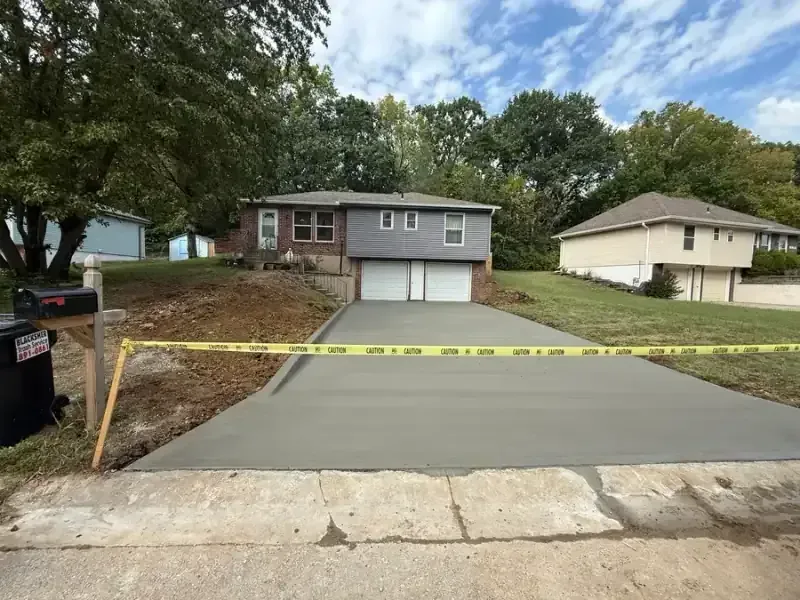
Concrete Driveways in Saint Joseph, MO
Saint Joseph driveways take a beating from Missouri River valley winters and Belt Highway road salt runoff. We pour slabs built to handle both.
Is This the Summer You Finally Replace That Cracked Driveway?
Summer in Saint Joseph means one thing for concrete: prime pouring season. Warm temps and longer daylight hours give us the ideal curing window. But here's the catch — every homeowner from Wyatt Park to Hall Park is thinking the same thing right now. Our schedule fills fast between May and September, and waiting until August means your project could slide into fall. If your driveway has been cracking, sinking, or pooling water since last winter, this is your window.
We've poured driveways across Buchanan County since 2015 — over 377 projects and counting. Homeowners in Museum Hill, Northside, and South Side neighborhoods have trusted our crew to tear out failing slabs and replace them with concrete engineered for this river valley climate. Missouri's freeze-thaw cycles punish weak concrete. We use air-entrained mixes and proper joint spacing to make sure yours survives.
A crumbling driveway does more than look bad. It drops your curb appeal, creates trip hazards, and lets water migrate toward your foundation. In a city where many homes date to the mid-twentieth century, that aging slab may be original to the house. Fifty or sixty years is a long run. It's time.
What Goes Into a Saint Joseph Driveway That Actually Lasts
Standard residential driveways in Saint Joseph get a four-inch pour over compacted base material. If you park heavy trucks or equipment — common in this part of Missouri — we recommend going to five or six inches with reinforcing wire mesh or rebar. The goal is matching slab thickness to actual load. A Wyatt Park family with two sedans has different needs than a homeowner near the Stockyards district running a work truck and trailer.
Subgrade preparation matters more here than most homeowners realize. Saint Joseph sits on Missouri River valley soils that range from silty loam to heavy clay depending on your neighborhood. Near Krug Park and the bluffs, we deal with slope and runoff. On the South Side and flatter areas near Frederick Avenue, standing water and soft subgrade are the usual suspects. We excavate, compact, and add granular base to create a stable platform before any concrete gets poured.
Finish options range from standard broom finish to exposed aggregate and stamped patterns. Broom finish gives the best traction in winter conditions and costs the least. Stamped concrete adds a decorative look that pairs well with the older craftsman and colonial homes scattered across Museum Hill and Hall Park. Every finish we apply gets sealed to resist moisture penetration and salt damage.
Saint Joseph-Specific Concrete Driveways Considerations
Missouri River Valley Soil and Drainage Challenges
Saint Joseph's position along the Missouri River means many neighborhoods sit on alluvial soils — loose, silty material that compacts unevenly under load. Homes closer to the river and in older industrial sectors near the Stockyards often have fill soil from decades of grading and development. We test subgrade density before every pour and add four to six inches of compacted limestone base where native soil is too soft. Proper drainage design prevents water from pooling against your garage slab, which is a persistent problem on flat lots east of Belt Highway.
Connecting New Concrete to Aging Street Infrastructure
Many Saint Joseph streets still use original curb cuts and apron connections from the 1950s and 1960s. When we replace your driveway, the transition zone where your new slab meets the city street apron needs careful attention. Spalling and cracking at that joint is one of the most common failure points we see along Frederick Avenue and in the Northside neighborhoods. We form and pour a clean connection, install proper expansion joints, and grade the apron so water drains toward the street — not back toward your property.
What Your Concrete Driveway Timeline Looks Like in Saint Joseph
Day 1-2: Consultation and Measurement. We visit your property, measure the driveway footprint, assess your subgrade conditions, and discuss finish options. If your home is in a historic district near Museum Hill, we check for any overlay district requirements. You get a detailed written estimate within 48 hours of the visit.
Day 3-7: Permits and Scheduling. Saint Joseph typically processes residential driveway permits within three to five business days through the city planning office. We handle the paperwork. During this window, we lock in your pour date and coordinate material delivery. We also schedule your old slab removal if it's a replacement job.
Day 8-9: Demolition and Subgrade Prep. Our crew removes the existing concrete, hauls debris offsite, and begins excavation. We compact the native soil, add granular base material, and set forms. This is the loudest part of the project — usually one full day. Your vehicles need to be parked on the street or in a neighbor's driveway starting now.
Day 10: The Pour. Concrete trucks arrive early morning. We pour, screed, float, and apply your chosen finish in a single session. Control joints get cut the same day. The entire pour typically takes four to six hours depending on driveway size. We barricade the area and leave it to cure.
Days 11-17: Curing and Completion. Concrete needs a full seven days to reach working strength in summer conditions. You can walk on it after 24 to 48 hours. Light vehicle traffic is safe after seven days. We return to strip forms, clean up the site, and do a final walkthrough with you. Most homeowners have full use of their new driveway within ten days of the pour.
How Much Does Concrete Driveways Cost in Saint Joseph?
| Type | Cost / Sq Ft | Typical 600 Sq Ft |
|---|---|---|
| Standard Gray (Broom Finish) | $8–12 | $4,800–$7,200 |
| Colored / Stained | $10–15 | $6,000–$9,000 |
| Exposed Aggregate | $10–16 | $6,000–$9,600 |
| Stamped / Decorative | $12–18 | $7,200–$10,800 |
Most Saint Joseph driveway projects fall between $4,800 and $9,500 depending on size, thickness, and finish. Homes near the river bluffs or on sloped lots in the Krug Park area may need additional grading and base work, which affects the final number.
Concrete Driveways FAQ for Saint Joseph, MO
Do I need a permit for a new concrete driveway in Saint Joseph?
Yes. Saint Joseph requires a permit for driveway replacement and new driveway installations. The city planning department on Jules Street handles residential permits, and turnaround is typically three to five business days. We submit the application on your behalf and include the permit cost in your estimate. If your home is near a historic overlay zone like parts of Museum Hill, there may be additional review, but that's rare for standard driveway work.
How does the freeze-thaw cycle in Buchanan County affect a concrete driveway?
Buchanan County averages around 100 freeze-thaw cycles per winter. Each cycle lets moisture seep into concrete pores, freeze, expand, and create micro-fractures. Over years, that causes surface spalling and deep cracking. We counter this with air-entrained concrete mixes that contain billions of tiny air bubbles. These bubbles give expanding ice room to move without fracturing the slab. Combined with proper joint spacing every eight to ten feet and a quality concrete sealer, your driveway handles Missouri winters without breaking apart.
Can you pour a driveway on a sloped lot near the river bluffs?
Absolutely. Lots near Krug Park and along the bluffs west of town often have significant grade changes. We engineer the slab thickness, drainage path, and form layout to work with the slope rather than fight it. Retaining edges, thickened slab edges, and channel drains are all options depending on how steep the grade runs. We've handled plenty of challenging topography in Saint Joseph — slope doesn't disqualify your project.
What size concrete truck do you use, and will it fit on my street?
Standard concrete trucks carry about ten cubic yards and weigh roughly 70,000 pounds fully loaded. Most Saint Joseph residential streets handle them fine, including the narrower blocks in Northside and the older South Side neighborhoods. If your street is exceptionally tight or has weight-restricted bridges, we arrange smaller loads or use a concrete pump to reach your driveway from a safer staging point. We always scout access before pour day so there are no surprises.
How long should I wait before applying sealer to my new driveway?
We recommend waiting a full 30 days after the pour before applying the first coat of sealer. Concrete continues to release moisture during the initial curing period, and sealing too early traps that moisture inside the slab. After 30 days, we apply a penetrating acrylic or silane-siloxane sealer that protects against water intrusion, road salt, and UV exposure. Reapply every two to three years for best results. In Saint Joseph's climate, consistent sealing is the single most effective thing you can do to extend your driveway's lifespan.
Other Concrete Services in Saint Joseph, MO
Get Your Free Saint Joseph Driveway Estimate This Week
Summer schedules fill fast across Buchanan County. Call us or fill out the form below, and we'll have a crew member at your property within a few days to measure, evaluate your subgrade, and put together a detailed quote.