
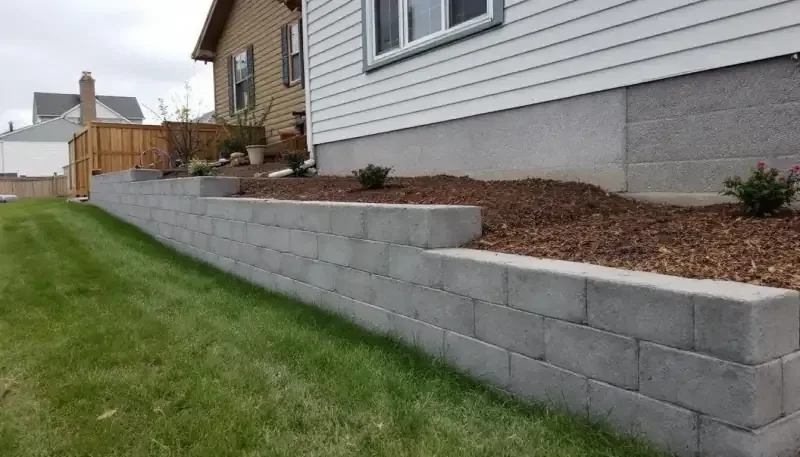
Retaining Walls in Liberty, MO
Liberty's rolling terrain doesn't have to dictate what you do with your yard. We build retaining walls that turn problem slopes into usable outdoor space — and they look good doing it.
That Slope Behind Your Shoal Creek Valley Home? It's Not Going to Fix Itself.
Walk through Shoal Creek Valley on a Saturday morning and you'll spot it everywhere — backyards that drop off sharply behind the house, garden beds slowly migrating downhill, patio pavers shifting where the grade wins the battle against gravity. Liberty sits on Clay County terrain that earned its name honestly. Heavy, expansive clay soil plus the gentle-to-aggressive slopes running through neighborhoods from Benson Place to Woodneath Farms creates a perfect recipe for erosion headaches.
A well-built retaining wall changes the equation entirely. Instead of watching topsoil wash toward the street every time a spring storm rolls through, you reclaim that hillside. You get a flat area for a firepit. You protect your foundation from hydrostatic pressure that builds up behind saturated clay. You stop the slow-motion landslide that's been creeping closer to your back door for three years.
Since 2015, we've completed 377+ concrete projects across the Kansas City metro, and Liberty keeps us busy. The combination of older established neighborhoods near the Historic Square and newer developments along the MO-152 corridor means we see every type of grading challenge. From two-foot garden walls to six-foot structural monsters holding back entire hillsides, we build retaining walls that outlast the problem.
Retaining Walls Engineered for Liberty's Clay County Terrain
Liberty's geography throws a curveball that many homeowners don't anticipate until they've lived through a few wet springs. The clay-heavy soil in Clay County expands when saturated and contracts during dry spells. This cycle puts enormous lateral pressure on any retaining structure. We design our walls specifically for this behavior — proper drainage behind the wall, adequate footing depth below the frost line, and reinforcement that accounts for the soil's seasonal mood swings. A retaining wall that works in sandy Colorado soil will fail in Liberty within five years.
Our crew installs both poured concrete retaining walls and segmental block systems depending on the application. Poured walls deliver maximum strength for taller installations — anything over four feet on Liberty's clay typically calls for engineered, steel-reinforced concrete with a proper French drain system behind it. Block walls work beautifully for shorter landscape terracing, garden borders, and decorative applications where you want natural stone aesthetics without sacrificing structural integrity.
Every retaining wall we build in Liberty includes a compacted gravel drainage layer behind the wall face, perforated drain tile at the footing level, and filter fabric to prevent clay migration into the drainage system. Skip any of those elements and you're building a dam, not a wall. Water pressure builds, the wall tilts, and you're calling someone like us to tear it out and start over. We'd rather build it right the first time.
Liberty-Specific Retaining Walls Considerations
Clay Soil Expansion and Footing Requirements in Liberty
Clay County soil has a plasticity index that makes shallow footings a liability. During wet seasons, the soil can expand with enough force to crack under-engineered walls. We excavate footings to a minimum of 36 inches in Liberty — well below the frost line and deep enough to anchor into stable substrate below the active clay zone. Our crew tests soil conditions on-site during every assessment. If we encounter particularly expansive conditions near Shoal Creek or the low-lying areas off Kansas Street, we adjust the reinforcement schedule accordingly.
Stormwater Drainage in Established Neighborhoods Near the Square
Older Liberty neighborhoods around the Historic Square and along the corridors south of William Jewell College often have grading that predates modern stormwater management standards. Yards slope unpredictably, and many properties channel water toward foundations or property lines without proper intervention. A retaining wall in these areas must account for concentrated runoff from neighboring properties, not just the soil it's holding back. We integrate surface drainage solutions with every wall installation to keep water moving away from your home.
Liberty's Permitting and Setback Rules for Residential Walls
Liberty enforces specific permitting requirements for retaining walls that exceed a certain height or sit near property boundaries. The city's building department reviews wall plans for structural adequacy, drainage impact, and setback compliance. We handle the permit application process for every project that requires one. Our crew knows the local inspectors and what they look for. This means fewer delays and no surprises when the inspector shows up. We also verify utility locations before any excavation — hitting a gas line because someone skipped the locate call is an expensive mistake.
From First Call to Finished Retaining Wall — Your Liberty Project Journey
It starts with a phone call or a form submission, and within 48 hours, one of our contractors is standing in your Liberty yard. Not a salesperson — someone who actually builds walls. During that first site visit, we walk the slope together. We look at where water collects during storms, measure the grade change, check the soil conditions, and identify any underground utilities or tree roots that could complicate excavation. If your Canterbury Estates backyard drops four feet over thirty horizontal feet, we'll tell you exactly what type of wall handles that load and what it'll cost.
After the assessment, you get a detailed written proposal. It breaks down materials, labor, drainage components, and permit fees — no vague line items. We walk you through the options: poured concrete versus block, straight wall versus terraced steps, standard gray finish versus something with more character. You pick what fits your yard and your budget. Once you approve, we schedule the build and pull any required permits through the City of Liberty.
Build day in Liberty usually starts early. Our crew arrives with excavation equipment, forms or block pallets, rebar, gravel, and drain tile. We excavate the footing trench, compact the base, install the drainage system, and begin building. Most residential retaining walls in the two-to-four-foot range take two to four days from excavation to completion. Taller engineered walls or terraced systems may take a full week. We protect your existing landscaping as much as physically possible — we've built walls in tight Benson Place backyards without touching the neighbor's fence line.
The reveal is the best part. Where there was a muddy, eroding slope yesterday, there's now a clean, level yard with a solid wall holding everything in place. We backfill behind the wall, grade the surrounding soil for proper drainage, and clean the site completely. You get a walkthrough where we show you how the drainage system works and what to watch for over the first year. Then we're out of your yard and you're left with a wall that'll hold for decades.
A Woodneath Farms Backyard Reclaimed from a Six-Foot Drop-Off
A homeowner in Woodneath Farms reached out after three years of watching their backyard erode toward the tree line behind their property. The lot had a roughly six-foot grade change over about twenty feet — steep enough that their kids couldn't safely play back there. Every heavy rain washed mulch, topsoil, and small rocks onto the flat area near the patio. The HOA had started sending letters about the visible erosion. Something had to give.
Our crew visited the property on a Tuesday morning and immediately saw the challenge. The clay soil was heavily saturated from recent storms, and the existing slope showed signs of shallow slip failure — small sections of earth sliding downhill in sheets. We designed a two-tiered retaining wall system: a four-foot reinforced poured concrete wall at the base of the slope and a two-foot block wall twelve feet uphill to create a usable terrace between levels. Both walls included full French drain systems routed to a daylight outlet near the side yard.
The build took five working days. When we finished, the homeowner had a flat lower yard, a planted terrace in the middle, and a stable upper section that no longer shed soil during storms. The HOA letters stopped. The kids got their play area. And the property gained a clean, engineered look that several neighbors have since asked us to replicate on their own lots along the same stretch of Woodneath Farms.
How Much Does Retaining Walls Cost in Liberty?
| Type | Cost / Sq Ft Face | Typical 200 Sq Ft |
|---|---|---|
| Poured Concrete (Structural) | $20–35 | $4,000–$7,000 |
| Decorative Block / Segmental | $25–45 | $5,000–$9,000 |
| Short Wall (Under 3 ft) | $15–25 | $1,500–$3,000 |
Retaining wall costs in Liberty typically range from $50 to $85 per square face foot depending on wall height, material choice, and soil conditions. Properties in low-lying areas near Shoal Creek or the older neighborhoods around Kansas Street often require deeper excavation and enhanced drainage, which can push costs toward the higher end of that range.
Retaining Walls FAQ for Liberty, MO
What permits does Liberty, MO require for a residential retaining wall?
Liberty generally requires a building permit for retaining walls exceeding four feet in height from the base of the footing to the top of the wall. Walls near property lines or within easements may have additional setback requirements. We handle the permit process for you — our crew submits the plans, coordinates with the city building department, and schedules the required inspections. The permit fee is included in our project proposals so there are no surprise costs after you approve the work.
How do you handle drainage behind the wall on Clay County soil?
Every retaining wall we build in Liberty includes a three-part drainage system. First, we install a layer of clean gravel behind the wall face to create a drainage channel. Second, perforated drain tile runs along the base of the footing to collect water and route it to a daylight outlet or storm drain connection. Third, filter fabric separates the gravel from the surrounding clay soil to prevent clogging. Clay County soil holds water aggressively, and without this system, hydrostatic pressure will eventually push any wall forward. We've seen plenty of failed walls in Liberty that skipped the drainage step.
Can I build a retaining wall on the property line between me and my neighbor in Liberty?
Technically possible, but it requires cooperation. Liberty's setback requirements typically keep permanent structures a certain distance from property boundaries. If both homeowners agree and the wall benefits both properties, we can sometimes build directly on the line with proper documentation. More commonly, we set the wall a foot or two inside your property to avoid disputes. We recommend having a survey completed before any wall project near a boundary. Our crew can work with your surveyor's stakes to ensure precise placement.
Will a retaining wall stop the erosion that's washing out my landscaping every spring?
Yes — that's one of the primary reasons Liberty homeowners call us. Spring storms dump heavy rainfall onto Clay County's slow-draining soil, and sloped yards channel that water like a funnel. A properly placed retaining wall intercepts the flow, holds the soil in place, and redirects water through the integrated drainage system. We often combine the wall with regrading above and below the structure to eliminate standing water entirely. After installation, the topsoil stays where you put it and your mulch stops migrating to the neighbor's yard.
What's the lifespan of a poured concrete retaining wall versus a block wall in this area?
A properly built poured concrete retaining wall in Liberty should last 50 years or more. The steel reinforcement and monolithic structure resist Clay County's freeze-thaw cycles and lateral soil pressure extremely well. Segmental block walls have a typical lifespan of 30 to 50 years depending on the block quality and installation method. Both options far outlast timber walls, which rarely make it past 15 years in our clay soil before rotting and leaning. We recommend poured concrete for any wall over four feet tall in Liberty and block systems for shorter landscape applications where aesthetics are a priority.
Other Concrete Services in Liberty, MO
Retaining Walls in Nearby Cities
Schedule Your Free Liberty Property Assessment
We'll walk your yard, measure the grade, check the soil conditions, and identify drainage concerns specific to your Liberty property. You'll leave the conversation knowing exactly what your retaining wall needs to look like — and what it'll cost.