
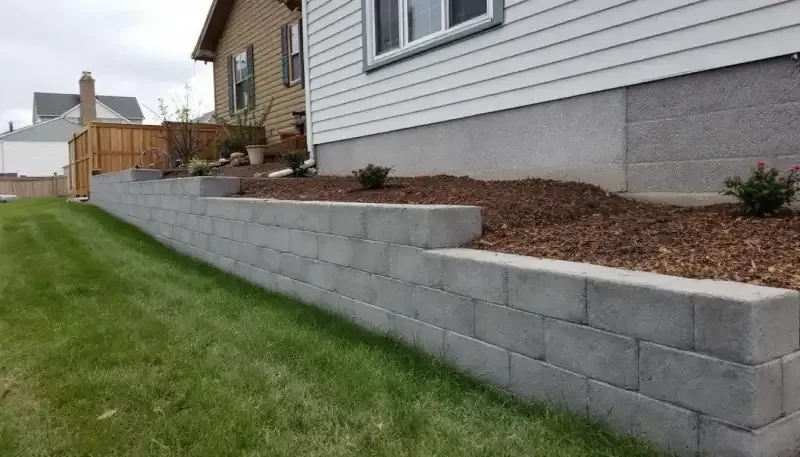
Retaining Walls in Prairie Village, KS
A retaining wall in Prairie Village isn't just a landscaping upgrade — it's structural protection for one of Johnson County's most valuable residential zip codes.
What Does a Retaining Wall Actually Cost in Prairie Village?
Let's talk dollars first. Most Prairie Village homeowners spend between $4,800 and $14,000 on a residential retaining wall. That range depends on wall height, linear footage, material choice, and how much grading your lot needs before we pour. A straightforward three-foot block wall along your Corinth Hills backyard slope runs far less than a five-foot engineered poured wall behind a Homestead home with drainage complications.
Why does Prairie Village cost what it does? Labor rates in Johnson County run higher than the metro average. Material delivery to tight residential streets like those off Somerset Dr or Roe Ave adds logistics time. And the clay-heavy soil across most of the city demands proper drainage systems behind every wall we build. Skipping that step saves money upfront and costs you the whole wall in five years.
Here's the thing most contractors won't say plainly: a cheap retaining wall is the most expensive thing you'll ever buy. We've rebuilt walls across Prairie Hills and Countryside East that were installed without proper footings or drain tile. Those homeowners paid twice. Since 2015, we've completed 377 projects across the metro, and we'd rather price it right the first time than see you again for a teardown.
The good news is that a properly built retaining wall in this market adds real value. Prairie Village homes already command premium prices. A well-designed wall that solves a grading problem, creates usable yard space, or protects a foundation makes your property more attractive to every buyer in this market. It's one of the few exterior improvements that pays for itself structurally and aesthetically.
Retaining Walls Built for Prairie Village's Premium Residential Standards
Prairie Village isn't a city where you slap up a wall and call it done. Homeowners here expect clean lines, materials that complement mid-century and updated-traditional architecture, and engineering that accounts for Johnson County's expansive clay soils. We build both poured concrete and segmental block retaining walls, and we'll tell you honestly which one fits your lot, your slope, and your budget. Most walls in this area need a proper aggregate base, compacted sub-grade, and a French drain system behind the wall face.
We handle everything from two-foot garden-tier walls along front yards near Mission Road to four-and five-foot structural walls that hold back eroding slopes in backyards throughout Homestead and Prairie Hills. Every wall over four feet gets engineered drawings — Prairie Village follows Johnson County building codes, and we pull permits before we break ground. No surprises, no stop-work orders, no inspector headaches.
Material selection matters here more than most places. Your neighbors notice. We offer standard gray block, colored and textured segmental units, natural stone veneer over poured concrete, and smooth-formed architectural concrete. If you want the wall to match your existing patio, walkway, or driveway hardscape, we can coordinate color and texture. Our 13 five-star Google reviews reflect that level of attention.
Prairie Village-Specific Retaining Walls Considerations
HOA and Neighborhood Aesthetic Standards
Prairie Village has some of the most active homeowner expectations in the metro. Even in neighborhoods without formal HOAs, there's an unspoken standard. A retaining wall along your front-facing slope near Corinth Square or The Shops of Prairie Village is visible to foot traffic daily. We help you choose materials and cap styles that match the mid-century ranch aesthetic common in Countryside East or the updated traditional look popular in newer Corinth Hills renovations. Getting the look wrong in a neighborhood like this can actually hurt curb appeal rather than help it.
Mature Tree Roots and Established Landscaping
Many Prairie Village lots have 50- to 70-year-old trees with root systems that extend well into areas where a retaining wall needs to go. Cutting major roots can kill a mature oak or elm, and removing a heritage tree in this community is a bigger deal than the wall itself. We survey root zones before we dig. In some cases, we adjust wall alignment by 18 to 24 inches to preserve root mass. On lots along Tomahawk Rd and near Meadowbrook Park, this is the single biggest planning factor — not the soil, not the slope, but the trees.
What Your Retaining Wall Timeline Looks Like in Prairie Village
Days 1-2: Site Evaluation and Design. We measure your slope, test soil conditions, and photograph the area. You'll get a detailed proposal within 48 hours including material options, wall height, drainage plan, and total cost. If your wall exceeds four feet, we commission engineered drawings — that adds about five business days but is non-negotiable for code compliance in Johnson County.
Days 3-10: Permits and Prep. Prairie Village permit turnaround typically runs five to seven business days for standard retaining walls. During this window, we finalize your material order and schedule delivery. We'll coordinate with you on driveway access — on tighter streets off 83rd St or Somerset Dr, we stage materials carefully to avoid blocking your neighbor's parking or the sidewalk.
Day 11: Excavation and Base Work. Our crew arrives early. We excavate the wall trench, install compacted aggregate base, and lay the French drain system behind the wall line. This is the loudest, most disruptive day. We protect your lawn with plywood paths and keep excavated soil contained. Most of this phase wraps in a single day for walls under 40 linear feet.
Days 12-14: Wall Construction. Block walls go up quickly — 20 to 30 linear feet per day depending on height and complexity. Poured concrete walls require forming on day one, pouring on day two, and a minimum 48-hour cure before we strip forms. We schedule pours around weather. Spring and fall are ideal in this area. Mid-summer pours need extra curing attention when temps push past 90 degrees.
Days 15-16: Backfill, Grading, and Cleanup. We backfill behind the wall with drainage aggregate, grade the surrounding soil, and restore any disturbed lawn areas. Cap stones or finishing details go on last. Final inspection with the city happens within a few days. Total disruption to your household is roughly one working week of active construction — we keep tools off your driveway each evening.
How Retaining Wall Needs Differ Across Prairie Village Neighborhoods
Countryside East homes were largely built in the 1950s and 1960s on gently graded lots. After six decades of settling, many backyards have developed uneven slopes that push water toward foundations. Retaining walls here tend to be shorter — two to three feet — but the real challenge is working around mature root systems and original concrete patios that homeowners want to preserve. Access through narrow side yards is standard on these lots.
Corinth Hills sits slightly higher in elevation and features lots with more pronounced grade changes, especially properties backing up to Meadowbrook Park. We see more requests for four-foot-plus walls here, often requiring engineered plans. The soil is the same Johnson County clay, but the steeper natural grade means hydrostatic pressure builds faster behind walls during heavy spring rains. Robust drainage design is critical on every Corinth Hills project.
Homestead and Prairie Hills represent a mix of original mid-century homes and extensively renovated properties. The challenge in these neighborhoods is matching new retaining wall materials to updated hardscaping — stamped patios, stone-veneer facades, decorative walkways. Homeowners here expect a wall that looks intentional, not like an afterthought. We spend more time on material selection and cap stone details in these neighborhoods than anywhere else in Prairie Village, and the results show.
How Much Does Retaining Walls Cost in Prairie Village?
| Type | Cost / Sq Ft Face | Typical 200 Sq Ft |
|---|---|---|
| Poured Concrete (Structural) | $20–35 | $4,000–$7,000 |
| Decorative Block / Segmental | $25–45 | $5,000–$9,000 |
| Short Wall (Under 3 ft) | $15–25 | $1,500–$3,000 |
Retaining wall pricing in Prairie Village reflects Johnson County labor rates and the near-universal need for drain tile systems due to heavy clay soils — expect drainage to add $800 to $1,500 to your total project cost compared to sandier soil regions.
Retaining Walls FAQ for Prairie Village, KS
Does Prairie Village require a permit for residential retaining walls?
Yes. Prairie Village follows Johnson County building codes, and any retaining wall over four feet in total height — measured from the bottom of the footing to the top of the wall — requires a building permit and engineered drawings. Walls under four feet technically don't require a permit, but we still recommend pulling one. It protects your investment if you ever sell the home. Permit fees are modest, usually under $150. We handle the entire permit application so you don't have to visit city hall.
Block wall or poured concrete — which should I choose for my Prairie Village yard?
It depends on your priorities. Segmental block walls cost less, go up faster, and offer more color and texture options. They're ideal for walls under four feet and for situations where aesthetics matter most — like a front yard terrace visible from the street. Poured concrete walls are stronger and better suited for taller walls or lots where heavy hydrostatic pressure builds behind the wall during spring rains. We build both and will recommend the right option based on your specific slope, soil, and height requirements.
How do you handle drainage on Prairie Village's clay soil?
Every wall we build in Prairie Village gets a drainage system. Period. Johnson County clay holds water like a sponge, and hydrostatic pressure behind a wall is the number one reason retaining walls fail in this area. We install perforated drain tile wrapped in filter fabric at the base of the wall, backed by clean drainage aggregate. The drain tile routes water to a daylight outlet or connects to your existing yard drain system. Without this, your wall becomes a dam — and dams eventually break.
Will construction equipment damage my lawn or landscaping beds?
We take this seriously in Prairie Village because yards here are well-maintained and neighbors are close. Our crew uses plywood ground protection on access paths and keeps a compact equipment footprint. For backyard walls accessed through a side yard, we limit equipment to a mini excavator that fits through a 36-inch gate opening. Some turf disruption is unavoidable near the wall itself, but we restore grading and reseed affected areas as part of every project. Most lawns recover fully within one growing season.
I have a gentle two-foot slope — is a retaining wall worth it or overkill?
A two-foot slope might not seem dramatic, but it depends on where the slope is. If it's directing water toward your foundation, a short retaining wall with proper drainage can prevent thousands in future water damage. If the slope is between your patio and the back fence, a wall creates usable flat space you don't currently have. In a market like Prairie Village where lot sizes are modest, gaining even 150 square feet of level yard is a meaningful improvement. We'll evaluate your specific situation and tell you honestly if a wall makes sense or if regrading alone would solve the problem.
What time of year is best for building a retaining wall in this area?
Late spring through mid-fall gives us the best weather window. Concrete pours need sustained temperatures above 40 degrees for proper curing, so we avoid December through February for poured walls. Block walls are more flexible on timing since they don't require a cure period, but frozen ground makes excavation harder and more expensive. The ideal months in Prairie Village are April through June and September through October — moderate temps, manageable rain patterns, and your landscaping recovers fastest from construction during active growing season.
Other Concrete Services in Prairie Village, KS
Get Your Free Retaining Wall Estimate in Prairie Village
Tell us about your slope, your lot, and what you're trying to solve. We'll visit your Prairie Village property, measure everything on-site, and deliver a detailed written estimate — typically within 48 hours of our visit.