
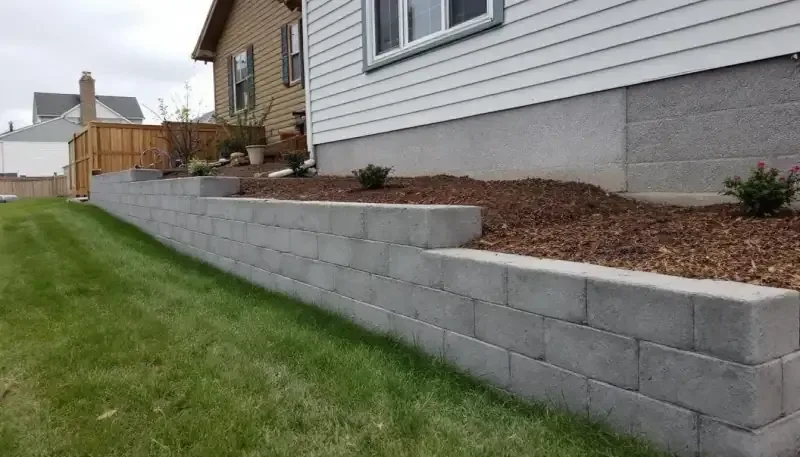
Retaining Walls in Lenexa, KS
That eroding slope behind your Lenexa home isn't going to fix itself. We build retaining walls engineered for Johnson County clay and built to last decades.
Is Your Backyard Slowly Sliding Downhill?
You notice it every spring. The mulch washes into a pile at the bottom of the slope. The fence posts lean a little more each year. Maybe there's a gap forming between your patio and the lawn where the grade keeps settling. Homeowners across Falcon Valley and Canyon Creek deal with this constantly — Johnson County's expansive clay doesn't sit still, and gravity always wins eventually.
A properly built retaining wall stops that slow-motion erosion for good. It holds your grade, protects your foundation, and reclaims usable yard space you've been losing inch by inch. Since 2015, we've completed 377+ concrete projects across the Kansas City metro, and Lenexa retaining walls are some of our most requested work. The terrain here demands it.
What Makes a Lenexa Retaining Wall Different
Lenexa sits on some of the most active clay soil in Johnson County. The neighborhoods west of Renner Boulevard — places like Green Trails and Four Colonies — were graded aggressively during development in the 1980s and '90s. That grading created slopes that look manageable until decades of freeze-thaw cycles and stormwater runoff undermine them. A retaining wall here isn't decorative. It's structural.
We build both poured concrete and concrete masonry block walls depending on site conditions. For walls under four feet on moderate slopes, a gravity block wall with proper drainage aggregate works well. For taller walls or lots with significant surcharge loads — like a driveway or patio sitting above the slope — we use reinforced poured concrete with engineered footings and steel rebar tied into the foundation.
Every wall we install includes a drainage system behind it. A perforated pipe wrapped in filter fabric sits in a bed of clean gravel at the base of the wall. This channels groundwater to daylight outlets at each end. Without this system, hydrostatic pressure builds behind the wall and eventually pushes it forward. That's why so many older landscape-timber walls in Lenexa are bulging or toppled — they were built without drainage.
Lenexa-Specific Retaining Walls Considerations
Expansive Clay and Footing Depth
Johnson County clay expands when wet and contracts when dry. This seasonal movement can shift a wall's footing if it isn't set below the frost line. In Lenexa, that means footings go a minimum of 30 inches deep. We also widen the footing base beyond standard specs on lots where the clay plasticity index runs high, which is common in developments near Little Mill Creek.
Subdivision HOA and City Permit Requirements
Lenexa requires a building permit for any retaining wall over four feet in height, measured from the bottom of the footing to the top of the wall. Many subdivisions in the 87th Street Parkway corridor also have HOA covenants that dictate materials and setbacks. We handle permit applications and can pull your HOA guidelines before we design the wall, so there are no surprises after construction starts.
Stormwater Runoff and Neighboring Properties
Kansas drainage law means you can't redirect water onto your neighbor's lot. In subdivisions like Canyon Creek, where homes sit close together on graded fill, a retaining wall changes how water moves. We design every wall with directed drainage outlets that route water to existing storm infrastructure or natural drainage paths. This protects you from liability and keeps your neighbors happy.
Utility Easements Along Rear Lot Lines
Many Lenexa lots have utility easements running 10 to 15 feet from the rear property line. Sewer, gas, and stormwater lines often sit right where you need the wall most. We call in utility locates before every project and design walls that either avoid the easement or comply with city requirements for structures within it. Ignoring this step can mean tearing out a finished wall.
How We Build Retaining Walls in Lenexa, KS
We start with a site visit that's more investigation than sales pitch. We walk the slope with a transit level and take elevation readings at multiple points. We probe the soil to check moisture content and consistency. Johnson County clay can vary dramatically even within a single lot — the fill dirt used during grading is often looser than the native clay underneath. Those differences affect footing design, so we need to see them firsthand before we draw anything up.
Once we have the site data, we design the wall and drainage system together. For reinforced walls, our engineer specs the rebar spacing, footing dimensions, and wall thickness based on actual soil conditions and the load sitting above the wall. We source our concrete from local Johnson County batch plants, which lets us control the mix design — typically a 4,000 PSI mix with air entrainment for freeze-thaw resistance. Block walls use split-face or smooth-face CMU from regional suppliers, and we core-fill every block with grout and rebar on walls over three feet.
Excavation is where the real craft starts. We dig the footing trench to spec, then compact the subgrade with a plate compactor. On soft or wet clay — common after spring rains in the Green Trails and Old Town areas — we over-excavate and backfill with compacted road base to create a stable platform. The footing gets poured first and cured for at least 24 hours before we start the wall. Behind the wall, we place filter fabric, drainage aggregate, and perforated pipe as we build up each course or pour each lift.
After the wall is complete and the drainage system is tested, we backfill in six-inch lifts and compact each one. We don't just dump dirt behind the wall and walk away. Poorly compacted backfill settles and creates voids that collect water. The final grade gets shaped to direct surface water away from the wall face and toward your yard's existing drainage pattern. We leave the site clean, with exposed soil seeded or prepped for sod.
Stopping a 10-Year Slide in Canyon Creek
A homeowner in Canyon Creek, just south of 87th Street Parkway, called us about a backyard slope that had been eroding since the home was built in the mid-2000s. The grade dropped about five feet from the back patio to the rear fence line. Every heavy rain sent a river of mud across the lower yard and against the fence. The previous owner had tried landscape timbers, but they were rotted and leaning forward at nearly 15 degrees. The soil behind them was saturated.
We removed the failed timber wall and excavated down to stable native clay, which sat about 14 inches below the fill material. We poured a reinforced concrete footing 36 inches deep and 24 inches wide, then built a four-foot-six-inch poured concrete wall with number-four rebar at 16-inch spacing. Behind the wall, we installed a full drainage blanket — six inches of washed gravel, filter fabric, and a four-inch perforated pipe draining to a pop-up emitter near the side yard downspout line.
The finished wall reclaimed nearly 200 square feet of usable backyard that had been unusable slope. The homeowner added a flagstone patio extension above the wall the following spring. Two years later, zero movement, zero drainage issues. That's what a properly engineered wall does on Johnson County clay.
How Much Does Retaining Walls Cost in Lenexa?
| Type | Cost / Sq Ft Face | Typical 200 Sq Ft |
|---|---|---|
| Poured Concrete (Structural) | $20–35 | $4,000–$7,000 |
| Decorative Block / Segmental | $25–45 | $5,000–$9,000 |
| Short Wall (Under 3 ft) | $15–25 | $1,500–$3,000 |
Retaining wall costs in Lenexa typically range from $45 to $85 per square foot of wall face, depending on height, material, and site access. Lots along Little Mill Creek or properties requiring engineered plans for walls over four feet will fall toward the higher end due to deeper footings and additional permitting.
Retaining Walls FAQ for Lenexa, KS
What permits does Lenexa require for a backyard retaining wall?
Lenexa requires a building permit for any retaining wall over four feet tall, measured from the bottom of the footing to the top of the wall. Walls over that height also require stamped engineered drawings. If your wall sits within a utility easement — common in subdivisions like Falcon Valley and Four Colonies — you may need additional approval from the utility provider. We handle the full permit process, including submitting drawings to the city and scheduling inspections. Most residential permits in Lenexa are approved within two to three weeks.
Can you build a wall on the slope between my house and the street in Old Town Lenexa?
Yes, and we do it regularly. Many Old Town lots have steep front-yard slopes between the sidewalk and the home, especially on streets near Thompson Barn and Pflumm Road. The challenge is working around existing utility lines, sidewalks, and mature trees. We typically use a compact excavator and hand-dig sections near tree roots to minimize damage. A two-to-three-foot wall along the front of an Old Town lot can dramatically improve curb appeal and stop the constant mulch washout that plagues those slopes.
How do you handle drainage on lots near Sar-Ko-Par Trails Park where the water table is higher?
Properties near Sar-Ko-Par and Little Mill Creek often have a higher seasonal water table, which means more hydrostatic pressure behind the wall. We address this with an oversized drainage blanket — a full layer of clean gravel behind the wall rather than just a strip near the base. The perforated drain pipe gets upsized to four-inch diameter, and we add extra daylight outlets to handle the volume. On sites where standing water is visible in the trench during excavation, we may install a secondary French drain below the footing to intercept groundwater before it reaches the wall.
My Four Colonies backyard has a four-foot drop — one wall or two terraced walls?
Either approach can work, but in Four Colonies where rear lot lines often sit close to neighbors, we usually recommend two shorter terraced walls with a planted shelf between them. A single four-foot wall requires a permit and engineering, which adds cost and time. Two walls at two feet each can sometimes stay under the permit threshold depending on spacing. Terracing also reduces the visual mass of the wall and creates a planting bed that improves drainage and appearance. We'll measure your actual grade during the site visit and show you both options with estimated costs.
Other Concrete Services in Lenexa, KS
Retaining Walls in Nearby Cities
Request a Callback About Your Lenexa Retaining Wall
Leave your info and we'll call you back within one business day. We serve all of Lenexa — from Old Town to City Center to every subdivision off 87th Street Parkway and K-10.