
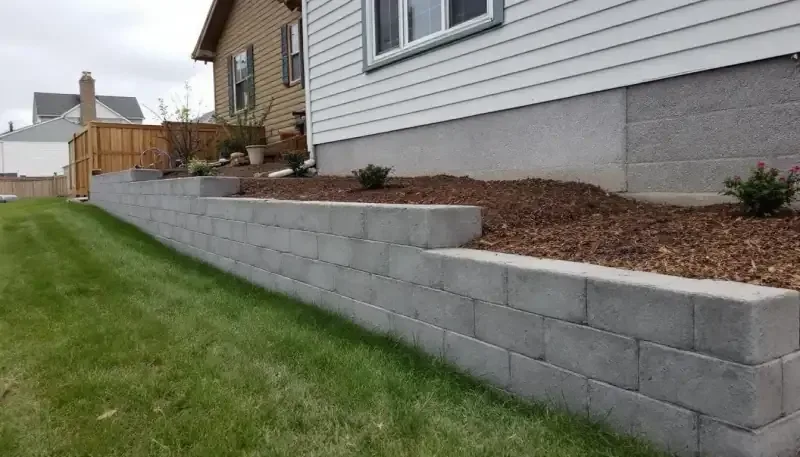
Retaining Walls in Olathe, KS
Your Olathe yard wasn't meant to be flat — but it doesn't have to wash away, either. We build retaining walls that hold Johnson County soil where it belongs.
Should You Patch That Failing Wall or Start Fresh?
We hear this question every week from homeowners in Persimmon Hill and Cedar Creek. That old timber or block wall is leaning, cracking, or letting water seep through. You're weighing the cost of patching it against tearing it out and building something that actually lasts. It's a fair debate. But here's the reality we've seen across 377 projects since 2015 — a wall that's already leaning rarely stops on its own. The soil pressure behind it doesn't take breaks.
Repair makes sense for cosmetic cracks or minor settling on walls under five years old. Beyond that, you're usually paying to delay the inevitable. Olathe's heavy Johnson County clay expands when wet and contracts when dry. That seasonal push-and-pull punishes weak joints and undersized footings. A wall built without proper drainage or reinforcement will keep failing no matter how many times you patch mortar or reset blocks.
Replacing a wall lets you solve the root problem. We can engineer the footing depth, install proper drainage aggregate and weep systems, and size the wall for actual soil loads — not guesswork. Homeowners in Brougham Village and Heatherstone have seen firsthand how a properly engineered replacement wall transforms a problem slope into usable yard space. It's an investment that pays off every spring when the rains hit.
We're not saying every wall needs demolition. During your free property assessment, we'll tell you honestly which approach fits your situation. Some walls just need a French drain added behind them. Others need to come down. Either way, you get a straight answer — not a sales pitch.
How Retaining Walls Solve Olathe's Toughest Yard Problems
Olathe sits on rolling terrain that made it the City of the Trails — but those same gentle hills create real headaches for homeowners. Slopes between your patio and fence line erode every spring. Graded lots in newer subdivisions near 175th Street settle unevenly as fill soil compacts. A well-built retaining wall stops erosion, levels usable yard space, and redirects water away from your foundation. We build both poured concrete walls and interlocking block walls depending on height requirements, soil conditions, and your aesthetic goals.
Poured concrete walls offer maximum strength for taller applications and heavy soil loads. They're ideal for Olathe properties where we need four feet or more of grade change. Block walls provide a textured, stacked-stone look that blends into landscaping. Both systems require engineered footings that extend below the frost line — roughly 30 inches in Johnson County — and a gravel drainage layer behind the wall face. We don't skip either step, regardless of wall height.
Beyond erosion control, retaining walls create functional outdoor living space. We've built tiered walls in Havencroft that turned unusable slopes into flat areas for gardens, fire pits, and play equipment. Near Lake Olathe, we've installed walls that protect waterfront grades from seasonal runoff. Every wall we pour includes reinforced steel, compacted base material, and a drainage system designed for the specific water volume your slope handles during Johnson County storms.
Olathe-Specific Retaining Walls Considerations
Johnson County's Expansive Clay and Footing Design
The clay soil across Olathe expands significantly when saturated and shrinks during dry spells. This seasonal movement generates lateral pressure against retaining walls that lesser designs can't handle. We excavate footings to a minimum of 30 inches — below the frost line — and widen the base to distribute load across unstable subgrade. For walls over four feet, we incorporate steel rebar tied into both the footing and the wall stem. Our crew has poured walls on some of the heaviest clay in Cedar Creek and Persimmon Hill without a callback for shifting.
Drainage Management Behind the Wall
A retaining wall without drainage is a dam. Hydrostatic pressure builds behind the face when water has nowhere to go, and eventually that pressure wins. Every wall we build includes a minimum of 12 inches of clean drainage aggregate behind the face, perforated drain tile at the footing level, and weep holes spaced along the base. In Olathe, where spring rains can drop several inches in a single event, this drainage layer is the difference between a wall that lasts 40 years and one that leans in five.
Olathe Permit Requirements and Setback Rules
The City of Olathe requires a building permit for retaining walls over four feet in height, measured from the bottom of the footing to the top of the wall. Walls that also serve as a fence or are near property lines face additional setback requirements. Engineered drawings may be required for taller walls or walls supporting surcharge loads like driveways or patios above. We handle the permit process, including engineering when needed, so you don't have to navigate city hall on your own.
From First Call to Finished Wall — Your Olathe Project Journey
It starts with a phone call or online request. We'll ask a few quick questions — where's the slope, how tall is the grade change, and what's happening with water. Then we schedule a site visit, usually within a few days. When our crew arrives at your Olathe property, we're not just eyeballing the hill. We measure the grade change, check soil conditions, note existing drainage patterns, and look at how close the work area is to your fence line, utilities, or neighbor's property. If your Heatherstone lot backs up to a common drainage easement, we flag that immediately.
After the site visit, you receive a detailed proposal. It includes wall type, footing specifications, drainage design, and a clear price. No vague allowances. We'll explain why we recommend poured concrete versus block for your specific situation, and what the permit process looks like if your wall exceeds four feet. You ask questions, we give direct answers, and you decide on your timeline.
On pour day, our crew arrives early. We excavate the footing trench, compact the subgrade, set forms, and place rebar. For block walls, we lay the leveling pad first and build courses with structural adhesive and geogrid reinforcement where required. Drainage aggregate and perforated pipe go in as the wall rises — not as an afterthought. Most residential walls in Olathe take two to five days depending on length and height. We protect your lawn with plywood pathways and haul out all debris.
The reveal is simple. You walk your finished wall with us. We show you where the drainage exits, explain any grading adjustments we made, and hand you a written warranty. Your slope is gone. Your yard is level. And the next time Johnson County gets a three-inch downpour, you'll see water moving exactly where it should — away from your foundation and off your property.
How Much Does Retaining Walls Cost in Olathe?
| Type | Cost / Sq Ft Face | Typical 200 Sq Ft |
|---|---|---|
| Poured Concrete (Structural) | $20–35 | $4,000–$7,000 |
| Decorative Block / Segmental | $25–45 | $5,000–$9,000 |
| Short Wall (Under 3 ft) | $15–25 | $1,500–$3,000 |
Retaining wall costs in Olathe typically range from $50 to $85 per square face foot, depending on wall type, height, and soil conditions. Properties in older subdivisions near Santa Fe Street often require deeper excavation due to compacted fill from 1990s-era grading, which can increase footing costs.
Retaining Walls FAQ for Olathe, KS
What height wall can I build without a permit in Olathe?
The City of Olathe generally requires a building permit for retaining walls exceeding four feet in exposed height, measured from the base of the footing to the top of the wall. Walls under four feet typically don't need a permit unless they support a surcharge load — like a driveway, patio, or structure above the wall. We always verify current requirements with the city before starting work, because setback rules and engineering thresholds can change. If your wall needs a permit, we handle the application and any required engineered drawings.
How do you keep my Brougham Village yard from flooding during construction?
We stage excavation carefully so we're never leaving an open trench overnight during rain forecasts. Temporary drainage channels redirect water away from the work area. In Brougham Village and similar neighborhoods with tight lot lines, we also protect adjacent properties from runoff with silt barriers. If rain hits mid-project, we cover exposed footing trenches with plastic sheeting. Our crew monitors weather closely and adjusts the schedule rather than risk washout damage to your yard or your neighbor's.
Poured concrete or block — which wall type do you recommend for an Olathe slope?
It depends on height and load. For walls under three feet with light soil loads, interlocking block walls offer a great look and solid performance. Above four feet, we typically recommend poured concrete with steel reinforcement. Poured walls handle the lateral pressure from Olathe's expansive clay better over the long term. Block walls work well for tiered designs where each tier stays under four feet. During your site visit, we assess your specific grade change and soil conditions and recommend the system that gives you the best longevity per dollar.
My Cedar Creek backyard has a six-foot drop near the back fence — can you build that as one wall?
Yes, we can build a single six-foot wall, but it will require engineered drawings and a city permit. Walls at that height need a reinforced concrete stem with a substantial footing — typically 36 inches wide and 30-plus inches deep. An alternative is a terraced design with two shorter walls separated by a planted shelf. Terracing reduces soil pressure on each wall and creates more usable planting area. We'll present both options with pricing during your assessment so you can choose based on budget and how you want to use the space.
Will the wall stop water from pooling against my foundation?
A retaining wall alone doesn't solve foundation drainage, but combined with proper grading and a drainage system behind the wall, it absolutely redirects water away from your home. We install perforated drain tile at the footing level that captures water behind the wall and channels it to a designated discharge point — usually a pop-up emitter or daylight outlet downhill from your foundation. Many Olathe homeowners see a dramatic reduction in basement moisture and foundation pooling after we install a wall with integrated drainage.
How long will a retaining wall last in this part of Johnson County?
A properly built poured concrete retaining wall with adequate drainage lasts 50 years or more in the Olathe area. Block walls with quality materials and correct installation typically last 30 to 50 years. The biggest threat to longevity here isn't the freeze-thaw cycle — it's poor drainage. When water builds up behind a wall, it accelerates deterioration and creates the lateral pressure that causes leaning. Every wall we build since 2015 includes a full drainage system specifically because we've seen what happens to walls that skip that step.
Other Concrete Services in Olathe, KS
Schedule Your Free Retaining Wall Property Assessment
We'll visit your Olathe property, measure the grade change, evaluate soil and drainage conditions, and give you a detailed plan with honest pricing — no surprises, no guesswork.