
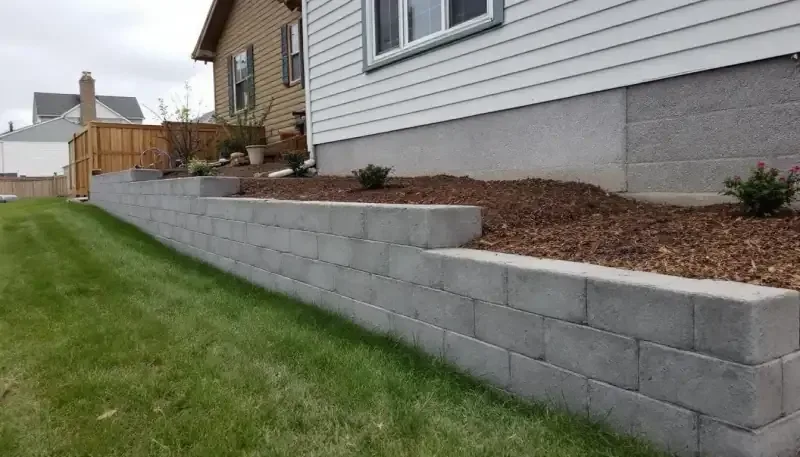
Retaining Walls in Lawrence, KS
That hillside behind your house isn't going to stabilize itself. We build retaining walls in Lawrence that hold back soil, redirect water, and turn unusable slopes into functional yard space.
Is your Lawrence backyard slowly sliding downhill?
You notice it first after a heavy spring rain. The soil along your back slope shifts a few more inches toward your fence. Mulch washes into your neighbor's yard. That crack in your old timber wall gets a little wider every season. In neighborhoods like Indian Hills and Sunset Hill, sloped lots are the norm — and gravity doesn't take a break. If your yard is losing ground, you're watching real property value erode with it.
Lawrence sits in rolling terrain between the Kansas River valley and the Wakarusa River basin. That geography gives this town its character, but it also creates drainage headaches for homeowners. Lots along 6th Street, near Clinton Lake, and throughout Brook Creek deal with elevation changes that move water exactly where you don't want it — toward foundations, patios, and fence lines.
A properly engineered retaining wall solves these problems permanently. It stops soil migration, controls stormwater runoff, and reclaims usable square footage from an otherwise wasted slope. We've completed 377 projects since 2015, and a significant number of those involved Lawrence properties with tricky grade changes that other contractors walked away from.
Our crew builds walls designed for the specific soil conditions and drainage patterns found in Douglas County. Not generic solutions copied from a textbook. Every wall we install accounts for local clay composition, freeze-thaw cycles, and the particular slope of your lot. That's why homeowners keep leaving us five-star reviews — 13 on Google and counting.
How Retaining Walls Work on Lawrence's Rolling Terrain
Most residential retaining walls in Lawrence range from two to six feet in height. We build with engineered concrete masonry units, poured reinforced concrete, or natural stone — depending on your lot's structural demands and your aesthetic goals. Walls over four feet in Douglas County typically require engineered drawings, and we handle that coordination for you. Every wall includes a compacted aggregate base, proper footing depth below the frost line, and a drainage system behind the wall face to relieve hydrostatic pressure.
Lawrence's soil profile is heavy on silty clay, especially in the Wakarusa valley areas south of 23rd Street. This type of soil expands when wet and contracts when dry, creating lateral pressure that can push an improperly built wall forward. We address this with geogrid reinforcement, adequate setback in the wall face, and perforated drain tile connected to a positive outlet. These aren't optional upgrades. They're essential for walls that last decades in this climate.
Beyond structural function, retaining walls transform your outdoor living space. A terraced wall system on a Deerfield slope can create flat areas for a patio, garden beds, or a play area. In Old West Lawrence, a well-designed stone wall adds curb appeal that fits the neighborhood's historic character. We match materials and textures to your home's existing hardscape so the wall looks intentional, not bolted on.
Lawrence-Specific Retaining Walls Considerations
Douglas County's Silty Clay and Freeze-Thaw Cycles
Lawrence sits on some of the most challenging residential building soil in northeast Kansas. The silty clay common throughout Douglas County absorbs moisture aggressively during spring storms and then shrinks during August droughts. This seasonal expansion and contraction exerts enormous lateral force on retaining walls. Add in freeze-thaw cycles from November through March — where temperatures swing above and below 32°F dozens of times — and you have a recipe for wall failure if the design doesn't account for it. We size footings, select backfill material, and specify geogrid reinforcement based on actual soil conditions at your specific lot, not regional averages.
Stormwater Drainage in the Wakarusa and Kansas River Basins
Homes near the Wakarusa River, along the south side of Lawrence, and in neighborhoods draining toward the Kansas River deal with elevated water tables during wet seasons. A retaining wall without proper drainage becomes a dam. Water pressure builds behind the wall face, eventually pushing it out of alignment or causing blowouts at the base. We install perforated drain tile wrapped in filter fabric, backed by clean aggregate, and connected to daylight outlets or storm drainage systems. If your lot is in a flood-adjacent area near Clinton Lake or the river bottoms, we factor that into every design decision.
Neighborhood Setback and HOA Requirements
Lawrence's residential zoning codes specify setback distances for structures including retaining walls. In subdivisions like Indian Hills and Deerfield, HOA covenants often add additional restrictions on wall height, materials, and placement relative to property lines. Before we pour a footing or set a single block, we verify your lot's specific requirements with the City of Lawrence planning office and review any HOA guidelines you're subject to. This prevents costly surprises and ensures your wall passes inspection the first time. We've navigated these requirements across dozens of Lawrence neighborhoods since 2015.
What to Expect During Your Lawrence Retaining Wall Project
Your project starts with a site visit where we walk your slope, take grade measurements, and identify drainage paths. We'll discuss your goals — whether you want a single wall to hold back a hillside or a terraced system that creates usable flat areas. If your wall exceeds four feet in height, we'll coordinate with a licensed structural engineer for stamped drawings, which Douglas County requires before issuing a building permit. We handle the permit application with the City of Lawrence, so you don't have to sit in a queue at City Hall.
On build day, our crew arrives early. Expect a mini excavator and a skid steer on your property. If your lot is tight — like many in Old West Lawrence or Brook Creek — we use compact equipment that fits through side yards and standard gates. The concrete or block delivery truck will park on your driveway or along the street. We lay plywood over lawn areas to minimize turf damage from equipment traffic. Excavation and base prep usually take the first full day.
Wall construction moves quickly once the base is set. For a typical three-to-four-foot wall spanning 40 linear feet, expect two to four days of active construction. You'll hear the compactor running as we tamp each course of backfill. You'll see gravel and drain tile going in behind the wall before it gets buried. This is the most critical part of the build, and we don't rush it. If Douglas County requires an inspection — and they do for permitted walls — we schedule it at the appropriate stage so there's no delay.
After the final course is set and cap stones are installed, we backfill, rough-grade the surrounding area, and clean up. Your yard will look disrupted for a few days until the exposed soil settles and you reseed or re-landscape. We'll walk you through the finished wall, explain the drainage system, and answer any questions. Most Lawrence homeowners are surprised how quickly the project wraps up — and how much usable yard they gained.
Repair Your Failing Wall or Replace It Entirely? A Honest Breakdown for Lawrence Homeowners
If your existing retaining wall is leaning, cracking, or bulging, you're facing a decision: patch it up or tear it out and start fresh. In Lawrence, the answer usually depends on the wall material and how far it's moved. Old timber walls along slopes in Brook Creek and Sunset Hill are almost always candidates for full replacement. Wood rot compromises the entire structure, and reinforcing one section just shifts the stress to the next weakest point. Repair buys you a year or two at best.
Concrete block or poured walls with minor cracking — hairline fractures under a quarter inch — can sometimes be repaired with structural epoxy and improved drainage. If the wall has tilted more than two inches from plumb, repair is rarely cost-effective. The footing has likely failed or the soil behind the wall has saturated and expanded beyond what the original design can handle. At that point, you're spending 60-70% of replacement cost on a fix that doesn't address the root cause.
In Douglas County's clay soil, most wall failures trace back to drainage problems. If your wall was built without drain tile and aggregate backfill — common with walls installed before the mid-2000s — replacement with a properly drained system is the smarter long-term investment. We assess every failing wall on site and give you an honest recommendation. Sometimes repair makes sense. More often in Lawrence, starting over with modern materials and proper drainage saves you money over a ten-year window.
How Much Does Retaining Walls Cost in Lawrence?
| Type | Cost / Sq Ft Face | Typical 200 Sq Ft |
|---|---|---|
| Poured Concrete (Structural) | $20–35 | $4,000–$7,000 |
| Decorative Block / Segmental | $25–45 | $5,000–$9,000 |
| Short Wall (Under 3 ft) | $15–25 | $1,500–$3,000 |
Retaining wall costs in Lawrence typically range from $50 to $85 per square foot of wall face, depending on material choice, wall height, and site access. Properties south of 23rd Street near the Wakarusa valley often require additional drainage work that can add 10-15% to the base price due to higher water table conditions.
Retaining Walls FAQ for Lawrence, KS
Does Lawrence require a building permit for a backyard retaining wall?
The City of Lawrence requires a permit for retaining walls over four feet in total height, measured from the bottom of the footing to the top of the wall. Walls exceeding that height also need stamped engineered drawings. Even for shorter walls, there are setback requirements based on your zoning district. We verify the specific requirements for your lot before starting any work and handle the permit application on your behalf. Douglas County inspections happen at specific stages during construction, and we schedule those so your project stays on track.
How do you handle access on narrow lots in Old West Lawrence?
Old West Lawrence lots are beautiful but tight. Many have side yards under eight feet wide and mature trees close to the work area. We use compact excavators that fit through standard fence gates and narrow passages between houses. Material gets staged on the driveway or street frontage and moved to the work area in small loads. We protect existing landscaping with plywood mats and take care around root zones. Our crew has worked on dozens of properties in this neighborhood and knows how to build full-scale walls without tearing up your whole yard.
Poured concrete or segmental block — which is right for my Lawrence property?
It depends on your slope, your budget, and the look you want. Poured concrete walls are stronger per linear foot and work well for tall, straight runs — ideal for lots with steep drops near foundations. Segmental block walls offer more design flexibility with curves, terraces, and color options. They also handle Douglas County's freeze-thaw cycles well because the individual units can flex slightly without cracking. For most residential projects in Lawrence under four feet tall, block is the more cost-effective choice. We'll recommend the right material during your site consultation based on your specific grade and soil conditions.
Will a retaining wall prevent water from reaching my foundation during heavy rain?
A retaining wall with a properly designed drainage system redirects water that would otherwise flow down a slope toward your foundation. The drain tile behind the wall captures subsurface water and routes it to a daylight outlet or storm connection away from your home. However, a retaining wall alone may not solve every drainage issue. If you have grading problems closer to your foundation or downspout discharge aimed at your house, those need separate corrections. During our site visit, we assess the full water path from the top of your slope to your foundation and recommend a complete solution.
My Sunset Hill lot drops about five feet from the back patio to the fence line — one wall or terraces?
For a five-foot drop, you have options. A single wall at five feet is structurally feasible but requires engineered drawings and a deeper footing. Two terraced walls — say a three-foot lower wall and a two-foot upper wall with a planted shelf between them — distribute the load, require less engineering, and create a more visually interesting backyard. Terraced walls also give you a flat planting bed between tiers that's perfect for low shrubs or perennials. We'll measure your exact grade during the consultation and show you both options with rough cost comparisons so you can decide what fits your budget and your vision.
How long should a retaining wall last in this part of Kansas?
A properly built concrete or block retaining wall in Lawrence should last 50 years or more. The key factors that shorten lifespan are poor drainage, inadequate base preparation, and undersized footings — problems that let Douglas County's expansive clay and freeze-thaw cycles do damage over time. Timber walls, by comparison, typically last 15 to 20 years before rot compromises their structural integrity. Every wall we build includes drainage, compacted aggregate base, and reinforcement sized for the actual soil and load conditions on your lot. We've been building walls since 2015 and haven't had a structural failure yet.
Other Concrete Services in Lawrence, KS
Schedule Your On-Site Retaining Wall Consultation
During your free site visit, we'll measure your slope, evaluate soil and drainage conditions, and outline your options with ballpark pricing — right there in your Lawrence backyard. Call today or fill out the form to get on the calendar.