Warehouse & Industrial Floors in Raymore, MO
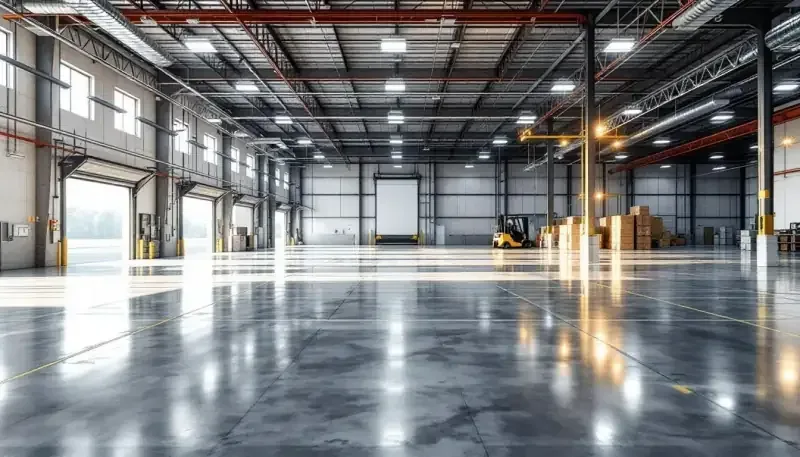
Raymore's logistics boom demands floors that can take a beating. We build warehouse slabs engineered for the heavy loads, forklift traffic, and Cass County soil conditions your operation depends on.
Your Raymore Commerce Center Facility Deserves a Floor That Keeps Up
Drive along the stretch of I-49 near Raymore Commerce Center and you'll see it — rows of distribution buildings, loading docks lined with trailers, forklifts humming inside bays. This corridor south of MO-58 is the industrial backbone of Raymore. Businesses here move serious tonnage through their facilities every day. The floors underneath all that activity take punishment most people never think about. Cracked joints, spalled surfaces, and uneven slabs slow down operations and create safety hazards.
Raymore has exploded over the past decade. Many warehouse facilities along Lucy Webb Rd and near Hawk Ridge were built between 2020 and 2025. That means some slabs are already showing early signs of wear from heavy racking point loads and constant pallet jack traffic. Other buildings closer to the MO-58 frontage date back to the 2000s, and their floors are hitting that critical rehabilitation window where patching stops working and full replacement becomes the smarter investment.
We've completed 377-plus concrete projects since 2015, and a significant share of that work involves warehouse and industrial floors across the southern Kansas City metro. Raymore's growth in e-commerce fulfillment and logistics infrastructure means more business owners need floors poured to exact specifications. That's where our crew comes in — building slabs designed for your specific load requirements, equipment, and operational demands.
Industrial-Grade Floors Built for Raymore's Logistics Corridor
Warehouse floors in Raymore face a unique combination of challenges. The heavy logistics-to-highway flow toward I-49 means facilities here handle constant truck traffic at dock doors. That translates to repeated impact loads at receiving areas and heavy point loads under racking systems. We design each slab with the right PSI rating, fiber reinforcement, and joint spacing to handle your specific operation — whether you're running narrow-aisle reach trucks or housing 40-foot-tall racking with concentrated post loads.
Many Raymore industrial buildings sit on Cass County's silty clay soils, which expand and contract with moisture changes. A warehouse floor that ignores this reality will crack, heave, and develop uneven joints within a few years. Our approach starts with proper subbase engineering — stabilized aggregate layers, moisture barriers, and compaction testing that accounts for local soil behavior. We don't guess at subbase prep. We build it based on geotechnical data specific to your site.
From epoxy-coated fulfillment center floors near Stonegate to heavy-duty distribution slabs off Dean Ave, we handle the full scope. That includes saw-cut joint layouts matched to your racking configuration, integral floor hardeners for abrasion resistance, and trench drain integration where wash-down or drainage requirements exist. Every pour follows ACI 302 standards for industrial floor construction.
Raymore-Specific Warehouse & Industrial Floors Considerations
Cass County Silty Clay and Subbase Stability
Cass County soils are notorious for volume change. The silty clay found across Raymore's industrial zones can swell 3-4% with seasonal moisture shifts. Without proper subbase stabilization, this movement translates directly into slab cracking and joint failure. We use a minimum 6-inch compacted aggregate base with lime-stabilized subgrade where soil testing warrants it. This prevents the subbase depression issues already visible in some of Raymore's older industrial queuing lanes.
Forklift and Racking Load Requirements
Your floor isn't just a surface — it's a structural element carrying massive concentrated loads. A typical warehouse racking post in a Raymore distribution center can transfer 8,000 to 15,000 pounds to a single baseplate. We calculate slab thickness, reinforcement, and concrete strength based on your actual racking layout and forklift wheel loads. Most Raymore warehouse floors require 6-inch to 8-inch slabs at 4,500 PSI minimum, with welded wire reinforcement or fiber dosing tailored to your load profile.
Operational Downtime and Phased Pours
Shutting down an entire Raymore fulfillment center isn't realistic when you're running operations tied to I-49 logistics schedules. We regularly phase warehouse floor projects into sections, allowing your crew to keep working in unaffected zones while we pour and cure adjacent areas. Typical phasing plans break a 20,000-square-foot facility into 3-4 pour zones with 7-day cure intervals between phases. We coordinate timing around your shipping calendar.
MO-58 Corridor Building Age and Rehabilitation Timing
If your facility sits along the MO-58 retail and industrial corridor built in the early 2000s, your floor is likely 20-plus years old. That puts it squarely in the rehabilitation window where surface repairs stop making financial sense. Joints are deteriorating, surface scaling is accelerating, and the subbase may have settled unevenly. Full slab replacement at this stage costs less per year of service life than repeated patching. We assess your existing floor condition and give you honest numbers on repair versus replacement.
How We Build Warehouse & Industrial Floors in Raymore, MO
Every project starts with a site visit where we evaluate your existing conditions. We check slab thickness, test for moisture vapor emissions, and assess subbase integrity. For new construction near Raymore Commerce Center or along Lucy Webb Rd, we review geotechnical reports for Cass County soil classifications. If the report shows high-plasticity clay — common in this part of the county — we specify lime stabilization before any aggregate goes down. We also survey floor elevations at dock doors, column lines, and doorways to establish grade targets.
Subbase preparation is where most contractors cut corners. We don't. Our crew excavates to engineered depth, places a 6-inch minimum compacted limestone base in two lifts, and runs nuclear density testing to verify 95% compaction. On Cass County clay, we add a 15-mil vapor barrier lapped and sealed at every joint. This step alone prevents the moisture-related curling and delamination that plagues warehouse floors in this region. We source our aggregate from local Cass County quarries, which keeps material costs lower and reduces haul times to your Raymore job site.
Pour day is choreographed down to the minute. We use laser screed equipment for flatness control — critical for narrow-aisle forklift operations common in Raymore distribution facilities. Our concrete mix designs typically run 4,500 to 5,000 PSI with a low water-cement ratio and mid-range water reducer for workability without sacrificing strength. We add synthetic macro fibers or specify welded wire reinforcement based on your load analysis. Finishing starts with power floating followed by hard troweling, and we apply a lithium silicate densifier within 7 days for surface hardness and dust control.
After the pour, we saw-cut contraction joints at 12-foot centers or closer, matched to your racking layout so joints never fall under baseplate locations. Curing compound goes on immediately. We monitor slab temperatures for the first 72 hours and protect the surface from premature loading. Most Raymore warehouse floors reach design strength within 28 days, but we allow light foot traffic at 48 hours and forklift traffic at 7 days depending on conditions. You get a detailed as-built document showing joint locations, slab thickness verification, and compressive strength test results.
How Much Does Warehouse & Industrial Floors Cost in Raymore?
| Type | Cost / Sq Ft | Project Dependent |
|---|---|---|
| Standard Industrial Slab | $3–6 | Varies by scope |
| Polished Concrete | $5–10 | Varies by scope |
| Epoxy / Coating System | $4–8 | Varies by scope |
Raymore warehouse floor costs typically range from $6 to $10 per square foot for a standard 6-inch slab, depending on subbase conditions and finish requirements. Cass County clay soil stabilization can add $0.75 to $1.50 per square foot but prevents expensive failures down the road.
Warehouse & Industrial Floors FAQ for Raymore, MO
Does Raymore require a permit for warehouse floor replacement inside an existing building?
Yes. Raymore falls under Cass County building jurisdiction for commercial projects. A structural floor replacement typically requires a building permit, especially if you're changing slab thickness or modifying drainage. We handle the permit application and coordinate any required inspections. Turnaround for Cass County permits usually runs 5 to 10 business days. If your facility sits in Raymore Commerce Center or another planned development, there may be additional covenant review requirements we can navigate for you.
What floor flatness numbers should I expect?
For standard warehouse operations with sit-down forklifts, we achieve FF 35 to FF 45 and FL 25 to FL 30 as measured by F-number testing. If your Raymore facility runs narrow-aisle reach trucks or automated guided vehicles, we can hit FF 50-plus with tighter tolerances on defined traffic paths. We measure flatness within 72 hours of the pour using a Dipstick profiler and provide certified F-number reports. Higher flatness specs require laser screed placement and careful curing — both standard in our process.
How do seasonal temperature swings in Raymore affect the pour schedule?
Raymore sees temperature extremes from single digits in January to 100-plus in July. We pour year-round but adjust our approach for each season. Winter pours use heated mix water, insulated blankets, and sometimes ground heaters to maintain proper curing temperatures above 50 degrees. Summer pours happen in early morning to avoid rapid surface drying that causes plastic shrinkage cracking. We schedule around the forecast, not against it. Your project timeline accounts for weather windows specific to the season.
Can you reinforce the floor for automated storage and retrieval systems?
Absolutely. AS/RS installations require exceptional flatness and structural capacity at rail and guide locations. We design the slab reinforcement and thickness around your system manufacturer's specifications, including point load data at column bases and dynamic loads from shuttle movement. Post-tensioned slabs or thickened sections at rail lines are options we evaluate based on your equipment specs. We've built floors supporting automated systems across the KC metro and can coordinate directly with your integrator on floor tolerance requirements.
Other Concrete Services in Raymore, MO
Warehouse & Industrial Floors in Nearby Cities
Request a Callback About Your Raymore Warehouse Floor
Leave your info and we'll call you back within one business day. We serve all of Raymore from Creekmoor to Raymore Commerce Center — wherever your facility sits, we'll come take a look.