
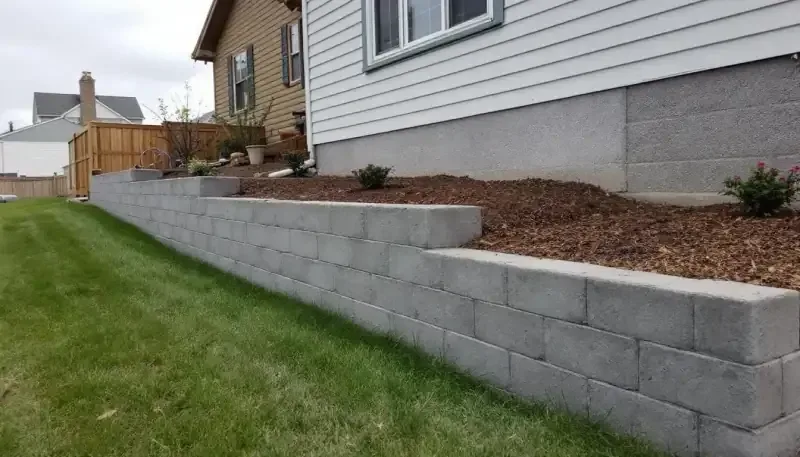
Retaining Walls in Independence, MO
Independence sits on some of the most stubborn clay soil in the metro. We build retaining walls that hold ground, redirect water, and turn problem slopes into usable yard space.
Is Your Hillside Slowly Creeping Toward Your Foundation?
Summer in Independence means two things for your yard: heat and sudden downpours. Those afternoon storms dump water fast, and if you live in Glendale, Rock Creek, or along the Santa Fe Trail neighborhoods, you already know what happens next. Saturated clay swells. Slopes shift. Soil creeps toward foundations, patios, and driveways. Right now is the window to get a retaining wall scheduled before fall rains compound the damage.
We've been pouring and building retaining walls across Jackson County since 2015. With 377 completed projects behind us and 13 five-star Google reviews, we understand this specific soil better than most. Independence yards have unique grading challenges — decades of development along the US-24 and US-40 corridors left many residential lots with aggressive slope transitions that were never properly retained.
A well-built retaining wall does more than hold dirt in place. It stops erosion that threatens your home's foundation. It creates flat, usable space where you previously had wasted hillside. And in a city with Independence's housing stock — many homes dating to the 1950s through 1980s — a structural wall can solve drainage problems that have been worsening for decades.
Retaining Wall Solutions Built for Independence Terrain
Most retaining walls we install in Independence range from two to six feet in height. The design depends on your lot's slope, soil composition, and what's at the top and bottom of the grade change. For homeowners along Susquehanna and Bingham Estates, where lots slope toward rear property lines, we typically recommend poured concrete or segmental block walls with integrated drainage systems. These handle Jackson County's expansive clay without buckling under hydrostatic pressure.
We build three primary wall types: gravity walls for shorter grade changes under three feet, reinforced concrete cantilever walls for steeper slopes, and segmental retaining wall systems with geogrid reinforcement for taller applications. Each type gets engineered for your specific lot. A wall on a Glendale hillside facing north has different moisture exposure than one along a sunny Rock Creek backyard. We account for all of it.
Every retaining wall we install includes a perforated drain pipe behind the wall face, clean gravel backfill, and proper compaction in lifts. These aren't decorative garden borders. They're structural elements designed to manage thousands of pounds of lateral earth pressure — especially critical in Independence where clay soil can exert 40 to 60 pounds per cubic foot when fully saturated.
Independence-Specific Retaining Walls Considerations
Jackson County's Expansive Clay and Lateral Pressure
Independence sits on Cheltenham and Maplewood clay formations that swell significantly when wet. This creates lateral earth pressure that can topple improperly built walls within a few seasons. We design every wall to handle worst-case saturated soil loads. Our footings extend below the frost line at 36 inches, and we use reinforced concrete rated for the specific pressure your slope generates. Skipping this engineering step is why so many older timber and landscape-block walls in Independence have already failed.
Drainage Patterns from Aging Infrastructure
Many Independence neighborhoods were graded around infrastructure built in the 1970s and 1980s. Storm drainage systems along Noland Road and the I-70 corridor have deteriorated, pushing more surface water into residential areas. If your property sits downhill from any commercial zone or older subdivision, you're absorbing runoff that the original drainage was supposed to handle. A retaining wall with a proper French drain system behind it can intercept and redirect that water before it reaches your foundation.
City of Independence Permit Requirements
Independence requires a building permit for retaining walls over four feet in height, measured from the bottom of the footing to the top of the wall. Walls within certain distances of property lines may also trigger setback reviews. We handle the permit process directly with the City of Independence building department. Our crew pulls permits, schedules inspections, and ensures your wall meets current IBC and IRC code requirements. You don't have to navigate any of that paperwork yourself.
Mature Tree Root Systems in Established Neighborhoods
Older Independence neighborhoods like Santa Fe Trail and the areas surrounding Independence Square feature large, mature trees with extensive root systems. Building a retaining wall near these trees requires careful excavation planning. We've encountered root networks from 80-year-old oaks and maples that extend 30 feet or more from the trunk. Our crew uses selective hand digging near root zones and adjusts footing placement to protect tree health while still delivering a structurally sound wall.
How We Build Retaining Walls in Independence, MO
Every project starts with a site visit where we shoot grades using a laser level and probe the soil. In Independence, we're almost always hitting clay within the first 12 inches. We take note of existing drainage, slope angle, proximity to structures, and what's happening uphill from the wall location. This assessment determines wall type, footing dimensions, and whether we need geogrid reinforcement. We don't guess on any of this — Jackson County clay punishes shortcuts.
Excavation is where the real work begins. Our crew uses a compact excavator — usually a CAT 305 or similar — to dig the footing trench and key it into undisturbed soil below the frost line. In Independence, that means going at least 36 inches deep. We then compact the subgrade with a plate compactor and lay a six-inch gravel base. If the wall exceeds four feet, we're installing rebar cages tied to spec and setting forms for a poured concrete footing that's typically 24 inches wide.
We source our concrete from local batch plants in eastern Jackson County, which keeps our pour schedules tight and mix quality consistent. For segmental block walls, we use manufacturer-approved units with positive mechanical connections — no relying on friction alone. Behind the wall, we install four-inch perforated PVC drain pipe wrapped in filter fabric, then backfill with clean three-quarter-inch gravel in eight-inch lifts, compacting each one. This drainage layer is what keeps hydrostatic pressure from building up and pushing against the wall face.
Final grading and backfill happen after the wall has cured or the block system is fully stacked and capped. We grade the soil behind the wall to direct surface water toward the drain outlets, not over the wall face. Our crew cleans the site, hauls debris, and walks you through what we built — including where the drain outlets are and how to keep them clear. The whole process typically runs five to ten working days depending on wall length and height.
Stopping a Slow-Motion Landslide on South Pleasant Street
A homeowner in the Santa Fe Trail neighborhood called us after noticing their back fence leaning further downhill each spring. The lot dropped about five feet over a 40-foot run behind the house, and years of water runoff from South Pleasant Street had eroded a visible channel through the clay. The existing landscape timbers installed in the early 1990s had rotted through and were actively separating from the hillside. Soil was creeping toward the home's back foundation wall.
We designed a two-tier segmental block wall system — each tier at 30 inches tall with four feet of flat terrace between them. Our crew excavated down to undisturbed clay, installed compacted gravel footings, and laid geogrid reinforcement extending six feet back into the hillside at every other course. Behind each wall, we placed perforated drain pipe that daylit at the east side of the property into an existing storm channel.
The finished project gave the homeowner roughly 160 square feet of usable flat yard space that didn't exist before. The drainage system eliminated the erosion channel completely. Six months later, through a full Independence summer storm season, the walls showed zero movement and the foundation stayed dry. Total project ran eight working days from excavation to final grading.
How Much Does Retaining Walls Cost in Independence?
| Type | Cost / Sq Ft Face | Typical 200 Sq Ft |
|---|---|---|
| Poured Concrete (Structural) | $20–35 | $4,000–$7,000 |
| Decorative Block / Segmental | $25–45 | $5,000–$9,000 |
| Short Wall (Under 3 ft) | $15–25 | $1,500–$3,000 |
Retaining wall costs in Independence typically range from $45 to $90 per square foot of wall face, depending on height and material. Properties closer to the I-70 corridor or in older neighborhoods often require additional excavation and drainage work due to decades of compacted fill and poor original grading — that can add 10 to 15 percent to the project total.
Retaining Walls FAQ for Independence, MO
What retaining wall material lasts longest in Independence's climate?
Poured reinforced concrete is the most durable option for Independence. It handles freeze-thaw cycles, resists the lateral pressure from Jackson County's expansive clay, and requires almost zero maintenance over a 50-plus year lifespan. Segmental concrete block systems with proper geogrid reinforcement are a close second and offer more design flexibility. We generally steer homeowners away from timber walls — the moisture levels in our clay soil accelerate wood rot, and most timber walls in this area fail within 10 to 15 years.
My backyard in Bingham Estates slopes toward my patio — can a retaining wall fix that?
Absolutely. That's one of the most common calls we get from Bingham Estates homeowners. A retaining wall set partway up the slope stops soil movement and creates a flat terrace between the wall and your patio. We combine the wall with a French drain system behind it to capture water that currently flows down the slope. The result is a dry patio area, no more erosion against your home, and often a bonus flat section of yard you didn't have before.
How far from my property line can you build a retaining wall?
Independence typically requires retaining walls to be set back at least two feet from property lines, though this varies by zoning district and wall height. If your wall exceeds four feet, the city may require additional setback or an engineered drawing. We research your specific parcel's zoning requirements before design and pull all necessary permits. If you're near a shared property line in neighborhoods like Glendale or Susquehanna, we coordinate the setback early so there are no surprises during inspection.
Do you build terraced retaining walls for steep slopes?
Yes. Terraced walls are often the best solution for steep Independence lots where a single tall wall would require heavy engineering and significantly higher costs. We typically space terraced walls four to six feet apart, with each wall handling two to four feet of grade change. This approach reduces lateral pressure on each individual wall, creates usable planting beds between tiers, and looks far more natural. We've built multi-tier systems in Rock Creek and Santa Fe Trail that transformed unusable hillsides into landscaped outdoor living space.
When is the best time of year to schedule retaining wall work in Independence?
Late spring through early fall gives us the best working conditions. Concrete cures properly in warmer temperatures, and we can excavate without fighting frozen ground. That said, summer is our busiest season — so if you're planning a wall for this year, booking by early summer locks in your spot on our schedule. We can pour concrete in cooler fall weather with proper curing blankets, but frozen or heavily saturated winter ground makes excavation in Jackson County clay extremely difficult and significantly more expensive.
Other Concrete Services in Independence, MO
Request a Callback About Your Retaining Wall Project
Leave your info and we'll call you back within one business day. We serve all of Independence — from Bingham Estates to Rock Creek and everywhere in between.