
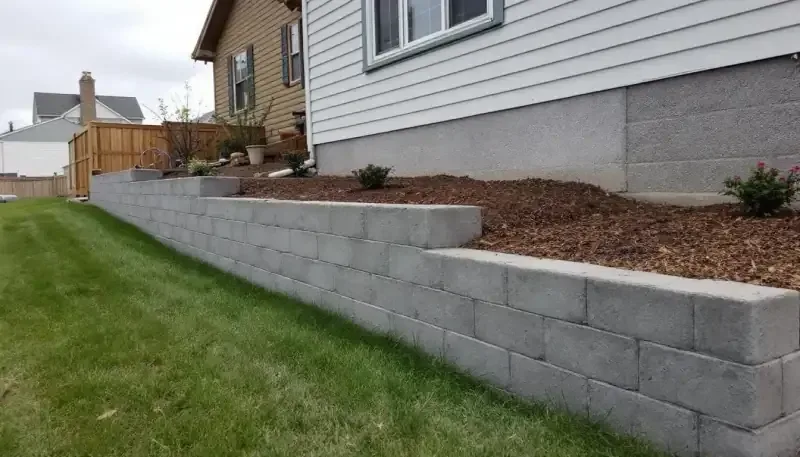
Retaining Walls in Grandview, MO
Grandview sits on some of the most stubborn clay in Jackson County. We build retaining walls that hold their ground — decade after decade — so your yard stops sliding and starts working for you.
What Does a Retaining Wall Actually Cost in Grandview?
Let's talk numbers first. A residential retaining wall in Grandview typically runs between $4,500 and $18,000 depending on height, length, material, and how much grading your lot demands. That range is wide on purpose — a two-foot decorative wall along your Meadowmere patio isn't the same project as a six-foot engineered wall holding back a Longview Heights hillside. We quote every job individually because your soil, slope, and drainage situation are yours alone.
Grandview's Jackson County clay is a major cost driver. This heavy, expansive soil shifts with moisture changes, meaning every wall we build here needs deeper footings and better drainage than walls in sandier regions. That translates to more labor, more gravel, and more drain tile behind the wall. Skipping those steps saves money upfront and costs you a failed wall in five years.
Material prices have climbed since 2021, and Grandview homeowners feel that. Concrete block, poured concrete, and natural stone all carry different price tags. Block walls typically come in lowest per linear foot. Poured concrete costs more but delivers unmatched strength for taller walls. We source most materials from suppliers within 30 miles, keeping freight costs reasonable for southern Jackson County projects.
Labor matters too. Our crew handles everything from excavation to final backfill, and we don't subcontract the critical steps. Since 2015, we've completed 377-plus projects across the Kansas City metro. Thirteen five-star Google reviews back up that track record. When you get a quote from us, you're seeing real costs — not a lowball number that balloons after demo day.
Why Grandview Properties Need Walls That Actually Perform
Grandview's terrain isn't flat. The southern metro slopes toward Longview Lake, and many residential lots — especially in Timber Lakes and Highgrove — carry noticeable grade changes from front yard to back. That slope funnels stormwater directly toward foundations, patios, and lower-lying neighboring yards. A properly engineered retaining wall redirects that pressure, turning a liability into usable outdoor space.
Much of Grandview's housing stock dates to the 1960s and 1970s, built during the Richards-Gebaur Air Force Base boom. Fifty-plus years of seasonal freeze-thaw cycles have taken a toll on original landscaping and grading. Soil has settled, original drainage paths have shifted, and erosion has carved new channels. Retaining walls restore structural order to these aging properties and prevent further degradation.
We also see Grandview homeowners using retaining walls to reclaim sloped yards for gardens, fire pit areas, and level play spaces. A terraced wall system can transform a steep, unusable backyard into two or three functional tiers. It's one of the highest-return improvements you can make on a Grandview home — practical, visible, and permanent.
Grandview-Specific Retaining Walls Considerations
Jackson County Clay and Hydrostatic Pressure
Grandview sits on heavy clay that holds water like a sponge. After spring rains, saturated clay behind a retaining wall generates enormous hydrostatic pressure. Every wall we build here includes a crushed stone drainage column and perforated drain tile to relieve that pressure before it pushes against the wall face. Without this system, even a well-built wall will bow and crack within a few seasons.
Aging Lot Grading from the 1960s-70s Housing Boom
Most Grandview subdivisions were graded decades ago during rapid development. That original grading has settled unevenly. Yards that once drained properly now pool water against foundations or shed runoff onto neighbors. Before we pour a single footing, we survey your lot's current grade and design the wall to correct — not just contain — the drainage problem. This prevents you from inheriting a new issue after construction.
Proximity to Neighboring Structures and Property Lines
Grandview lots tend to be modest in size, especially in Bel-Aire and Meadowmere. That means retaining walls often sit close to fences, sheds, or property lines. Setback requirements in Grandview typically call for walls to stay at least two feet from the property boundary, but specific rules vary by wall height. We handle the permit research and communicate with the city's building department so you don't have to guess.
Utility Lines Along Blue Ridge Blvd and Main Street Corridors
Homes near Blue Ridge Boulevard and Main Street often have underground utility easements running through their yards. Gas lines, sewer mains, and buried electric can all interfere with excavation for a retaining wall. We call Missouri One Call before every project and adjust our footing locations if needed. Hitting a gas line isn't just dangerous — it adds weeks of delay and thousands in repair costs.
How We Build Retaining Walls in Grandview's Jackson County Clay
Every project starts with a site visit where we measure the slope, probe the soil, and check drainage patterns. Jackson County clay behaves differently depending on moisture content — a yard that feels firm in July can turn into a swamp in April. We note where water collects, where the soil is most saturated, and where existing grading has failed. This information drives every decision that follows, from footing depth to drain tile placement.
Excavation in Grandview clay is slow, deliberate work. We use a compact excavator — usually a Kubota KX040 — to trench the footing line. In this soil, we dig a minimum of 24 inches below grade for walls under four feet and deeper for taller structures. The trench gets a six-inch compacted gravel base before we set the first course or form. Compaction matters enormously here. Loose gravel under a wall on expansive clay is a recipe for settlement and cracking.
Behind the wall, we install a full drainage system: filter fabric against the undisturbed soil, a 12-inch column of clean crushed limestone, and a four-inch perforated drain tile at the footing level. The drain tile runs to daylight or connects to a pop-up emitter downhill. This system is the single most important element of a Grandview retaining wall. Without it, clay soil traps water directly behind the wall face. Hydrostatic pressure builds. The wall fails. We've repaired dozens of walls across the metro that were built without proper drainage — and the repair always costs more than doing it right the first time.
Final backfill goes in six-inch lifts, each compacted with a plate tamper. We cap the wall, grade the surrounding soil to direct surface water away, and seed or sod any disturbed areas. The whole process typically takes three to seven days depending on wall length and height. We source our concrete block and stone from regional suppliers in the KC metro, keeping lead times short and material quality consistent.
Retaining Wall Challenges Across Grandview's Neighborhoods
Meadowmere and Bel-Aire feature compact lots from the 1960s and 1970s with relatively modest grade changes. The challenge here is working in tight spaces near fences, patios, and utility easements. Walls in these neighborhoods are typically two to four feet tall and serve double duty — holding soil and creating level space for small yards. Drainage is critical because original grading has settled over five decades, and many homes now sit lower relative to their neighbors than when they were built.
Longview Heights and Highgrove sit on steeper terrain closer to the Longview Lake corridor. These lots often have six to ten feet of grade change from street to backyard. Taller, engineered walls — sometimes terraced into two or three tiers — are common here. The clay is especially heavy in this area, and we frequently encounter perched water tables during excavation. Extra drainage provisions and deeper footings are standard for these projects.
Timber Lakes presents a unique mix. Newer construction on rolling terrain means some homes already have builder-grade retaining walls that are beginning to fail after 15-20 years. We see leaning block walls, cracked mortar joints, and clogged drainage systems regularly in this neighborhood. Replacement walls here need to address the original design failures — usually insufficient drainage and undersized footings — while working around established landscaping and mature trees.
How Much Does Retaining Walls Cost in Grandview?
| Type | Cost / Sq Ft Face | Typical 200 Sq Ft |
|---|---|---|
| Poured Concrete (Structural) | $20–35 | $4,000–$7,000 |
| Decorative Block / Segmental | $25–45 | $5,000–$9,000 |
| Short Wall (Under 3 ft) | $15–25 | $1,500–$3,000 |
Retaining wall pricing in Grandview reflects the extra excavation and drainage work that Jackson County clay demands. Expect to invest 10-15% more than you'd see quoted in areas with sandier, better-draining soil — that premium buys you a wall that won't fail when spring storms saturate the ground.
Retaining Walls FAQ for Grandview, MO
What height triggers a permit requirement for retaining walls in Grandview?
Grandview follows standard Jackson County guidelines. Walls exceeding four feet in exposed height — measured from the base of the footing to the top of the wall — generally require a building permit and engineered drawings. Some situations involving surcharges like driveways or structures near the top of the wall can trigger permit requirements at lower heights. We check with the Grandview building department before every project and handle the permit application for you.
Can a retaining wall help with the drainage issues common in Timber Lakes and Highgrove?
Absolutely. Both neighborhoods sit on sloped terrain that funnels water toward lower lots and foundations. A retaining wall with integrated drainage captures that runoff behind the wall and redirects it through drain tile to a controlled outlet. This protects your foundation, prevents yard erosion, and keeps water from flooding your patio or lower-level walkout. We design the drainage system specifically for your lot's slope and water volume.
How do freeze-thaw cycles in this area affect retaining walls?
Kansas City averages around 100 freeze-thaw cycles per year. Each cycle expands and contracts the soil behind your wall. Over time, this repetitive movement can push a poorly built wall forward. We counter this by using proper drainage to minimize water content in the backfill zone, setting footings below the frost line at 30-plus inches, and using reinforced construction methods for walls over three feet. These steps prevent frost heave from becoming a structural problem.
Do you build walls using poured concrete or only block?
We build both. Poured concrete retaining walls offer superior strength and are our recommendation for walls above five feet or walls supporting heavy loads like driveways. Segmental concrete block is excellent for shorter walls and terraced designs — it's versatile, attractive, and cost-effective. We also work with natural stone veneer over concrete cores for homeowners who want a more organic look. During your site visit, we'll recommend the right material for your specific slope, height, and budget.
My Bel-Aire yard is small — will construction damage my entire lawn?
We minimize disruption, but retaining wall construction does require excavation access. On smaller Bel-Aire lots, we use compact equipment that fits through standard fence gates and limits turf damage. We protect areas we don't need to work in with plywood mats over the grass. After construction, we regrade and reseed any disturbed areas. Most homeowners see full lawn recovery within six to eight weeks of project completion during the growing season.
What's the expected lifespan of a retaining wall built on Grandview clay?
A properly engineered and drained retaining wall in Grandview should last 50 years or more. Poured concrete walls with adequate steel reinforcement can exceed that easily. Block walls with good drainage and intact cap stones routinely last 40-plus years. The key variable is drainage — not the wall material itself. Walls that trap water behind them deteriorate far faster regardless of construction quality. Every wall we build includes a full drainage system designed for Jackson County's heavy clay and high rainfall events.
Other Concrete Services in Grandview, MO
Request a Callback From Our Grandview Crew
Drop your name, address, and a few details about your slope or drainage issue. We return calls within one business day and serve all Grandview neighborhoods from Meadowmere to Timber Lakes.