
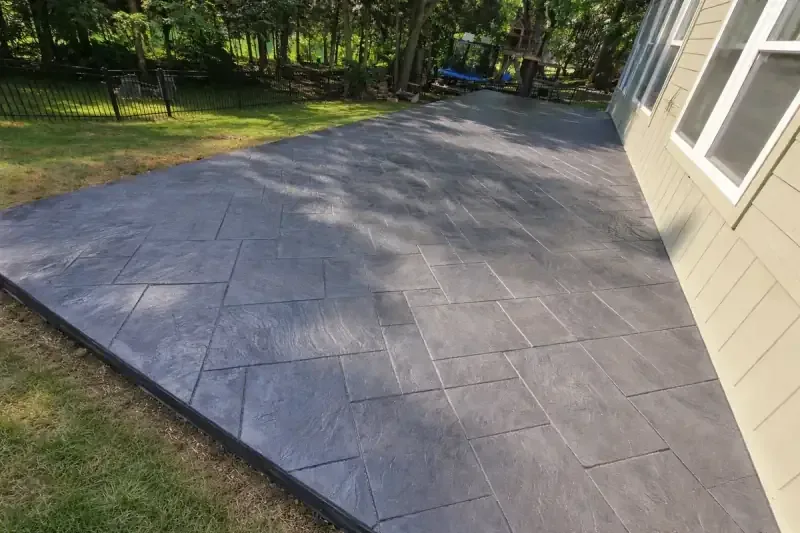
Stamped Concrete in Grandview, MO
Grandview homeowners deserve straight talk about stamped concrete pricing before the first stamp ever hits wet mud.
What Does Stamped Concrete Actually Cost in Grandview?
Let's skip the runaround. Most stamped concrete projects in Grandview run between $12 and $18 per square foot installed. A typical 400-square-foot patio lands in the $4,800 to $7,200 range. That price covers site prep, forms, reinforcement, the pour itself, stamping, coloring, and sealing. Pattern complexity and color layering push you toward the higher end. Simple ashlar slate in a single tone keeps you closer to the bottom.
Why does it cost what it costs here? Grandview sits on Jackson County clay that demands extra subgrade work. We're also competing for ready-mix trucks with the heavy industrial pours happening around the Port of Grandview and Blue Ridge Industrial corridor. Material delivery timing affects scheduling and labor hours. These aren't excuses — they're the real mechanics behind your quote.
Stamped Concrete That Fits Grandview's Character
Grandview is a working community with deep roots. Homes in Meadowmere and Bel-Aire were built during the Richards-Gebaur boom of the 1960s and 70s. Many of those original concrete patios and walkways have reached the end of their useful life. Stamped concrete replaces aging slabs with surfaces that look like natural stone, brick, or slate — without the price tag of individual pavers or the maintenance headaches of flagstone.
Pattern selection matters in this market. Homes along Blue Ridge Blvd and in Highgrove tend to pair well with random stone or European fan patterns in warm earth tones. Newer builds in Timber Lakes and Longview Heights often go with cleaner ashlar or herringbone layouts. We carry over 30 stamp patterns and can custom-tint integral color to match your siding, roof, or existing hardscape.
Stamped concrete isn't just decorative. A properly reinforced and sealed stamped slab handles Missouri's freeze-thaw cycles, resists UV fading, and lasts 25 years or more with basic resealing every two to three years. It's a functional upgrade with real curb appeal — something that matters in a community actively revitalizing its residential and retail identity.
Grandview-Specific Stamped Concrete Considerations
Jackson County Clay and What It Means for Your Slab
Grandview's heavy clay soils expand when wet and shrink when dry. This seasonal movement can crack poorly supported concrete. We address it by excavating 6 to 8 inches of native soil and replacing it with compacted Class 5 aggregate base. Fiber mesh reinforcement and strategic control joint placement handle the rest. This subgrade work adds a day to most projects but prevents the buckling and cracking that plagues older Grandview slabs.
Matching Grandview's Mid-Century and Ranch-Style Architecture
Most homes in neighborhoods like Meadowmere and Bel-Aire are single-story ranch or split-level designs from the 1960s and 70s. Stamped patterns need to complement those lower rooflines and brick exteriors. We typically recommend seamless textures or running bond brick patterns in warm sandstone or charcoal tones for these homes. Overly ornate patterns can clash with the straightforward architecture Grandview is known for.
Ready-Mix Truck Access on Grandview's Narrower Streets
Some Grandview neighborhoods have tighter lot lines and narrower streets than newer Lee's Summit or Raymore developments. A fully loaded concrete truck weighs around 40 tons. We scout every project site before scheduling the pour to confirm truck access, turning radius, and chute reach. In tight spots off Main St or in older Bel-Aire cul-de-sacs, we may use a concrete pump or wheelbarrow relay to get material where it needs to go without tearing up your yard.
What to Expect During Your Stamped Concrete Project
Day one starts with demolition and excavation if we're replacing an existing slab. Our crew arrives around 7:30 AM with a skid steer and dump trailer. Expect noise and vibration during demo — we'll let your neighbors know ahead of time. Old concrete gets hauled to a recycling facility off I-49. Once the site is cleared, we excavate to proper depth, compact the subgrade, and install aggregate base. This phase usually wraps in a single day for a standard patio.
The pour day is the main event. A ready-mix truck from a local batch plant will park in your driveway or along the street — wherever we identified best access during the site visit. Chute length typically reaches 12 to 15 feet. Our crew places the concrete, screeds it flat, and bull-floats the surface. Then the real craft starts: we broadcast color hardener, apply release agent, and press the stamp mats into the surface by hand. Timing is everything. We watch the concrete's set rate closely because Missouri humidity and temperature swing that window dramatically.
After stamping, we let the slab cure for 24 to 48 hours before washing off the release agent. This reveals the color contrast in the joints and texture. You'll want to keep foot traffic off the surface during this window. We return a few days later to apply a high-gloss or matte acrylic sealer — your choice. Jackson County doesn't typically require a permit for a residential patio replacement on your existing footprint, but if we're adding square footage or changing drainage patterns, we pull the permit and handle the inspection scheduling ourselves.
Most Grandview stamped concrete projects take four to six working days from first shovel to final seal. Weather delays happen — a rainy week in April can push things back. We build buffer days into every schedule so you're never left with an open excavation over a long weekend.
A Bel-Aire Backyard Gets a Fresh Start
A homeowner on the east side of Bel-Aire, about two blocks south of MO-150, called us about a crumbling 1970s-era concrete patio. The original 3.5-inch slab had no reinforcement and was poured directly on native clay. Fifty years of Missouri freeze-thaw cycles had split it into five major sections with nearly two inches of differential settlement. The surface was a tripping hazard and an eyesore.
We demoed the old slab and excavated eight inches of clay soil beneath it. After installing compacted limestone base and rebar on chairs, we poured a 5-inch slab totaling 480 square feet. The homeowner chose a random stone pattern with an autumn brown integral color and dark walnut release agent. We stamped the entire surface in a single continuous pour to avoid cold joints and color variation between loads.
The finished patio transformed the backyard into a usable entertaining space. The homeowner added a pergola and gas fire pit within a month. The color tones complement the original red brick exterior perfectly. Two rainy seasons later, the surface shows zero cracking and the sealer is still beading water. That's what proper subgrade work and reinforcement buy you in Grandview's clay.
How Much Does Stamped Concrete Cost in Grandview?
| Type | Cost / Sq Ft | Typical 300 Sq Ft |
|---|---|---|
| Basic Patterns (1 color) | $12–15 | $3,600–$4,500 |
| Premium Patterns (2 colors) | $15–18 | $4,500–$5,400 |
| Multi-Color / Custom | $16–20 | $4,800–$6,000 |
Grandview pricing reflects the extra subgrade prep Jackson County clay demands and the scheduling competition from heavy commercial pours in the Port of Grandview industrial zone. We provide fixed-price quotes — no surprise change orders after the truck shows up.
Stamped Concrete FAQ for Grandview, MO
What stamped concrete patterns are popular in Grandview's ranch-style neighborhoods?
Running bond brick and random stone are our most requested patterns in Meadowmere, Bel-Aire, and Highgrove. These complement the low-profile rooflines and brick facades common in Grandview's 1960s and 70s housing stock. Ashlar slate is another strong choice for homeowners who want a cleaner, more contemporary look. We bring physical stamp samples to your consultation so you can see the texture and scale against your home's exterior before committing.
Can I get stamped concrete on a sloped backyard?
Yes. Many Grandview lots — especially in Longview Heights and Timber Lakes — have noticeable grade changes toward the rear property line. We form and pour stepped pads connected by stamped risers, or we grade the slab with a controlled slope for drainage. Retaining walls or curb edges can define level changes. Slopes actually help with water management as long as we direct runoff away from your foundation. We assess the grade during the site visit and include any slope corrections in the quote.
How long before I can put patio furniture on stamped concrete?
Light foot traffic is safe after about 48 hours. We recommend waiting a full 7 days before placing heavy furniture, grills, or planters on the surface. Concrete reaches roughly 70 percent of its ultimate strength by day 7 and full cure at 28 days. Dragging metal furniture legs across a freshly sealed surface can scuff the sealer, so use felt pads or pick items up rather than sliding them.
Does stamped concrete raise my home value in Grandview?
Outdoor living improvements consistently rank among the best returns on investment for residential upgrades. A well-executed stamped patio or walkway improves curb appeal and functional square footage. In Grandview's market, where many homes still have original or aging concrete, a stamped patio stands out to buyers. We can't guarantee a specific dollar-for-dollar return, but real estate agents in the southern metro consistently tell us that finished outdoor spaces help homes sell faster.
What if it rains during my pour?
We monitor weather forecasts obsessively during project scheduling. A passing drizzle after the surface is stamped and colored usually causes no harm. Heavy rain on fresh concrete is a different story — it can wash out color hardener and ruin the stamp impressions. If a serious storm is incoming, we postpone the pour. Grandview's spring and early fall weather can be unpredictable, so we always build schedule flexibility into your project timeline. We'd rather delay one day than redo an entire slab.
Do you stamp driveways or just patios?
We stamp driveways, patios, walkways, pool surrounds, and front porches. Driveways require thicker slabs — typically 5 to 6 inches with rebar reinforcement — to handle vehicle weight. We also reinforce the apron where the driveway meets the street, which takes extra abuse from turning tires and snow plows. Several of our 377 completed projects include full stamped driveway replacements in Grandview and the surrounding Jackson County area.
How often do I need to reseal, and can I do it myself?
We recommend resealing every two to three years in the Kansas City metro. Missouri's UV exposure and freeze-thaw cycling break down acrylic sealers over time. You can reseal it yourself with a roller and commercial-grade acrylic sealer from a concrete supply house. The key is cleaning the surface thoroughly with a pressure washer first, letting it dry completely, and applying two thin coats rather than one thick coat. If you'd rather not handle it, we offer resealing as a maintenance service. It takes about two hours for a standard patio.
Other Concrete Services in Grandview, MO
Schedule Your On-Site Consultation in Grandview
During the visit, we measure your space, evaluate soil and drainage conditions, and show you physical stamp and color samples against your home's exterior. You'll walk away with a detailed written quote — typically within 48 hours.