
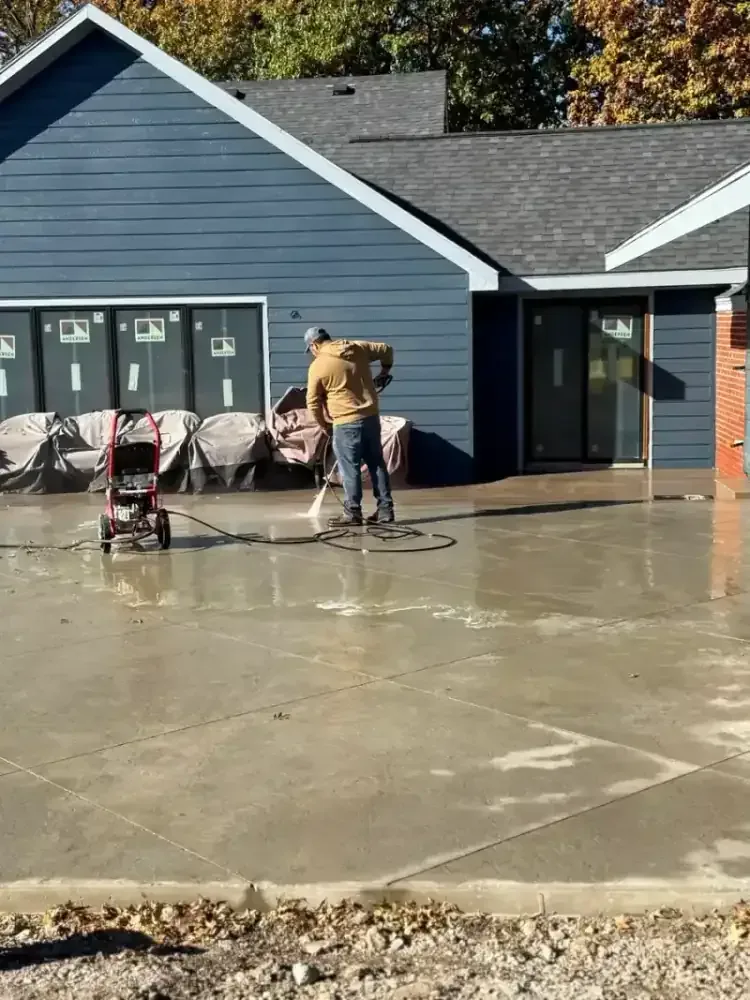
Concrete Patios in Independence, MO
Your backyard in Independence deserves more than a patch of grass and a folding chair. We pour concrete patios built for Jackson County weather and decades of weekend cookouts.
So What Does a Concrete Patio Actually Cost in Independence?
Let's skip the runaround. A standard 300-square-foot concrete patio in Independence typically runs between $2,700 and $5,400. That range depends on thickness, finish, and grade prep. Stamped or colored concrete pushes you toward the higher end. A basic broom-finish slab with clean edges lands closer to the bottom. We quote by the job, not by some mystery formula. Every backyard in Bingham Estates or Glendale has different soil and slope conditions that affect the final number.
Why does pricing vary so much here? Independence sits on heavy clay soil across most of eastern Jackson County. That clay expands and contracts with moisture changes. Proper subgrade preparation — compaction, gravel base, sometimes soil amendment — adds labor and material. Skipping that step saves a few hundred dollars upfront and costs you thousands in cracked slabs within five years. We won't cut that corner.
Material costs in the KC metro have climbed roughly 18 percent since 2021. Ready-mix concrete delivery from local batch plants along the I-70 corridor factors in fuel surcharges and minimum load fees. A smaller patio might still require a full truck, so square footage matters when you're budgeting. We help you right-size the pour to get the most value from every yard of concrete delivered.
Labor is the other big variable. Our crew handles everything from excavation to finish work. We're not subbing out pieces to random day laborers. Since 2015, we've completed 377-plus projects across the metro, and 13 five-star Google reviews back up what we deliver. You get a locked-in price before we break ground. No surprise change orders. No vague allowances.
Concrete Patio Options That Fit Independence Backyards
Most Independence homes were built between the 1950s and 1980s. That means established yards, mature trees, and grading that wasn't always done with future patios in mind. We work with what your lot gives us. Flat yards along the Santa Fe Trail neighborhood might need minimal prep. Sloped properties near Rock Creek often require a stepped design or retaining edge to manage runoff. We assess drainage patterns before drawing up your layout.
Finish options range from simple to stunning. Broom-finish concrete is the workhorse — slip-resistant, low-maintenance, and budget-friendly. Stamped concrete mimics flagstone, brick, or slate at a fraction of the cost. Exposed aggregate gives you texture and visual depth that works well alongside older homes near Independence Square. We can also integrate colored concrete or acid staining to match your home's exterior palette.
Size and shape matter more than most homeowners expect. A 12-by-20-foot rectangle handles a grill and a four-person table. Want a firepit area or room for a full outdoor dining setup? Plan for 400 to 500 square feet. We pour patios with built-in expansion joints, reinforced with fiber mesh or rebar depending on load expectations. Every slab we install is designed to last 25-plus years in Jackson County's freeze-thaw cycle.
Independence-Specific Concrete Patios Considerations
Clay Soil and Subgrade Prep Along Eastern Jackson County
Independence sits on expansive clay that swells when wet and shrinks when dry. This seasonal movement is the number one killer of residential concrete in this area. We excavate a minimum of six inches below slab depth and install a compacted gravel base. On properties near Susquehanna and the creek corridors south of US-24, we sometimes encounter pockets of poorly draining fill from older developments. Soil testing tells us exactly what we're working with before we pour a single yard of concrete. Proper prep here isn't optional — it's the difference between a 30-year patio and a 5-year headache.
Backyard Access and Equipment Logistics in Older Neighborhoods
Many Independence homes, especially in Glendale and neighborhoods near Noland Road, have narrow side yards, chain-link fences, and mature landscaping that complicate equipment access. Getting a concrete truck's chute or a pump line to your backyard requires planning. We coordinate access routes before the project starts, sometimes using wheelbarrow runs or line pumps for tight spots. Established trees with surface root systems also affect where we can excavate. We map all of this during the estimate visit so there are no surprises on pour day.
What Your Concrete Patio Timeline Looks Like
Day 1 — Excavation and Base Prep: Our crew arrives early, usually by 7:30 AM. We mark the layout with stakes and string, then excavate to the required depth. In most Independence backyards, this takes a full day. Soil gets hauled off-site. We compact the subgrade and spread a four-to-six-inch gravel base. Your backyard will be a construction zone today, so plan to keep kids and pets inside.
Day 2 — Forming and Reinforcement: We set the perimeter forms from pressure-treated lumber or steel stakes, checking grade with a laser level. Rebar or wire mesh goes in next, raised on chairs to sit in the middle of the slab. Expansion joints get placed against your foundation wall and any existing concrete. This day is quieter — mostly hand work and precision layout. You'll still have full access to your home.
Day 3 — The Pour: Concrete delivery arrives from a batch plant off I-70, typically mid-morning. The actual pour takes two to four hours depending on slab size. Finishing — screeding, floating, edging, and applying your chosen texture — takes the rest of the day. If you chose stamped concrete, our crew works the stamps into the surface while it's still plastic. This is the loudest and busiest day. We recommend parking cars away from the driveway to give the truck room.
Days 4-5 — Curing and Protection: We apply a curing compound immediately after finishing. The slab needs to stay moist and undisturbed. In Independence's summer heat, we sometimes wet-cure with soaker hoses. During cooler months, we use insulating blankets if overnight temps drop below 50 degrees. No foot traffic for 24 hours. No furniture for 48. Your yard starts returning to normal by day five.
Day 7 — Form Removal and Cleanup: We pull forms, backfill edges with topsoil, and haul away all debris. Light foot traffic is safe at this point. Full furniture and grill placement should wait until day 10. Heavy items like a stone firepit base should wait the full 28-day cure. We walk you through care instructions and leave you with a clean, finished patio ready to enjoy.
A Rock Creek Backyard That Finally Got Its Outdoor Space
A homeowner off South Crysler Avenue in the Rock Creek neighborhood called us about replacing a crumbling 15-by-12 brick paver patio. The pavers had shifted badly over the years — the clay underneath had heaved in two spots and settled in another. Furniture wobbled. Water pooled near the back door after every rain. The homeowner wanted something permanent that could handle a six-person dining table, a freestanding grill station, and space for their kids to ride tricycles.
We removed the old pavers and excavated eight inches of compromised clay. The soil was saturated from a downspout that had been dumping water right at the patio's edge for years. We rerouted the downspout extension, installed a four-inch compacted gravel base, and formed a 20-by-18-foot slab with a gentle slope toward the south side of the yard. The homeowner chose an ashlar slate stamped pattern with a sandstone color hardener and dark brown release agent.
The pour went down on a clear Tuesday morning in early October. Cure temps were ideal — mid-60s during the day, low 50s at night. Two weeks later, the homeowner sent us a photo of their family eating dinner outside on the new slab. No wobbling chairs. No puddles. Just flat, solid concrete that'll be there long after those kids outgrow the tricycles.
How Much Does Concrete Patios Cost in Independence?
| Type | Cost / Sq Ft | Typical 300 Sq Ft |
|---|---|---|
| Standard Gray (Broom Finish) | $8–12 | $2,400–$3,600 |
| Stained / Colored | $10–15 | $3,000–$4,500 |
| Exposed Aggregate | $10–16 | $3,000–$4,800 |
| Stamped / Decorative | $12–18 | $3,600–$5,400 |
Independence permit fees for residential patios in Jackson County typically run $50 to $100 depending on slab size. Clay soil prep in neighborhoods like Rock Creek and Susquehanna can add $300 to $600 to the base cost — but it's the most important money you'll spend on the project.
Concrete Patios FAQ for Independence, MO
What thickness should my patio be in Independence?
Four inches is standard for foot traffic and patio furniture. If you're planning a heavy stone firepit, built-in outdoor kitchen, or hot tub pad, we go to six inches with additional rebar reinforcement. Independence's clay soil adds stress to thinner slabs during freeze-thaw cycles, so we never pour less than four inches here. The slight added material cost pays for itself in longevity. We evaluate your planned use during the estimate and recommend accordingly.
When is the best time of year to pour a patio in the KC metro?
Late April through mid-October gives us the best conditions. Concrete needs ambient temperatures above 50 degrees for proper curing. Independence summers get hot, often above 95 degrees, which accelerates set times and requires careful moisture management. We adjust our pour schedule to avoid the hottest afternoon hours in July and August. Spring and fall are the sweet spots — moderate temps, manageable humidity, and predictable cure rates. Winter pours are possible with cold-weather techniques, but they add cost and risk.
How do you handle drainage so water doesn't pool against my foundation?
Every patio we pour slopes away from your house at a minimum grade of one-eighth inch per foot. In Independence, where clay soil drains poorly, we sometimes add a French drain or channel drain at the patio's low edge. Properties near the creek corridors south of US-24 need extra attention because natural drainage patterns shift seasonally. We evaluate your yard's grading during the estimate and design the slab pitch to move water where it belongs — away from your foundation and toward a safe discharge point.
Will a concrete patio increase my home's value?
In Independence's housing market, a well-built concrete patio typically returns 50 to 70 percent of its cost at resale. More importantly, it expands your usable living space and makes your listing more attractive. Homes near Independence Square and along the Santa Fe Trail corridor compete for buyers who want outdoor living areas. A clean, finished patio with a quality surface treatment photographs well and signals a maintained property. It's one of the more cost-effective exterior improvements you can make.
Do you pour patios in sections or all at once?
We pour the entire slab in a single session whenever possible. Monolithic pours create stronger, more uniform concrete with fewer cold joints. For very large patios — say 600-plus square feet — or L-shaped designs that wrap around a house, we may use planned control joints to manage cracking. We never do piecemeal pours across multiple days unless structural design demands it. One pour means one consistent batch of concrete, one uniform finish, and one clean result.
What maintenance does a concrete patio need after installation?
Minimal, which is the whole point. Sweep debris regularly and rinse with a garden hose a few times per season. Pressure wash once a year to prevent mildew buildup — Independence's humid summers encourage algae growth on shaded slabs. If you have stamped or colored concrete, we recommend resealing every two to three years to maintain the finish and protect against UV fading and salt damage. Avoid using deicing chemicals the first winter. After that, standard ice melt is fine. Concrete is low-maintenance, not no-maintenance.
Other Concrete Services in Independence, MO
Get Your Free Patio Estimate This Week
We'll come to your Independence home, assess your yard's soil and grading, and hand you a detailed written quote — usually within 48 hours of the visit. Most neighborhoods from Bingham Estates to Susquehanna are within our daily service routes.