
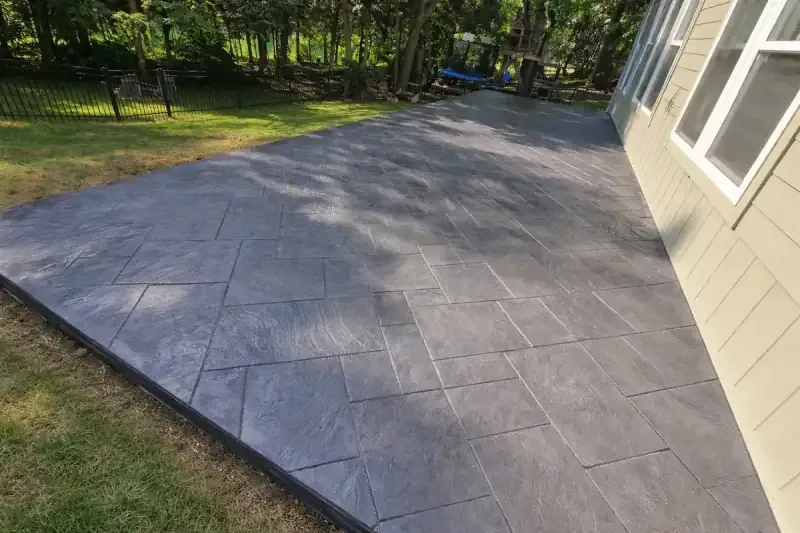
Stamped Concrete in Bonner Springs, KS
Bonner Springs homes deserve hardscape that matches the town's outsized personality. We pour stamped concrete that turns your patio, driveway, or walkway into something the neighbors slow down to admire.
What Does a Stamped Patio Look Like on a Quiet Street in Tiblow Mills?
Picture a Saturday morning on one of the tree-lined streets in Tiblow Mills. Kids are riding bikes past the cul-de-sac. A couple two doors down is grilling on a patio that looks like hand-laid flagstone — but it's stamped concrete we poured last spring. The warm Tuscan walnut color pulls from the brick on their 1990s ranch home. It looks like it's always been there. That's the goal every time we work in Bonner Springs: concrete that fits the house, the street, and the way you actually live.
Bonner Springs sits in a sweet spot between small-town quiet and big-event energy. You're five minutes from the Azura Amphitheater and the Renaissance Festival grounds, but your backyard still feels like a retreat. Stamped concrete gives you a surface that handles all of it — barefoot summer evenings, winter ice, patio furniture dragged across it for years. Since 2015, we've completed 377-plus projects across the KC metro. Dozens of those are right here in Wyandotte County.
A stamped patio or driveway in Bonner Springs isn't just cosmetic. It replaces aging plain gray slabs that crack and stain. It eliminates the weed-filled gaps between pavers. And it costs significantly less than natural stone. If you've been watching your Oak Hills or Sunningdale neighbors upgrade their outdoor spaces, stamped concrete is likely what you're seeing.
How Stamped Concrete Works in a River Town Built on Clay
Stamped concrete starts as a standard 4-inch reinforced slab — same structural mix we'd pour for any driveway or patio. The difference is what happens in the last 30 minutes of the pour. While the surface is still workable, we apply color hardener, release agent, and large-format texture mats that imprint patterns like ashlar slate, cobblestone, wood plank, or random flagstone. In Bonner Springs, where homes range from 1960s ranches in Alden to newer builds in Saratoga Park, we adjust pattern scale and color to match your home's architecture.
The Kansas River floodplain that Bonner Springs sits on means heavy clay soils with high moisture retention. That clay expands in wet springs and contracts in August heat. We address this with a compacted 4-inch aggregate subbase, fiber mesh reinforcement, and strategic control joint placement. These aren't decorative choices — they're engineering decisions that prevent the mid-slab cracking you see on older pours around town, especially near K-32 and the industrial corridor.
Color is where stamped concrete really separates from plain gray. We use integral color mixed through the entire slab depth, topped with a broadcast color hardener that adds richness and surface density. The result is a two-tone finish that mimics the natural variation of real stone. Popular choices in Bonner Springs lean toward warm earth tones — sandstone, desert tan, walnut — colors that complement the red brick and buff stone common on homes along Nall Avenue and through Sunningdale.
Bonner Springs-Specific Stamped Concrete Considerations
High Clay Content Below Bonner Springs Properties
The Wyandotte County clay beneath your yard is one of the most active soil types in the metro. It shifts seasonally and can heave poorly prepared slabs within two years. We excavate to stable ground, install crushed limestone base, and compact it to 95% density before any concrete is placed. This subbase prep adds half a day to the job but eliminates the buckling and corner cracking that plagues shortcuts. Every stamped project in Bonner Springs gets this treatment regardless of size.
Event Traffic and Street Vibration Near the Amphitheater
If your property is near K-7 or the roads leading to Azura Amphitheater, you deal with heavy vehicle traffic and ground vibration during concert season. Homes in Saratoga Park and along US-40 feel this more than most. We use rebar grid reinforcement on driveways in these areas rather than fiber mesh alone. The added steel keeps your stamped surface intact even when 18-wheelers and event buses shake the ground a quarter-mile away.
Matching Stamped Concrete to Bonner Springs Home Styles
Bonner Springs has a real mix — mid-century homes in Alden, split-levels in Oak Hills, and newer traditional builds in Tiblow Mills. A heavy European cobblestone pattern looks wrong on a 1970s ranch, just like a smooth slate pattern can feel sterile next to a rustic Craftsman. We bring physical stamp samples and color swatches to your property so you see the options against your actual siding, brick, and landscaping. Getting this match right is what makes stamped concrete look intentional, not applied.
From First Call to Finished Slab: Your Stamped Concrete Journey
It starts with a phone call or form submission. We ask basic questions — what surface you want stamped, approximate size, and your address in Bonner Springs. Within a few days, one of our contractors is at your property with a tape measure and a soil probe. We walk the area together. At a recent Sunningdale project, the homeowner wanted a patio off the back door but hadn't considered the 6-inch grade drop toward the fence line. We flagged it on the spot and designed a drainage solution that kept rainwater moving away from the foundation. That's the kind of detail a site visit catches.
After the visit, you receive a written estimate with pattern options, color recommendations based on your home's exterior, and a clear scope of work. No surprises. Once you approve, we schedule the pour — typically within two to three weeks. We coordinate with Bonner Springs utility locates and check whether your property falls in a floodplain zone that requires additional setback. For most residential patios and driveways, no city permit is needed, but we confirm that before any work starts.
Pour day moves fast. Our crew arrives early, sets forms, and places the subbase. Concrete trucks access your property from the nearest street — on tighter lots near Alden or Oak Hills, we use wheelbarrows and chutes to reach backyards without damaging landscaping. The pour, stamping, and initial color work happen in a single day. You'll see the pattern take shape in real time. We apply the texture mats in sequence, checking alignment at every joint so the finished surface reads as one continuous stone or slate field.
Two days later, we return to wash off the release agent, revealing the final color contrast. A week after that, we apply a high-gloss or matte acrylic sealer — your choice. The sealer locks in color and adds slip resistance. You can place furniture on the surface within 48 hours of sealing. Full vehicle traffic on a stamped driveway takes about seven days. The whole process, from first call to finished slab, runs three to four weeks for a typical Bonner Springs project.
How Much Does Stamped Concrete Cost in Bonner Springs?
| Type | Cost / Sq Ft | Typical 300 Sq Ft |
|---|---|---|
| Basic Patterns (1 color) | $12–15 | $3,600–$4,500 |
| Premium Patterns (2 colors) | $15–18 | $4,500–$5,400 |
| Multi-Color / Custom | $16–20 | $4,800–$6,000 |
Stamped concrete in Bonner Springs typically runs $12 to $18 per square foot installed, depending on pattern complexity and color layers. Properties with heavy clay requiring extra subbase work — common near the K-32 floodplain corridor — may add $1 to $2 per square foot for proper soil stabilization.
Stamped Concrete FAQ for Bonner Springs, KS
Does Bonner Springs require a permit for a residential stamped concrete patio?
Most backyard patios in Bonner Springs do not require a building permit. The city generally treats them as accessory improvements that don't alter the structure. However, if your project is within the floodplain near the Kansas River or if you're adding a covered structure above the patio, a permit or floodplain review may apply. We verify this with Wyandotte County before starting any project so there are no surprises after the concrete is poured.
How do you keep stamped concrete from cracking on Bonner Springs clay soil?
Clay soil is the number one threat to concrete longevity in Wyandotte County. We excavate the top layer of expansive clay, replace it with 4 inches of compacted crushed limestone, and reinforce the slab with fiber mesh or rebar depending on the application. Control joints are cut at intervals calculated for your slab dimensions. This approach distributes soil movement across the joints rather than letting it crack through the stamped surface. We've used this method on every Bonner Springs project since 2015 without a structural failure.
What stamp patterns work with the ranch-style homes in Alden and Oak Hills?
Ranch homes have clean horizontal lines, so busy patterns tend to fight the architecture. We recommend ashlar slate or random flagstone in earth tones — sandstone, canyon brown, or desert tan. These patterns have enough texture to look natural but enough regularity to complement a low-profile roofline. For driveways, a running bond brick pattern in charcoal or pewter gives a traditional look without competing with the home's facade. We bring physical samples to your property so you can see them against your brick or siding in natural light.
How often will I need to reseal a stamped patio in this part of Kansas?
In the Bonner Springs climate, we recommend resealing every two to three years. Kansas summers bring intense UV exposure that breaks down acrylic sealers, and winter freeze-thaw cycles stress the surface film. Resealing is a straightforward job — clean the surface, apply one thin coat of solvent-based acrylic sealer, and let it cure overnight. A typical 300-square-foot patio takes about an hour. Keeping up with this schedule prevents color fading and keeps the surface resistant to moisture penetration and salt damage.
Can stamped concrete be poured right up against my existing garage slab or house foundation?
Yes, but it requires an isolation joint between the new stamped slab and the existing structure. This flexible joint allows each slab to move independently — critical in Bonner Springs where clay soil causes seasonal heaving. We use a compressible foam strip and seal the top with a color-matched flexible caulk so the joint is nearly invisible. Without this detail, the new slab bonds to the old one and cracks form at the connection point within a year or two. It's a small detail that prevents expensive repairs.
Other Concrete Services in Bonner Springs, KS
Schedule Your Free Bonner Springs Property Assessment
We'll evaluate your soil conditions, drainage grade, access for concrete trucks, and how your home's exterior colors and style guide the best pattern and color match. Call today or fill out the form to get your Bonner Springs stamped concrete project started.