
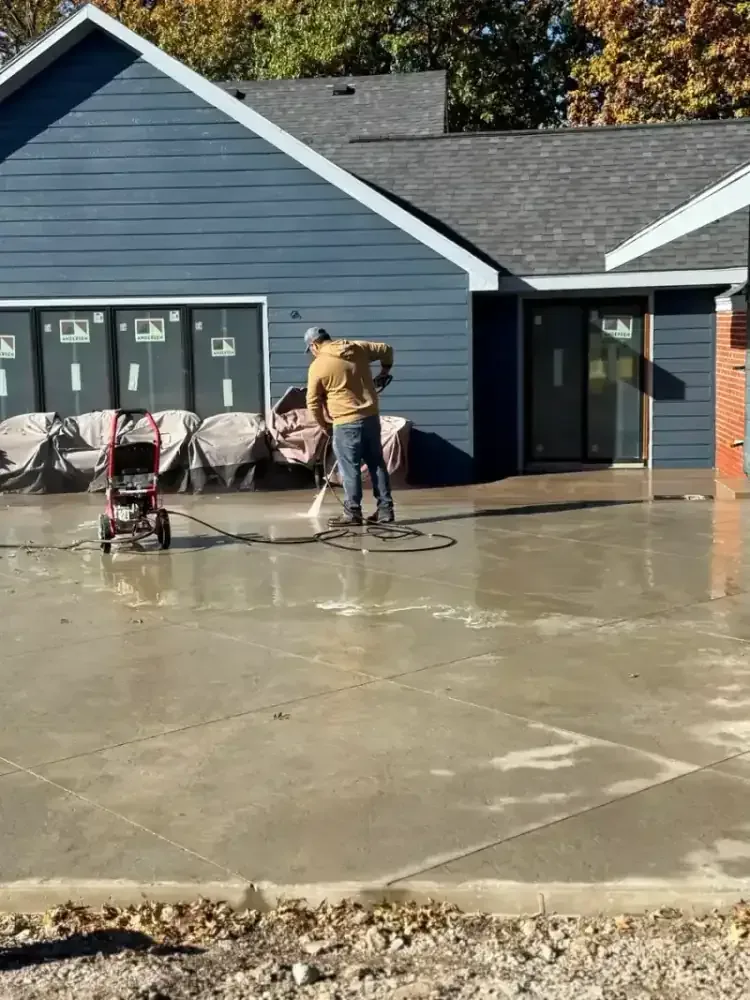
Concrete Patios in Bonner Springs, KS
Your backyard in Bonner Springs deserves more than cracked concrete and patchy grass. We pour patios built to handle Wyandotte County's clay soils, Kansas weather, and decades of summer cookouts.
That Sinking Feeling in Your Backyard? You're Not Imagining It.
You step out your back door in Oak Hills or Tiblow Mills and feel the old patio slab rock under your feet. One corner has sunk an inch. Cracks spider across the surface from last winter's freeze-thaw cycles. Rainwater pools against your foundation instead of draining away. You've tried patching it, but the problem is underneath — the same subbase failure plaguing infrastructure across Bonner Springs is happening right in your backyard.
A new concrete patio fixes all of that. Not a temporary patch. Not pavers that shift in Wyandotte County's expansive clay. A properly engineered slab with the right base prep, reinforcement, and drainage pitch. We've poured 377-plus projects since 2015, and we understand exactly what this soil demands. Your patio should be the place you relax — not the thing keeping you up at night.
What a Bonner Springs Patio Actually Needs to Last
Bonner Springs sits along the Kansas River floodplain, and much of the residential soil here is heavy alluvial clay mixed with silty loam. That combination expands when wet and contracts when dry, creating seasonal movement that destroys poorly built slabs. A patio poured on top of uncompacted fill or without adequate base rock will settle within two years. We design every slab for this specific ground condition.
Most of the homes in neighborhoods like Saratoga Park and Sunningdale were built between the 1960s and 1990s. Backyards in these areas often have decades of compacted topsoil, buried construction debris, and root systems from mature trees. We excavate past all of that. A patio here isn't just about the concrete on top — it's about what's underneath, and we treat every yard like it has something to prove.
Bonner Springs homeowners use their patios hard. Summer weekends bring friends and family over. The Azura Amphitheater draws crowds that spill into neighborhood gatherings. You need a surface that handles furniture, grills, foot traffic, and Kansas weather without crumbling. We pour residential patios at a minimum four inches thick with fiber mesh and welded wire reinforcement. Decorative options include broom finish, stamped patterns, exposed aggregate, and integral color.
Bonner Springs-Specific Concrete Patios Considerations
River-Bottom Clay and Seasonal Ground Movement
Bonner Springs sits on Wyandotte County's river-bottom soils — heavy clay that swells after spring rains and shrinks during August dry spells. This seasonal heaving is the number one reason older patios crack and settle. We excavate to stable subgrade, install four to six inches of compacted Class 5 limestone base, and use control joints spaced to manage movement. This approach accounts for the specific soil behavior along K-32 and south of I-70.
Drainage on Flat and Low-Lying Lots
Many Bonner Springs lots — especially in Alden and near the Kansas River corridor — sit low and drain poorly. Standing water against your foundation causes more damage than the patio itself ever could. We grade every slab at a minimum one-eighth inch per foot slope away from your home. Where needed, we integrate channel drains or french drain tie-ins to move water toward the street or designated drainage easement.
Backyard Access in Older Neighborhoods
Homes in Saratoga Park and along K-32 often have narrow side yards, chain-link fences, and established landscaping that complicate equipment access. We use compact skid steers and wheelbarrow crews where a full-size truck can't reach. For concrete delivery, we work with local batch plants to schedule smaller loads or use pump trucks when the pour site is more than 100 feet from the street. Tight access adds planning time, but it doesn't compromise quality.
Freeze-Thaw Durability for Year-Round Use
Bonner Springs averages around 30 freeze-thaw cycles per winter. Each cycle forces moisture into microscopic pores in the concrete, expanding as it freezes. We pour with air-entrained concrete at 4,000 PSI minimum — the entrained air bubbles give expanding ice somewhere to go without cracking the slab. We also recommend sealing your patio every two to three years to keep surface spalling at bay, especially if you use calcium chloride ice melt.
How We Build Concrete Patios in Bonner Springs
Every project starts with a site visit where we check your soil conditions, measure slope, and identify underground utilities. In Bonner Springs, we frequently encounter buried downspout lines, old septic components, and root systems from cottonwoods and silver maples common along the river corridor. We mark everything before we dig. Then we establish the finished grade using a laser level, setting the slab height and drainage pitch before any excavation begins.
We excavate eight to ten inches below finished grade, removing topsoil, organic material, and any unstable fill. In Wyandotte County's clay-heavy soil, we don't compact the native subgrade and hope for the best. We bring in four to six inches of Class 5 crushed limestone from quarries along K-7 and compact it in lifts using a vibratory plate compactor. Each lift gets verified for density. This base layer is what prevents settling — skip it, and your patio fails in three years.
Forms go in next, built from two-by-four or two-by-six lumber depending on slab thickness. We stake forms every four feet and check level continuously. Welded wire reinforcement sits on chairs two inches off the base, and we add fiber mesh to the concrete order for extra crack resistance. Control joints are saw-cut within 12 hours of the pour at intervals no greater than ten feet — these planned weak points control where cracks form so they stay hidden.
We order concrete from local batch plants that deliver air-entrained 4,000 PSI mix. Pour day is scheduled around weather — we won't pour if rain is likely within six hours or if temperatures will drop below 40 degrees overnight. Our crew places, screeds, and bull-floats the concrete, then applies your chosen finish while the surface is still workable. Stamped patterns get pressed in a specific sequence to maintain consistent depth and alignment. After finishing, we apply a curing compound and keep traffic off the slab for at least five days.
A Sunken Slab in Sunningdale Gets a Complete Redo
A homeowner near Sunningdale Drive called us about a 350-square-foot patio that had settled nearly two inches on one side. The original slab was poured in the early 1990s directly on topsoil with no base rock. Over 30 years of clay expansion and contraction, the slab had cracked into five separate pieces. Water pooled against the foundation wall after every rain. The homeowner had been sandbagging the back door during heavy storms.
We demolished and removed the old slab, then excavated 10 inches below grade. The native soil was dense gray clay — classic Wyandotte County river-bottom material. We installed six inches of compacted Class 5 limestone in two lifts, verified compaction, and formed a new 400-square-foot slab with a two-percent slope away from the house. We added a ribbon drain along the foundation side tied into the existing downspout system.
The finished patio got a stamped ashlar slate pattern with a sandstone integral color and charcoal release. The homeowner had the space to fit a six-person dining set and a freestanding fire pit with room to spare. No more pooling water. No more rocking slabs. Six months later, through a full Kansas winter, not a single crack outside the control joints.
How Much Does Concrete Patios Cost in Bonner Springs?
| Type | Cost / Sq Ft | Typical 300 Sq Ft |
|---|---|---|
| Standard Gray (Broom Finish) | $8–12 | $2,400–$3,600 |
| Stained / Colored | $10–15 | $3,000–$4,500 |
| Exposed Aggregate | $10–16 | $3,000–$4,800 |
| Stamped / Decorative | $12–18 | $3,600–$5,400 |
Patio pricing in Bonner Springs typically ranges from $8 to $15 per square foot for standard broom-finish slabs, with stamped and decorative options running higher. Tight backyard access in neighborhoods like Saratoga Park and Oak Hills can add to labor costs due to equipment limitations and manual material transport.
Concrete Patios FAQ for Bonner Springs, KS
Do I need a permit for a patio in Bonner Springs?
Bonner Springs generally does not require a building permit for a standard ground-level patio that doesn't attach to the home's structure. However, if your patio includes electrical for lighting, a built-in gas line for a fire feature, or sits within a floodplain setback zone near the Kansas River, you may need permits or inspections. We check with Bonner Springs city planning before every project and handle any required paperwork. If your property is in a flood-prone area south of K-32, there may be additional elevation requirements.
What decorative finish holds up best in this climate?
For Bonner Springs, we recommend stamped concrete with an integral color and a surface-applied release agent. This combination resists UV fading better than topical color products. Exposed aggregate is another strong choice — it hides minor surface wear and provides excellent traction in wet conditions. Smooth trowel finishes look great indoors but get slippery outdoors, especially near the Kansas River where morning dew and humidity are common through late spring and summer. We can show you samples at your site visit so you see how each finish looks in natural light.
How do you handle large tree roots near where I want my patio?
Mature cottonwoods and maples are everywhere in Bonner Springs, and their root systems spread wide. During excavation, we assess whether roots are structural or surface-level. Cutting a major root within the drip line of a large tree can destabilize or kill it. If roots are too dense, we'll adjust the patio layout, bridge over roots with a thickened slab edge, or recommend removing the tree first. We've worked around root systems in Tiblow Mills and Sunningdale dozens of times. Honest assessment upfront saves you from a cracked slab and a dead tree later.
Can I add a fire pit or seating wall to my patio later, or should it be done during the initial pour?
Building a fire pit or seating wall during the initial pour is almost always the better approach. We can thicken the slab beneath heavy features, install rebar dowels for wall connections, and run gas lines before the concrete sets. Adding these features later means cutting into a finished slab, which risks cracking and costs more in labor. If you're even considering a fire feature or wall, mention it during our site visit. We'll rough in the connections so you're ready — even if you don't build the feature for another year.
Other Concrete Services in Bonner Springs, KS
Request a Callback About Your Patio Project
Leave your info and we'll call you back within one business day. We serve all of Bonner Springs — from Tiblow Mills to Oak Hills and everywhere between K-7 and the river.