
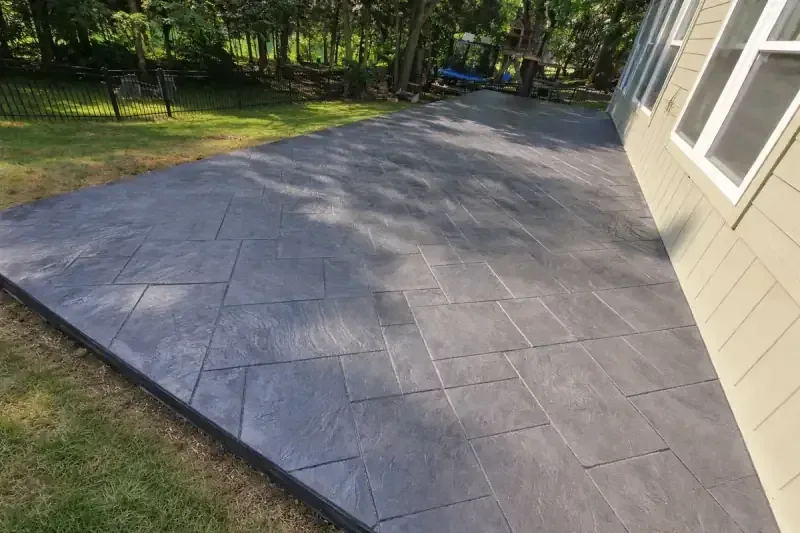
Stamped Concrete in Leavenworth, KS
Historic charm deserves concrete that matches. We pour stamped patios, driveways, and walkways that hold up to Leavenworth's Missouri River bluff winters and look right at home next to century-old brick.
Pavers or Stamped Concrete — Which One Actually Makes Sense in Leavenworth?
We hear this debate constantly from homeowners along North Broadway and Vilas Street. Pavers look great in magazines. But Leavenworth's freeze-thaw cycles, expansive clay soils, and mature tree roots shift individual pavers out of alignment within a few seasons. Then you're looking at uneven surfaces, weed growth between joints, and repair bills that keep climbing. Stamped concrete gives you the same natural stone or brick appearance on a single monolithic slab that resists shifting.
The cost comparison seals it for most Leavenworth homeowners. Pavers typically run $18 to $28 per square foot installed. Stamped concrete lands between $12 and $20 per square foot for most residential projects here. You get the decorative look without the maintenance headaches. And because our crew pours one continuous surface, water drains predictably instead of pooling between loose joints.
Stamped concrete also fits Leavenworth's architectural character. Many homes near the Historic Downtown District and Shrine Park feature older brick and limestone facades. We color-match and texture-match stamps to complement those materials. Ashlar slate, herringbone brick, and cobblestone patterns are popular choices that echo the city's 1850s-era streetscape without looking forced or out of place.
Since 2015, we've completed 377 projects across the Kansas City metro, including driveways, patios, pool decks, and front walkways throughout Leavenworth County. Our 13 five-star Google reviews reflect the consistency homeowners expect. If you've been weighing pavers against stamped concrete, the numbers and the climate both point in the same direction.
How Stamped Concrete Works in the First City of Kansas
Stamped concrete starts with a standard 4-inch reinforced slab — the same structural foundation as any high-quality flatwork. Before the concrete sets, our crew applies color hardener for UV-stable pigment that penetrates the surface. Then we press large rubber mats into the wet concrete to create texture patterns that mimic natural stone, brick, slate, or wood planking. Release agent prevents the stamps from sticking and adds subtle color variation for a realistic finish.
In Leavenworth, we typically reinforce stamped slabs with fiber mesh and rebar on 18-inch centers. The clay-heavy soils along Metropolitan Ave and the bluffs near Leavenworth Landing Park expand and contract seasonally. Proper reinforcement and control joint placement prevent random cracking. We also grade every pour with a minimum 1/8-inch per foot slope to move rainwater away from your foundation — critical on the tighter lots common in Muncie and Limit Street neighborhoods.
After curing for 28 days, we apply a high-gloss or matte acrylic sealer that protects against moisture penetration, road salt tracking, and UV fading. Resealing every two to three years keeps the surface looking fresh. Most stamped patios and driveways in this climate last 25 to 30 years with basic maintenance — far longer than pavers that settle, separate, and need releveling.
Leavenworth-Specific Stamped Concrete Considerations
Historic Home Compatibility Near Fort Leavenworth
Many homes within a mile of Fort Leavenworth date to the early 1900s. Original walkways show spalling and cracking from decades of salt exposure and settling. Replacing those surfaces with stamped concrete lets you preserve a historic aesthetic while gaining modern durability. We regularly match old brick tones and limestone textures so the new pour blends with existing masonry. Leavenworth's historic district guidelines don't restrict residential patio materials, but we'll confirm setback requirements with city planning before breaking ground.
Clay Soil Movement Along the River Bluffs
Leavenworth sits on Missouri River bluff geology — heavy clay with seasonal moisture swings. Soil near Eisenhower Rd and the southern neighborhoods can shift two inches or more between wet spring and dry August. We compact and prep the subgrade with four to six inches of Class V limestone base before pouring. This creates a stable platform that absorbs soil movement without telegraphing cracks through your stamped surface. Every slab gets strategic control joints placed to follow stamp pattern lines so they stay nearly invisible.
Freeze-Thaw Cycles and Salt Exposure
Leavenworth County averages 25 to 30 freeze-thaw cycles per winter. Each cycle forces moisture into concrete pores, expands, and chips the surface — a process called spalling. We combat this with air-entrained concrete mixes rated for 4,500 PSI minimum. The acrylic sealer adds another moisture barrier. We also recommend calcium magnesium acetate over rock salt for de-icing your stamped driveway. It's gentler on decorative surfaces and available at most hardware stores along the 4th Street corridor.
What to Expect During Your Stamped Concrete Project
After your site consultation, we handle the Leavenworth building permit if your project requires one. Most backyard patios under 200 square feet don't trigger a permit, but driveways and larger slabs near property lines usually do. The city's Community Development office on South 4th Street processes residential permits in about five to seven business days. We submit the application and schedule the Leavenworth County footing inspection so you don't have to manage paperwork.
On pour day, a concrete truck will park as close to the work area as possible — usually in your driveway or along the street. On narrower streets in North Broadway or Vilas Street, we coordinate with neighbors if the truck blocks access temporarily. Expect the delivery truck to idle for 30 to 45 minutes. The pump hose or wheelbarrows carry concrete to the forms. You'll hear the vibration of a screed leveling the surface, then watch our crew apply color hardener by hand-broadcasting it across the wet slab. The stamping process is quiet — just the rhythmic pressing of texture mats.
We'll ask you to keep kids, pets, and foot traffic away from the pour area for 48 hours minimum. Plastic sheeting and caution tape mark the perimeter. If rain threatens during the first 24 hours, we cover the slab with poly sheeting to protect the fresh texture. Leavenworth's spring storms in April and May can be unpredictable, so we monitor hourly forecasts on pour day and will reschedule if conditions look risky. Nobody benefits from a compromised slab.
Final sealing happens after 28 days of curing. We'll return, clean the surface with a low-pressure wash, and apply two coats of acrylic sealer. You can walk on it the same day and park vehicles on it within 72 hours. The entire project — from permit to sealed finish — typically takes three to five weeks depending on weather and city scheduling.
A Crumbling Walkway Gets a Second Life on North Broadway
A homeowner on North Broadway had a 40-year-old front walkway that connected the sidewalk to a covered porch. The original broom-finished concrete had spalled badly — chunks of surface missing, rebar exposed in two spots, and an uneven section near the porch steps that pooled water after every rain. The home itself was a well-maintained 1920s Colonial Revival, and the deteriorating walkway clashed with the rest of the property.
We removed the old walkway and dug down eight inches to establish a compacted limestone base over the clay subgrade. The new pour featured an ashlar slate stamp pattern in a charcoal base with a light gray release agent — chosen to complement the home's dark shutters and limestone foundation. We curved the walkway slightly to add visual interest and graded it to drain toward the yard instead of pooling at the porch landing.
The finished walkway transformed the home's curb appeal. Neighbors stopped to ask about it during the curing period. The homeowner told us it was the first improvement in years that made the house feel like it matched the historic character of the street. Total project: 185 square feet, completed in two days of active work, with final sealing four weeks later.
How Much Does Stamped Concrete Cost in Leavenworth?
| Type | Cost / Sq Ft | Typical 300 Sq Ft |
|---|---|---|
| Basic Patterns (1 color) | $12–15 | $3,600–$4,500 |
| Premium Patterns (2 colors) | $15–18 | $4,500–$5,400 |
| Multi-Color / Custom | $16–20 | $4,800–$6,000 |
Most stamped concrete projects in Leavenworth run $12 to $20 per square foot, depending on pattern complexity and color options. Homes on the bluff-side neighborhoods may cost slightly more due to difficult truck access and additional subgrade prep for the clay-heavy soil.
Stamped Concrete FAQ for Leavenworth, KS
What stamp patterns work with Leavenworth's older Victorian and Craftsman homes?
Ashlar slate and European fan patterns complement the stone and brick detailing common on homes near the Historic Downtown District and Shrine Park. For Craftsman-style homes along Limit Street, we often recommend random stone or flagstone patterns in warm earth tones — walnut, sandstone, or terra cotta. These textures echo the handcrafted look without competing with existing architectural details. We bring physical stamp samples to your site visit so you can see them against your home's exterior before committing.
How do Leavenworth County inspections affect my project timeline?
If your project requires a permit, the city typically schedules a footing or subgrade inspection before we pour. Leavenworth's Community Development office usually sends an inspector within two business days of our request. The inspection itself takes about 15 minutes. Once we get approval, we schedule the pour for the next available weather window. The inspection step adds roughly three to five days to the overall timeline but rarely causes significant delays.
Can I add a stamped border to a plain concrete patio I already have?
Yes, but with conditions. We can pour a stamped border or extension adjacent to your existing slab. The new section bonds to the old through doweled rebar connections drilled into the existing edge. The color won't perfectly match aged concrete, so we typically recommend a decorative band or contrasting border pattern that makes the transition look intentional rather than patched. This approach works especially well for expanding smaller builder-grade patios common in Leavenworth's 1990s subdivisions.
Will tree roots from my mature oaks damage a stamped patio?
Mature trees are everywhere in Leavenworth — especially along North Broadway and the older neighborhoods near Muncie. Roots can lift and crack concrete if the slab sits too close to a large trunk. We assess root proximity during the site visit and recommend a minimum five-foot clearance from major root zones. In tighter situations, we install a root barrier membrane along the slab edge. Proper subgrade compaction and reinforcement also help the slab resist upward pressure from smaller feeder roots over time.
Do I need to reseal, and how often?
Plan to reseal every two to three years. The acrylic sealer protects against moisture penetration, UV fading, and surface wear. High-traffic areas like driveway aprons may need attention sooner. Resealing costs roughly $1.50 to $2.50 per square foot — significantly less than the original pour. We offer maintenance resealing for existing customers and can set up a reminder schedule so the surface never goes unprotected through a Leavenworth winter.
How does stamped concrete hold up around a hot tub or fire pit?
Stamped concrete handles the weight of hot tubs and fire features without issue when poured at the right thickness. We increase slab depth to five or six inches under heavy point loads and add extra rebar reinforcement. For fire pits, we recommend a non-combustible pad or ring insert to prevent direct flame contact with the sealer. The concrete itself is fireproof, but sustained heat can discolor the sealer finish. Proper planning during the design phase eliminates these issues entirely.
Other Concrete Services in Leavenworth, KS
Schedule Your On-Site Consultation in Leavenworth
We'll walk your property, assess soil and drainage conditions, and show you stamp and color samples against your home's exterior. Most Leavenworth consultations take about 30 minutes — you'll leave with a clear scope and written estimate.