
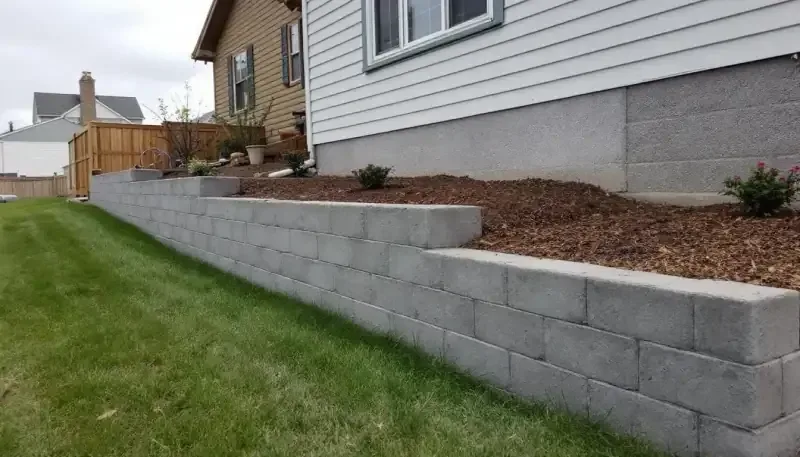
Retaining Walls in Harrisonville, MO
Harrisonville yards sit on some of the most stubborn clay in Cass County. We build retaining walls that hold grade, manage water, and outlast the soil that fights back.
Ever Walk Through Creekstone Estates After a Hard Rain?
If you live in Creekstone Estates, you already know the scene. A two-inch downpour rolls through, and within an hour the yards along the lower lots are holding water like shallow ponds. Mulch migrates downhill. Grass thins where the slope steepens. The grading that looked fine on move-in day is slowly losing the battle against Cass County clay. These aren't cosmetic problems — they're signs your property needs structural help.
Retaining walls solve exactly this kind of issue for Harrisonville homeowners. They hold soil in place, redirect stormwater away from foundations, and reclaim usable yard space from awkward slopes. From the gentle grades in North Woods to the steeper drops near Southview, nearly every neighborhood in town has lots that would benefit from a properly engineered wall.
We've completed 377-plus concrete projects since 2015, and a growing share of that work happens right here in southern Cass County. Harrisonville's mix of original lots near the Historic Square and newer subdivisions like The Vineyards gives us a wide range of slope conditions to work with. That experience shows up in walls that perform for decades, not just seasons.
What a Retaining Wall Actually Does for Your Harrisonville Property
A retaining wall is a structural barrier designed to hold soil at two different elevations. In Harrisonville, that usually means managing a slope between your yard and a neighbor's, protecting a patio or walkout basement from creeping grade changes, or creating a level terrace on a hillside lot. The wall bears the lateral pressure of the soil behind it — thousands of pounds per linear foot on taller walls — so material choice and footing design matter enormously.
Most residential walls in Harrisonville fall between two and five feet tall. Below four feet, a well-built gravity wall using interlocking block or poured concrete can handle the load. Above four feet, we typically move to a reinforced design with geogrid tiebacks anchored into compacted fill. The Cass County clay adds extra lateral pressure when saturated, so our designs account for worst-case hydrostatic loads even on shorter walls.
Beyond the engineering, a retaining wall reshapes how you use your property. Homeowners along MO-7 and in Original Town often gain 200 to 400 square feet of flat, usable yard by terracing a slope. That's space for a patio, garden beds, or simply a safer grade for kids to play on. The wall pays for itself in function long before you factor in the bump to your home's resale value.
Harrisonville-Specific Retaining Walls Considerations
Cass County Clay Expansion and Footing Depth
Harrisonville sits on high-plasticity clay that swells significantly when wet and shrinks during dry spells. This seasonal movement can shift shallow footings and crack under-engineered walls within a few years. We pour footings to a minimum of 30 inches — below the frost line and into more stable subgrade — and use crushed limestone base material sourced from quarries along the I-49 corridor. That foundation resists both frost heave and clay expansion.
Stormwater Drainage on Graded Subdivision Lots
Newer subdivisions like Creekstone Estates and The Vineyards were built on graded fill, and many lots channel runoff toward rear property lines. A retaining wall without proper drainage will trap water behind it, multiplying hydrostatic pressure until something fails. Every wall we build includes a perforated drain tile wrapped in filter fabric, bedded in clean gravel, and daylit to a safe discharge point downhill. We design the drainage system before we design the wall.
Permit Requirements Inside Harrisonville City Limits
Harrisonville requires a building permit for retaining walls over four feet tall measured from the bottom of the footing to the top of the wall. Walls near property lines or within drainage easements may trigger additional review. We handle the permit application, provide engineered drawings when required, and schedule the city inspection at the footing stage. You don't have to make a single trip to City Hall.
Proximity to Mature Trees and Existing Utilities
Original Town lots near the Historic Square often have large oaks and maples with root systems that extend 30 feet or more. Cutting through major roots weakens the tree and can create voids behind the wall. We work with a locator service to map underground utilities and adjust wall alignment to avoid root zones wherever possible. On tight lots along South Street or Commercial Street, this kind of planning prevents expensive surprises.
How We Build Retaining Walls in Harrisonville
Every project starts with a site visit where we shoot grades with a laser level and probe the soil. Cass County clay varies a lot even within the same subdivision — we've seen plasticity index readings differ by 30 percent between front and back yards in North Woods. That data determines our footing width, depth, and whether we need geogrid reinforcement. We also walk the natural drainage paths on your lot so we can plan where the wall's drain tile will discharge without creating problems for you or your neighbor.
We excavate the footing trench using a compact excavator — usually a CAT 303.5 or similar — which fits through standard fence gates and minimizes lawn damage. The trench gets over-dug by six inches on each side and filled with compacted MoDOT-spec crushed limestone. We pour the footing with 4,000-PSI concrete reinforced with number-four rebar on 16-inch centers. In Harrisonville's clay, we won't pour footings if the trench bottom is saturated. We'd rather wait a day than set a wall on mud.
Wall construction depends on the design. For block walls, we lay each course with construction adhesive and embed geogrid tiebacks at every other course on walls over three feet. For poured concrete walls, we set steel-framed forms, place rebar cages, and pour in a single lift to avoid cold joints. Behind every wall, regardless of type, we install four-inch perforated PVC drain tile bedded in washed gravel and wrapped in non-woven geotextile. That gravel layer extends 12 inches behind the wall face, top to bottom.
After the wall is built, we backfill in eight-inch lifts using clean fill compacted with a plate tamper. We finish the top of the wall with a capstone or broom-finished concrete cap, depending on the design. Final grading blends the wall into your existing yard so it looks like it was always part of the property. Most residential walls in Harrisonville take five to eight working days from excavation to final cleanup.
How Much Does Retaining Walls Cost in Harrisonville?
| Type | Cost / Sq Ft Face | Typical 200 Sq Ft |
|---|---|---|
| Poured Concrete (Structural) | $20–35 | $4,000–$7,000 |
| Decorative Block / Segmental | $25–45 | $5,000–$9,000 |
| Short Wall (Under 3 ft) | $15–25 | $1,500–$3,000 |
Retaining wall costs in Harrisonville typically run $45 to $85 per square foot of wall face, depending on height and material. Local material hauling from quarries along I-49 keeps aggregate costs lower here than in parts of northern Kansas City.
Retaining Walls FAQ for Harrisonville, MO
What retaining wall material do you recommend for Harrisonville's clay and weather?
For most Harrisonville residential projects, we recommend either poured concrete or engineered concrete block. Poured walls offer maximum strength and a clean modern look. Block walls give you more design flexibility with curves and terraces. Both materials handle Cass County's freeze-thaw cycles and clay pressure well when paired with proper drainage and footings below 30 inches. We avoid timber walls entirely — they deteriorate too quickly in this soil and moisture environment to justify the lower upfront cost.
My Vineyards lot has a slope between my deck and the back fence — how do you access the work area?
We use compact excavators that fit through 36-inch fence gates, so we rarely need to remove fencing. On Vineyards lots, we typically access from the side yard and work along the slope line. We lay plywood track mats to protect your lawn from tire damage. If your deck is close to the planned wall line, we build outward from the deck footing and tie the wall's drainage system into the existing downslope grade. Most homeowners are surprised how little disruption there actually is.
Can I add a fence or railing on top of the retaining wall?
Yes. We embed galvanized post sleeves into the wall cap or footing during construction so fence posts anchor directly into the structure. This is far stronger than surface-mounting posts after the fact. If you're planning a fence, let us know before we pour so we can place the sleeves at the correct spacing. Harrisonville code may require a guardrail on walls over 30 inches in certain situations, so we factor that into the design from the start.
How do you prevent the wall from leaning over time on expansive clay?
Three things prevent lean: deep footings, proper drainage, and engineered backfill. Our footings sit at least 30 inches deep on undisturbed clay, below the active zone where seasonal moisture causes the most swelling. The gravel drainage layer behind the wall eliminates hydrostatic pressure that would otherwise push the wall forward. And we compact backfill in controlled lifts rather than dumping and hoping. On walls over four feet, geogrid tiebacks anchor the structure into the retained soil mass. This combination has kept every wall we've built in Cass County plumb through multiple wet-dry cycles.
Other Concrete Services in Harrisonville, MO
Request a Callback About Your Retaining Wall
Leave your number and a few details about your slope or drainage issue. We return calls within one business day and serve all of Harrisonville — from Original Town to The Vineyards and every neighborhood in between.