
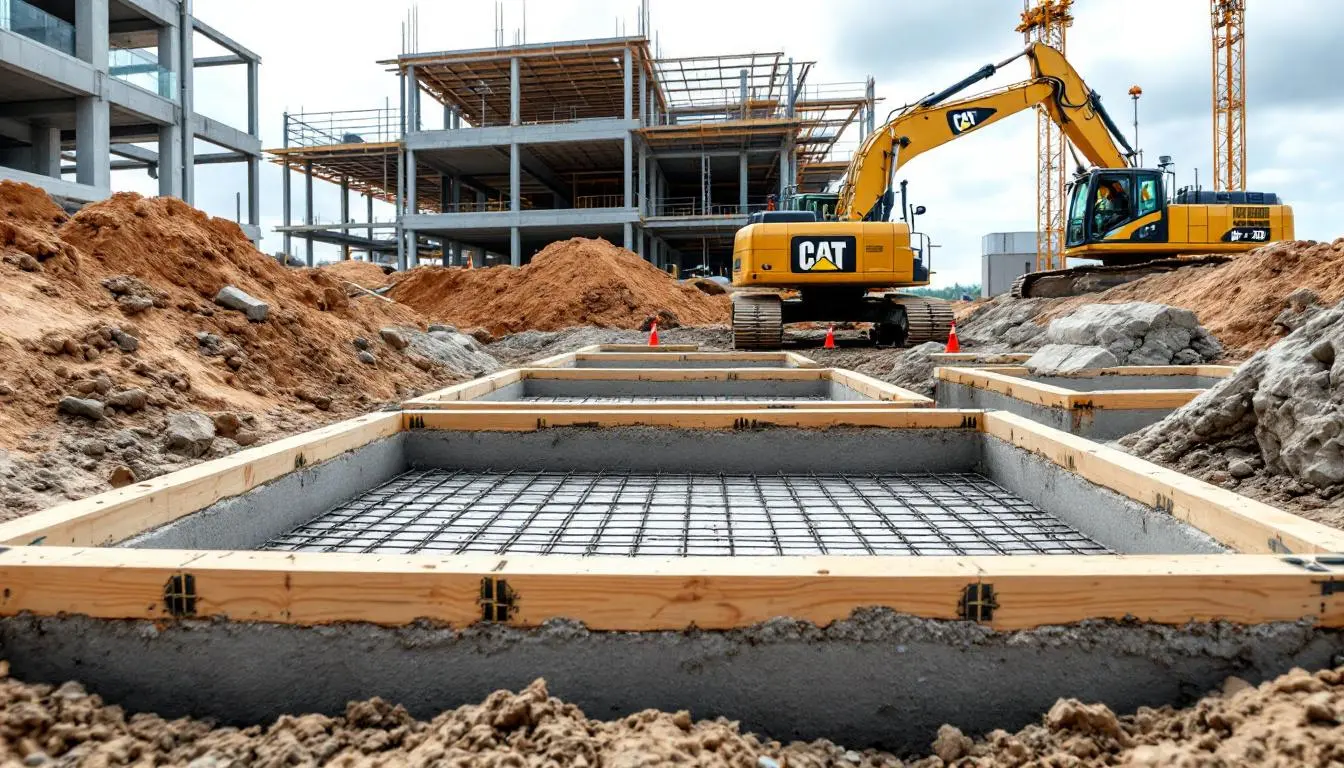
Spread Footing Contractors in Kansas City
Individually engineered column footings sized for KC's challenging clay soils — from geotech analysis through concrete placement under one contract.
What Makes Spread Footings Different From Residential Footings?
Column Loads, Bearing Pressure, and the Engineering That Separates Commercial From Residential
A residential footing supports a wood-frame wall that distributes load along its full length at 40 to 80 pounds per square foot. A commercial spread footing supports a single steel or precast column that concentrates 100,000 to 500,000 pounds onto one discrete point. The footing must spread that concentrated load across enough soil area to stay within the allowable bearing pressure determined by the geotechnical investigation. The sizing math is straightforward: divide the column load by the allowable bearing pressure to get the required footing area. On granular soils with 4,000 to 6,000 psf bearing capacity, a 200,000-pound column load requires a footing of roughly 33 to 50 square feet. On Wymore CH clay at 1,500 to 3,000 psf, that same column load requires 67 to 133 square feet of footing area. The footing dimensions on KC clay are 30 to 50 percent larger than identical structures built on granular soils in other regions.
Why KC Clay Changes the Calculation for Every Spread Footing
The Wymore series clay that dominates Jackson, Johnson, and Clay counties is classified CH (fat clay) with 60 to 80 percent clay content and a "very high" shrink-swell rating per the USDA-NRCS soil survey. Seasonal moisture swings of 15 to 25 percent cause the clay beneath spread footings to expand when saturated and contract when dry, generating uplift and settlement forces that crack undersized footings and shift column alignments. A footing that would be 4 feet square on sand often needs to be 5.5 to 6 feet square on Wymore clay. When individual spread footings grow beyond 8 feet square, the structural engineer evaluates whether a mat foundation becomes more economical than individual pads. Every commercial spread footing project in the Kansas City metro starts with a geotechnical report that classifies the soil, measures bearing capacity, identifies groundwater conditions, and recommends foundation types and depths. The structural engineer then designs each footing to transfer the specific column load safely into that soil profile. Kansas City Concrete Contractors executes that design in the field with the precision that KC soils demand.
Why Do Spread Footings Fail in Kansas City?
Spread footings are the most common commercial foundation type in the Kansas City metro — and they are also the most vulnerable to KC's expansive clay soils when designed or installed without proper site-specific engineering. The problem compounds when contractors skip geotechnical testing or pour footings directly on native clay without over-excavation and structural fill replacement. A footing that appears solid during dry summer months settles unevenly when fall rains saturate the clay beneath it. By the time the steel goes up, differential settlement has already begun — and the structural engineer is writing an expensive remediation report instead of signing off on the project.
Kansas City Concrete Contractors eliminates this risk by controlling the entire sequence from over-excavation through concrete placement. We size every spread footing from site-specific geotech data, replace unsuitable native clay with compacted structural fill verified by nuclear density gauge, and pour 4,000 to 5,000 psi air-entrained concrete that meets both the structural design and KC's freeze-thaw demands.
Have Structural Drawings? We’ll Bid Your Spread Footings.
Send your plans and geotech report. Detailed line-item bid returned within 5 business days.
What Does the Geotech Report Tell Us About Your Spread Footing Design?
Every commercial spread footing project in the Kansas City metro begins with the geotechnical report. The geotech engineer drills boring logs at column locations, runs laboratory tests — Atterberg limits, sieve analysis, unconfined compression, consolidation — and produces a report recommending allowable bearing pressures and foundation types for the specific site. On Wymore CH clay, the geotech report typically shows liquid limits above 50, plasticity indices above 30, and allowable bearing pressures of 1,500 to 3,000 pounds per square foot depending on moisture content and depth. These numbers directly determine how large each spread footing must be. A column load of 200,000 pounds on clay bearing at 2,000 psf requires a footing area of 100 square feet — roughly a 10-foot-square pad.
The geotech report also specifies the over-excavation depth and structural fill requirements. On most KC clay sites, the report calls for removal of 24 to 48 inches of native soil below the footing elevation and replacement with compacted crushed limestone or approved granular fill. The fill placement specification — 8-inch lifts compacted to 95 percent modified proctor per ASTM D1557 — transforms unpredictable Wymore clay into a stable, engineered bearing surface. Without the geotech data driving the design, footing sizing is guesswork, and guesswork on KC clay produces foundations that settle, crack, and cost six to seven figures to remediate. Kansas City Concrete Contractors reviews every geotech report before bidding and flags discrepancies between the soil data and the structural design before mobilization — because a footing sized for the wrong bearing pressure cannot be fixed after the concrete sets.
- Bearing Pressure (Clay)
- Range: 1,500–3,000 psf
- Bearing Pressure (Limestone)
- Range: 10,000+ psf
- Typical Footing Size (Clay)
- Range: 5–8 ft square
- Concrete Strength
- Standard: 4,000–5,000 psi
- Over-Excavation Depth
- Typical: 24–48 inches
- Fill Compaction Standard
- Target: 95% Modified Proctor (ASTM D1557)
Clay Belt
Wymore-Ladoga CH/CL clay complex. Very high shrink-swell. Spread footings 30-50% oversized vs granular soil. Over-excavation and structural fill replacement standard on every project.
River Valley
SM/SC silty-clayey sands with variable bearing capacity. Spread footings may work where bearing is consistent, but mat foundations are often specified for inconsistent alluvial sites.
Limestone Shelf
Bethany Falls and Argentine limestone at 3-15 ft depth. Excellent bearing (10,000+ psf) allows significantly smaller spread footings, but rock excavation costs $25-50/BCY.
How Are Spread Footings Built From Start to Finish?
Six phases of spread footing construction in the Kansas City metro. Every phase verified before advancing to the next.
Geotech & Plan Review
Review geotechnical boring logs, Atterberg limits testing, and allowable bearing pressure recommendations for the specific site.
Cross-reference the structural engineer's footing schedule against the geotech data to verify that footing sizes, over-excavation depths, and structural fill specifications align with the actual soil conditions. Flag any discrepancies before mobilization — a footing sized for 3,000 psf bearing on a site with 1,500 psf clay means redesign, not a field fix.
Excavation & Over-Excavation
Excavate individual footing pits to the dimensions and depths shown on the structural drawings, plus the over-excavation depth specified by the geotechnical engineer.
On Wymore clay sites across the KC metro, over-excavation of 24 to 48 inches below the footing bottom is standard practice. Excavated clay swells 25 to 35 percent when removed from its natural state — a 100-cubic-yard excavation produces 125 to 135 cubic yards of spoils requiring hauling and disposal.
Structural Fill & Compaction
Import crushed limestone or approved granular fill and place in 8-inch uncompacted lifts.
Moisture-condition each lift to within 2 percent of optimum and compact with vibratory roller or plate compactor to 95 percent modified proctor per ASTM D1557. Nuclear density gauge verification on every lift at depth — not just the surface — ensures soft pockets at 12 to 18 inches are detected and corrected before the next lift is placed. This phase is where most KC spread footing failures originate, and where our single-source model delivers the most value.
Formwork & Rebar
Set steel or heavy-gauge wood forms to the structural dimensions for each footing.
Laser-check for level and alignment. Place bottom mat rebar in both directions per the structural schedule with 3-inch minimum clear cover to the soil contact face. Set dowels for column pedestals, keyways for slab-to-footing connections, and waterstops at all construction joints below grade. Anchor bolts or base plate embeds are template-set and verified against the steel erection drawings — a misplaced anchor bolt can delay steel erection by weeks.
Pre-Pour Inspection & Concrete Placement
Schedule city building inspector and special inspection agency verification of formwork dimensions, rebar placement, embed plates, and anchor bolt locations.
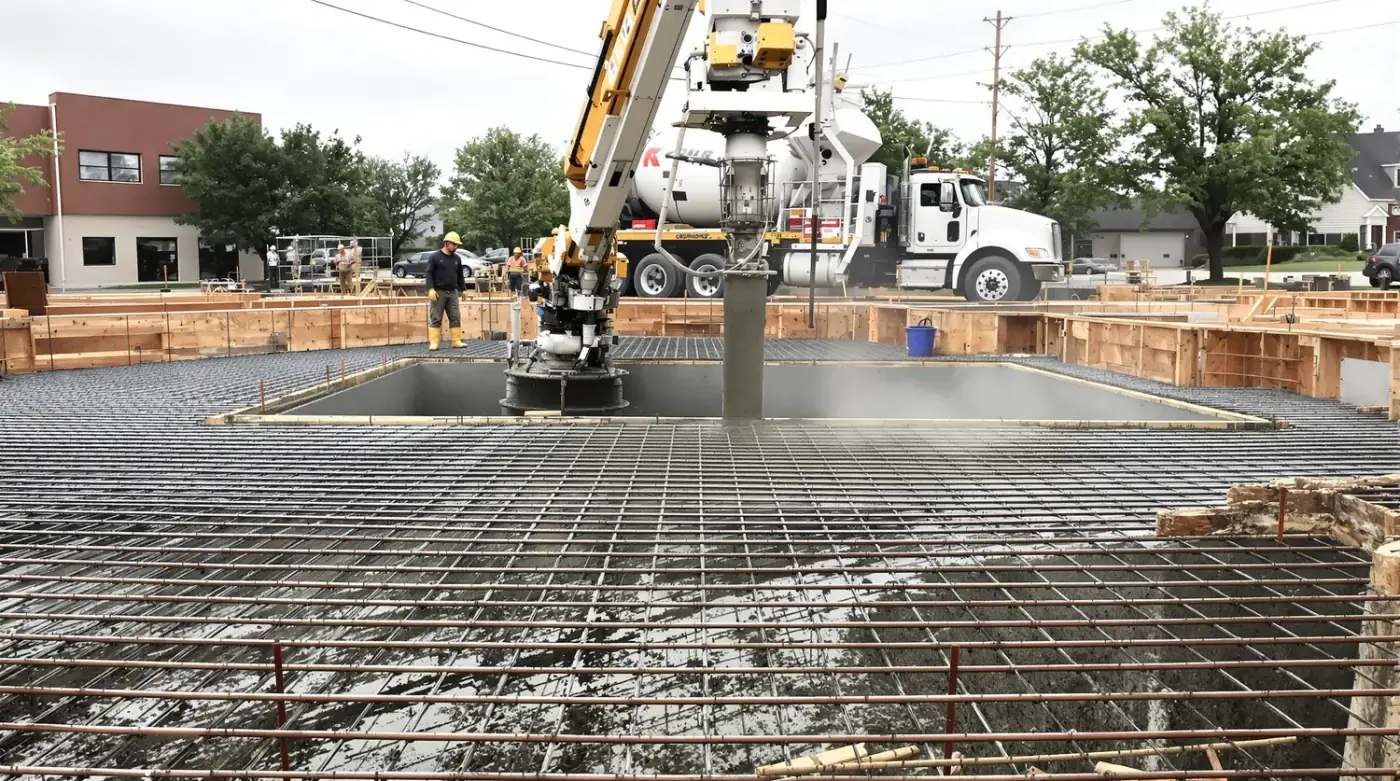
Hold point — no concrete is placed until inspection passes. Pour 4,000 to 5,000 psi air-entrained concrete by boom pump or line pump. Consolidate with internal vibrators on every lift to eliminate honeycombing and voids. Pull break test cylinders for 7-day and 28-day strength verification. Apply curing compound or wet cure with burlap for 7 days on critical pours.
Strip, Backfill & Closeout
Strip forms after concrete reaches sufficient early strength, typically 24 to 48 hours.
Apply waterproofing membrane to below-grade surfaces per the project specification. Backfill against the footings in lifts without displacing the waterproofing. Deliver the closeout documentation package: compaction reports with lift-by-lift density data, concrete delivery tickets, break test results, special inspection reports, and as-built drawings showing actual footing locations and elevations.
What Reinforcement and Connection Details Go Into a Spread Footing?
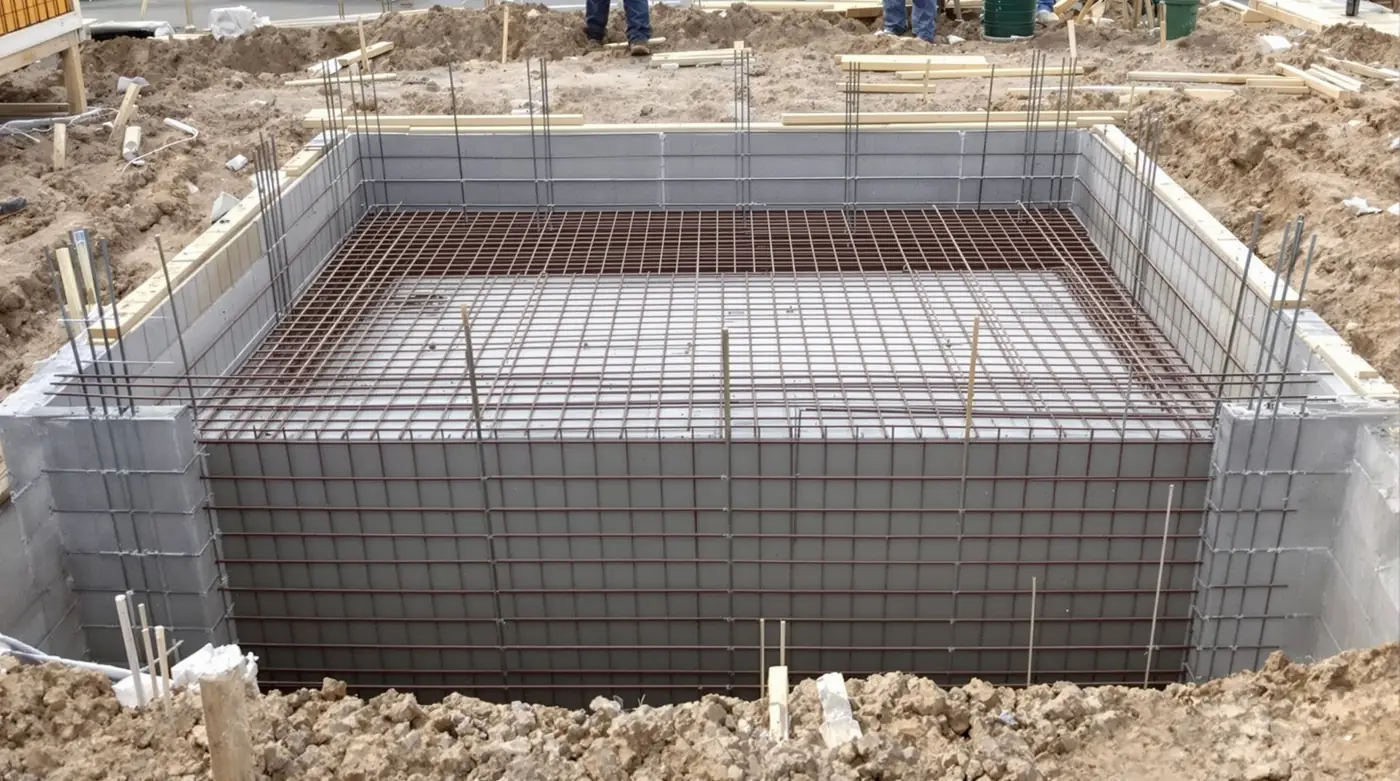
Spread footings in commercial construction require reinforcing steel sized by the structural engineer based on column loads, footing dimensions, and soil conditions. Typical configurations include a bottom mat of rebar running in both directions with 3-inch minimum clear cover to the soil contact face. Rebar size and spacing vary by footing — a 4-foot-square footing under a light column may use #5 bars at 12-inch spacing, while an 8-foot-square footing under a heavily loaded column may require #7 bars at 8-inch spacing with a top mat as well.
Dowels projecting vertically from the footing connect to the column pedestal or wall above. Keyways — formed recesses in the top of the footing — create a mechanical interlock with the slab-on-grade that pours against the footing later. Waterstops are installed at all construction joints below grade to prevent water infiltration along the cold joint between footing and wall.
For steel-frame buildings, anchor bolts or base plate embeds are set in the footing or pedestal to precise tolerances — typically plus or minus one-eighth inch. Template bolts are dry-set and checked against the structural steel erection drawings before concrete placement. A misplaced anchor bolt on a spread footing can delay steel erection by weeks while an engineer designs a field fix. Kansas City Concrete Contractors verifies every anchor bolt location against the erection drawings before calling for the pre-pour inspection.
What Do Spread Footings Cost in the Kansas City Metro?
| Component | Typical Range | Notes |
|---|---|---|
| Spread footing concrete (in place) | $350 – $600 / CY | Includes forming, rebar, pour, strip |
| Over-excavation & structural fill | $15 – $30 / CY | Depth and soil type dependent |
| Compaction testing (nuclear gauge) | $250 – $500 / day | Third-party lab, per visit |
| Rock excavation (if encountered) | $25 – $50 / BCY | Common south of 135th St in JoCo |
| Spoils hauling (swell factor 25-35%) | $12 – $20 / CY | KC clay swells on excavation |
Spread footing costs in the Kansas City metro vary significantly based on column loads, soil conditions, and over-excavation depth. Projects on Wymore clay with deep over-excavation requirements cost more than sites bearing on shallow limestone in southern Johnson County. Every bid we issue breaks out excavation, structural fill, compaction testing, formwork, reinforcement, concrete, and backfill as separate line items — so your project manager can compare scope-for-scope against competing subcontractors. Request a detailed bid with line-item pricing by calling (816) 339-8133 or submitting your structural drawings through our estimate form.
What Kansas City GCs Ask About Spread Footing Projects
How large do spread footings need to be on Kansas City clay?
What is over-excavation and why is it required for spread footings in KC?
How deep do spread footings need to be in Kansas City?
What concrete strength is used for commercial spread footings?
How long does it take to install spread footings for a commercial building?
Do you coordinate special inspections for spread footing projects?
Spread Footing Contractors Across the Kansas City Metro
Other Foundation Types We Build in Kansas City
Commercial Foundations Hub
Complete overview of all commercial foundation types we build in KC.
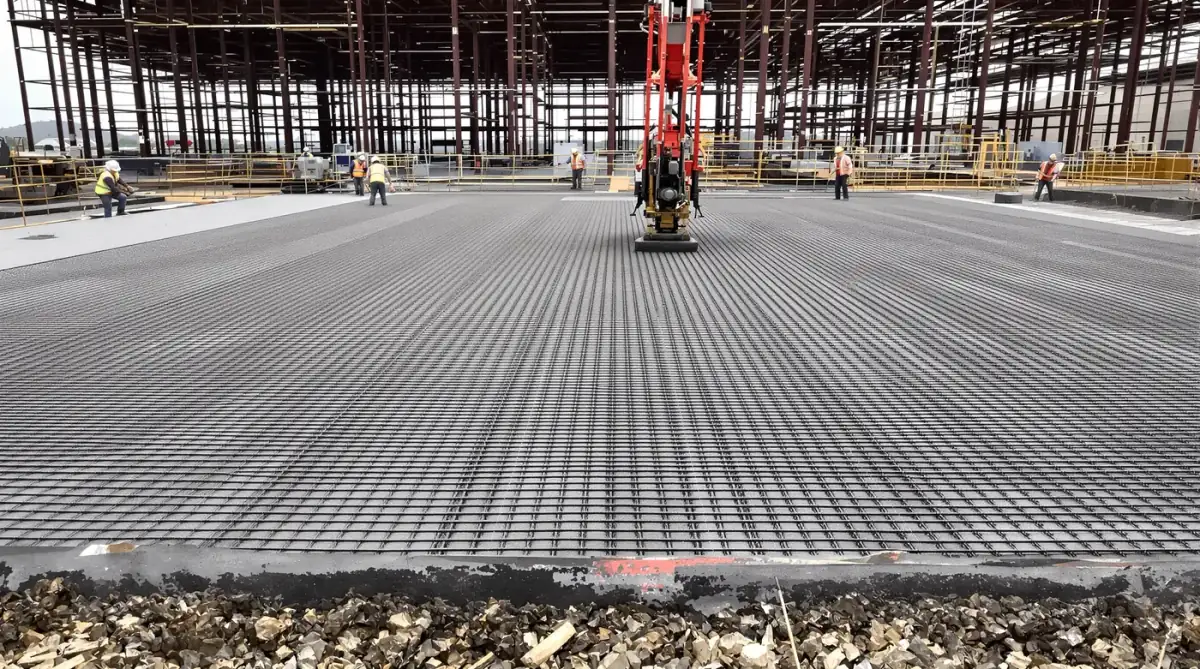
Mat & Raft Foundations
Full-footprint slabs for heavy loads or inconsistent soils.
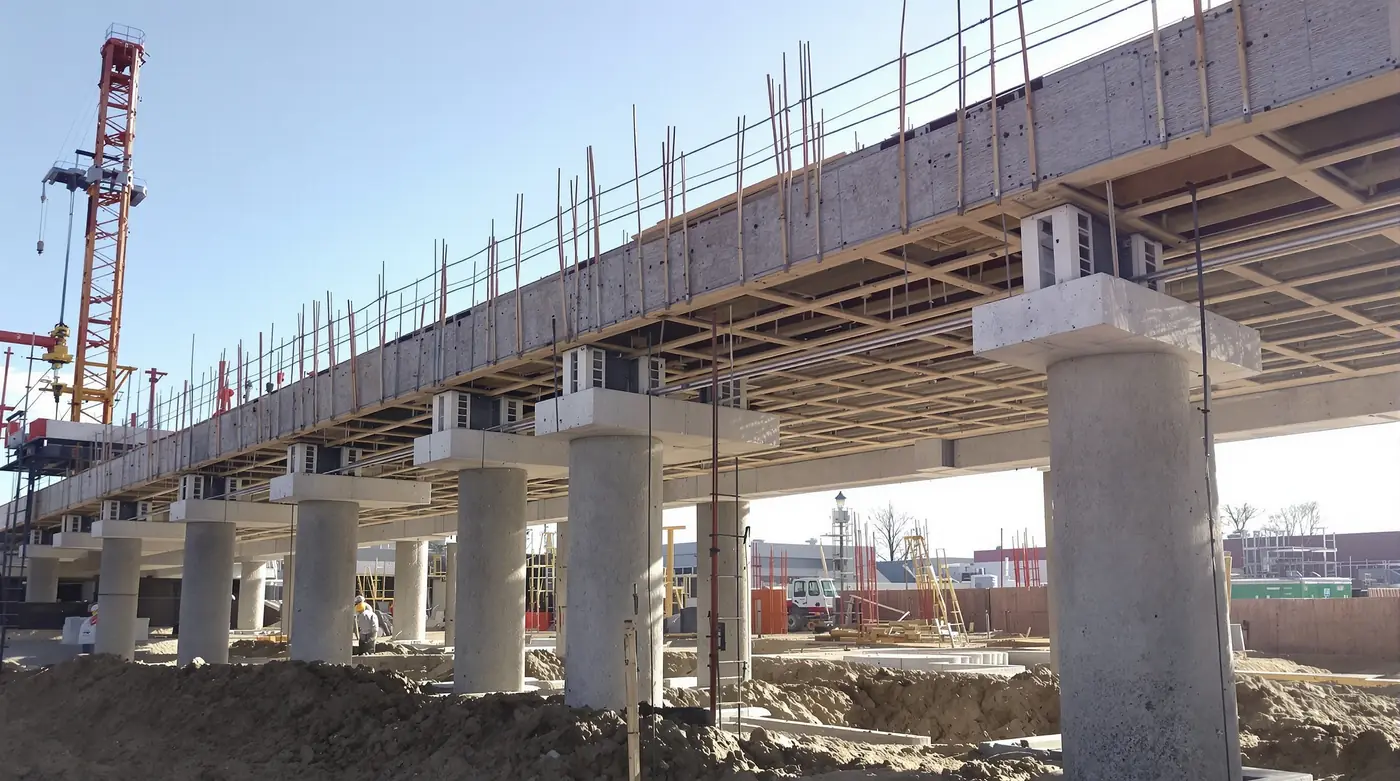
Grade Beams
Reinforced beams spanning drilled piers to competent bearing strata.
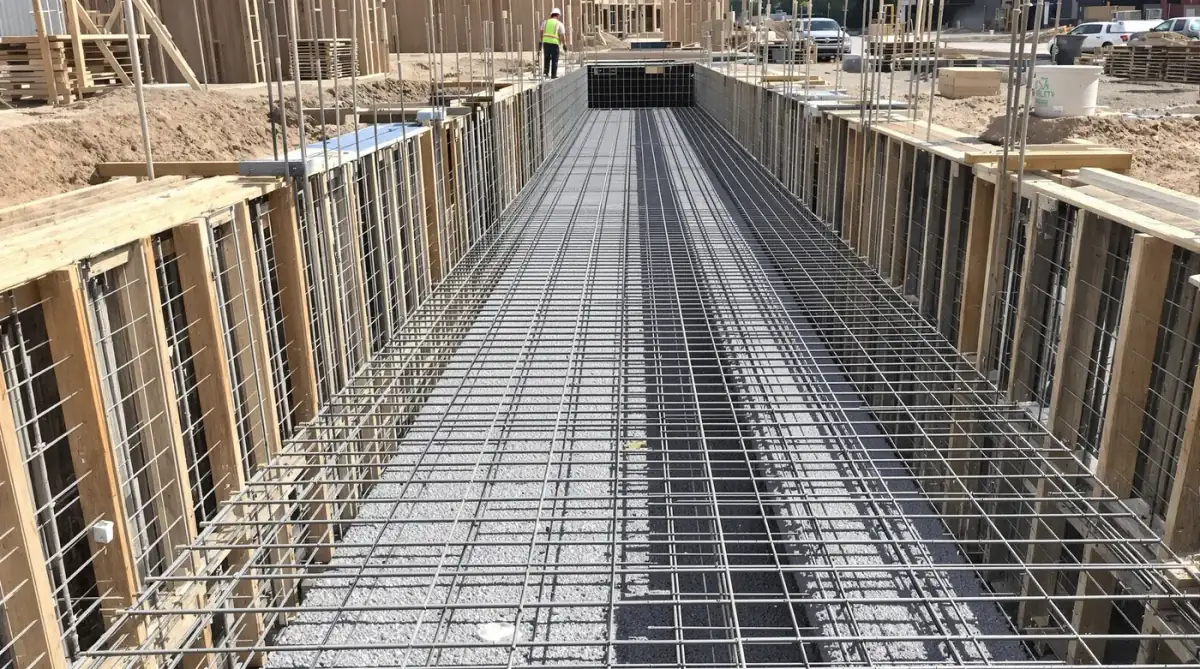
Continuous Footings
Strip footings beneath load-bearing walls and building perimeters.
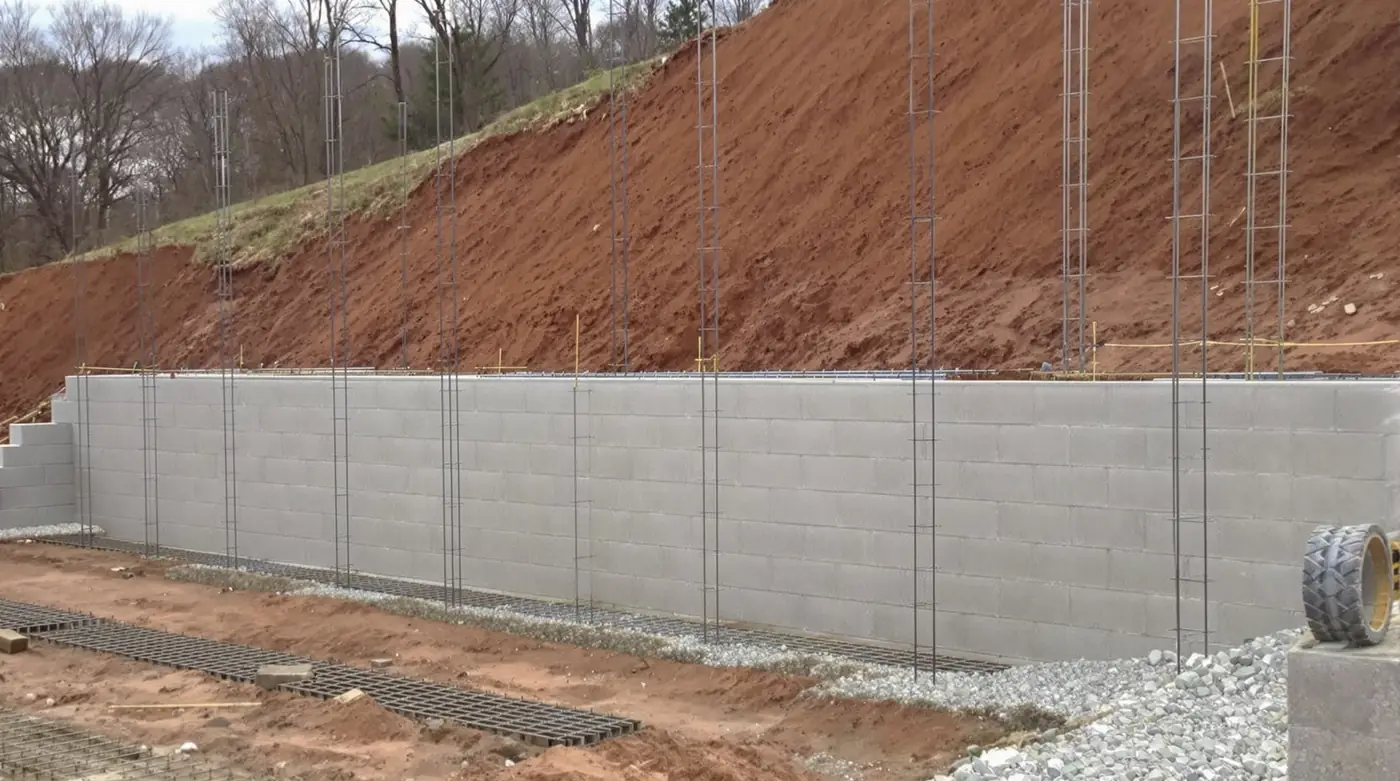
Retaining Wall Foundations
Foundation systems designed for lateral earth pressure and sliding resistance.
Ready to Bid Your Spread Footing Project?
Send us your structural drawings, geotechnical report, and project timeline. We return a detailed line-item bid within 5 business days that separates excavation, structural fill, compaction testing, formwork, reinforcement, concrete, and backfill — so your team can compare scope-for-scope against other subcontractors. If you are early in the design phase and do not yet have structural drawings, we can provide a budgetary estimate based on the building footprint, column loads, and geotech report to support your project planning.
- ✓5-day bid turnaround on complete plan sets
- ✓Line-item breakdown for apples-to-apples comparison
- ✓Over-excavation + concrete under one contract
- ✓Nuclear density testing on every fill lift
- ✓Licensed in Missouri and Kansas
Start Your Spread Footing Bid
Click below to open the bid request form. Provide the project address, building type, number of footings, and any structural drawings or geotech reports you have available. We respond within one business day to confirm receipt and request any additional information needed for a complete bid.