
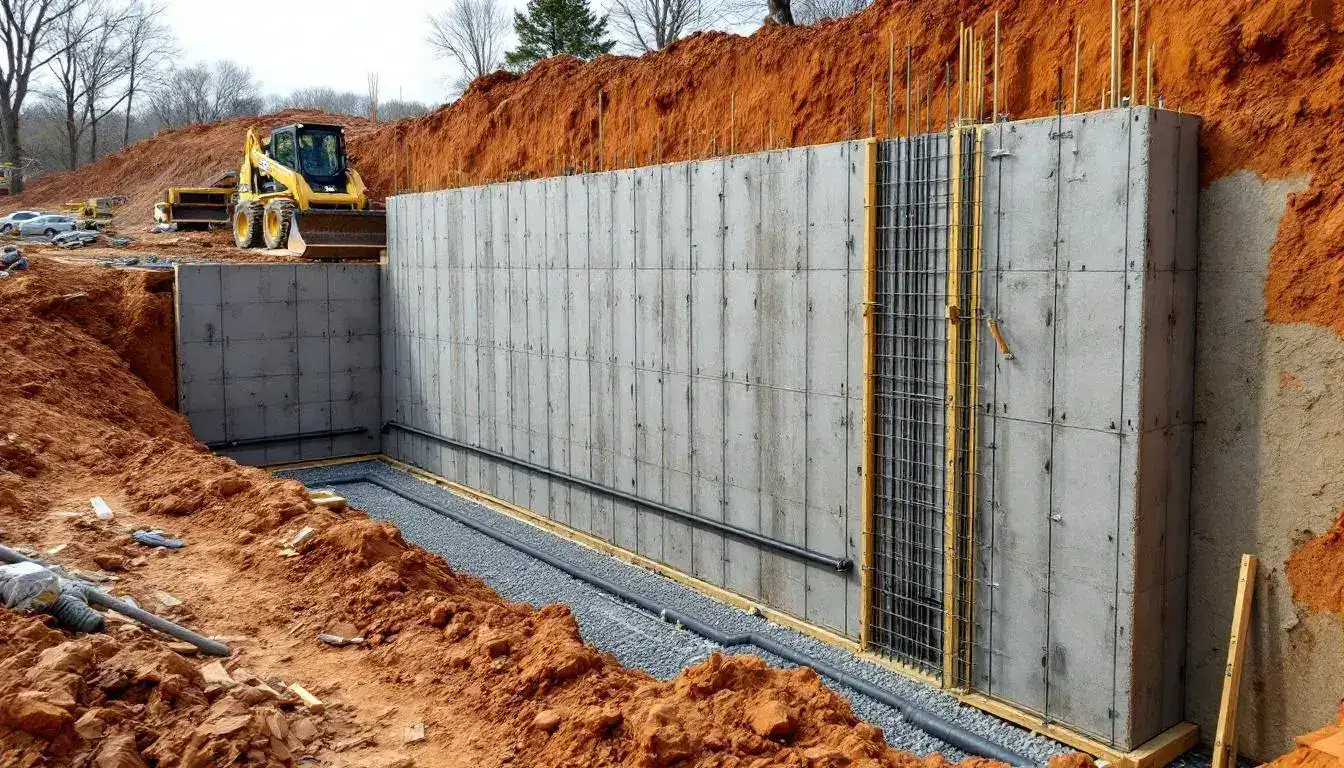
Retaining Wall Foundation Contractors in Kansas City
Foundations engineered for lateral earth pressure, not just vertical loads — with drainage, waterproofing, and footing ratios designed for KC’s expansive clay.
Why Are Retaining Wall Foundations Engineered Differently Than Standard Footings?
Standard building footings resist one primary force: vertical load pressing downward from the structure above. The footing distributes that load across enough soil area to stay within the allowable bearing pressure, and the engineering is straightforward. Retaining wall foundations operate under a fundamentally different loading condition. In addition to the vertical weight of the wall itself, the footing must resist lateral earth pressure — the horizontal force generated by the soil retained behind the wall. This lateral pressure pushes the wall outward and creates two failure modes that standard footings never encounter: overturning (the wall rotating forward around its toe) and sliding (the wall moving horizontally across the bearing surface).
The structural engineer designs the retaining wall footing to resist both failure modes simultaneously. The footing width, the toe and heel projections, the weight of the soil resting on the heel, and the friction between the footing base and the bearing soil all contribute to the stability calculation. On Kansas City's Wymore CH clay, these calculations produce footings significantly wider than those required on granular soils because the lateral earth pressure coefficient is higher and the passive resistance at the toe is lower. Wymore clay generates variable lateral pressure depending on its moisture content — when saturated after spring rains, the active pressure coefficient can increase 30 to 50 percent above the dry-season value, creating design loads that exceed generic soil table predictions.
The distinction matters because contractors who build retaining wall foundations using standard footing details — sized for vertical loads only — produce walls that fail predictably within 3 to 7 years on KC clay. The footing is too narrow to resist the overturning moment, the heel projection is undersized or absent, and the drainage detail is either inadequate or missing entirely. Kansas City Concrete Contractors engineers every retaining wall foundation for the actual lateral forces generated by the site-specific soil conditions, not the theoretical values from a generic soil mechanics textbook.
What Happens When Drainage Fails Behind a Retaining Wall on KC Clay?
Wymore clay does not drain naturally. When rain saturates the soil behind a retaining wall that lacks a drainage system, the water has nowhere to go. It accumulates against the wall face and builds hydrostatic pressure — a force that acts in addition to the existing lateral earth pressure from the soil itself. A 6-foot retaining wall with 3 feet of water saturation behind it experiences nearly double the lateral force it was designed for.
The wall begins to rotate forward as the combined force exceeds the footing's overturning resistance. Horizontal cracks appear at the base where the wall stem meets the footing. Vertical cracks propagate upward through the stem as the bending moment exceeds the concrete's tensile capacity. The foundation slides forward as the horizontal force overcomes the friction between the footing base and the bearing soil. This failure sequence repeats on KC retaining walls every spring — and the root cause is always the same: missing or inadequate drainage behind the wall.
Building a Retaining Wall Over 6 Feet? Let’s Engineer It Right.
Walls over 6 feet require stamped structural drawings and proper lateral pressure engineering on KC clay.
How Does Kansas City Clay Create Unique Challenges for Retaining Wall Foundations?
The Wymore CH clay that dominates the Kansas City metro creates a lateral pressure condition on retaining walls that is significantly more aggressive than standard soil tables predict. In its dry state, Wymore clay behaves as a cohesive soil with moderate active earth pressure coefficients. But when spring rains saturate the retained soil behind a wall, the clay absorbs water and expands — increasing both its unit weight and its lateral pressure coefficient simultaneously. The active pressure behind the wall can increase 30 to 50 percent above the dry-season design value. A retaining wall foundation designed for the dry-season loading condition alone is undersized for the wet-season reality that occurs every year in the KC metro from March through June.
Hydrostatic pressure is the second critical force that KC clay creates behind retaining walls. Because Wymore clay has a permeability coefficient near zero, water that enters the retained soil does not drain downward through the clay — it accumulates behind the wall and builds hydrostatic head. A 4-foot hydrostatic head behind a retaining wall adds roughly 250 pounds per square foot of lateral pressure at the base of the wall. That force is in addition to the lateral earth pressure from the soil itself. Without a functioning drainage system behind the wall, every rain event increases the total lateral load on the foundation.
This is why drainage is the number one detail that separates retaining walls that perform for decades from those that fail within a few years on Kansas City clay. The drainage system — perforated pipe, filter fabric, granular aggregate backfill — must intercept and remove water before it builds hydrostatic pressure against the wall. Kansas City Concrete Contractors installs this drainage system on every retaining wall foundation we build, regardless of wall height. On KC clay, there is no wall small enough to skip the drain.
- Lateral Pressure Coefficient
- Active Ka (dry): 0.33–0.40
- Active Ka (wet): 0.45–0.55
- Footing Width Ratios
- Width-to-height: 50–70% of retained height
- Drain Pipe Spec
- Type: 4–6″ perforated PVC/HDPE
- Wrap: Geotextile filter fabric
- Waterproofing Type
- Method: Spray-applied or sheet membrane
- Backfill Standard
- Material: Clean crushed limestone / pea gravel
- Placement: Lifts, compacted to spec
Commercial Grade Changes
Retaining walls that manage grade transitions between parking lots, building pads, and adjacent properties. Foundations sized for surcharge loads from vehicles and structures above the wall.
Parking Structure Retention
Below-grade parking walls retaining earth on one or more sides. Heavy surcharge loads from vehicle traffic and adjacent buildings require deep footings with engineered drainage and full waterproofing.
Loading Dock Walls
Truck well retaining walls at warehouse dock positions. Combined lateral earth pressure and truck impact loads require specialized footing design with bumper bollard integration.
How We Build Retaining Wall Foundations in Kansas City
Six phases from site survey through final grade. Every phase verified before advancing to the next.
Site Survey & Structural Design
Review site topography, grade changes, and surcharge loads above the wall.
Structural engineer designs the footing width, toe/heel ratios, rebar schedule, and drainage details based on the geotechnical report and the retained height. KC clay lateral pressure coefficients are verified against site-specific boring log data — not generic soil tables.
Excavation & Soil Assessment
Excavate to the footing bottom elevation per the structural drawings.
Verify that the exposed bearing surface matches the geotechnical assumptions — moisture content, consistency, and bearing capacity. On Wymore clay sites, over-excavation of unsuitable material and replacement with compacted structural fill is standard when the native soil is above optimum moisture or shows signs of disturbance.
Footing & Drain Installation
Form and pour the retaining wall footing with vertical dowels projecting for the wall stem.
Install perforated drain pipe along the inside face of the footing heel, wrapped in geotextile filter fabric. This is the critical drainage detail — the pipe must have positive slope to the daylight outlet and must be protected from clogging by fine clay particles migrating through the granular backfill.
Wall Pour & Waterproofing
Form and pour the wall stem with rebar tied to the footing dowels.
A keyway at the footing-to-wall construction joint provides shear resistance, and waterstops prevent water infiltration at the cold joint. After strip, spray-applied or sheet membrane waterproofing is applied to all below-grade wall surfaces. Drainage board installed over the membrane protects it during backfill operations.
Granular Backfill & Compaction
Clean granular drainage aggregate — crushed limestone or pea gravel — fills the zone between the wall face and the native clay.
This drainage zone extends the full height of the retained soil and connects to the drain pipe at the base. Backfill is placed in lifts and compacted to specification without displacing the waterproofing membrane or the drain pipe below.
Final Grade & Drainage Outlet
Establish final grade at the top of the wall and verify the drain pipe outlet is functioning.
Surface drainage must direct water away from the retained side of the wall — not toward it. Cap the granular backfill zone with a clay cap or geomembrane to prevent surface water from infiltrating directly into the drainage layer and overwhelming the drain pipe capacity during heavy rain events.
What Drainage and Waterproofing Details Protect Retaining Wall Foundations?
The drainage system starts at the base of the wall: a 4 to 6 inch perforated PVC or HDPE drain pipe is laid along the inside face of the footing heel, wrapped in geotextile filter fabric to prevent clay fines from clogging the perforations. Clean granular drainage aggregate — typically crushed limestone or pea gravel — fills the zone between the wall face and the native clay backfill, creating a permeable drainage path that intercepts water before it builds hydrostatic pressure against the wall. The drain pipe daylights at the low end of the wall or connects to a storm drainage system.
On the wall face itself, spray-applied or sheet membrane waterproofing prevents moisture from migrating through the concrete. A drainage board installed over the membrane provides both membrane protection during backfill operations and an additional drainage plane that channels water downward to the drain pipe at the footing. For retaining walls that support occupied structures or below-grade spaces, the waterproofing is upgraded to a fully adhered system with redundant protection at all penetrations, construction joints, and transitions.
Kansas City Concrete Contractors installs the full drainage and waterproofing system as part of every retaining wall foundation project. On KC clay, omitting any element of this system — the drain pipe, the filter fabric, the granular aggregate, or the waterproofing membrane — compromises the long-term performance of the entire wall.
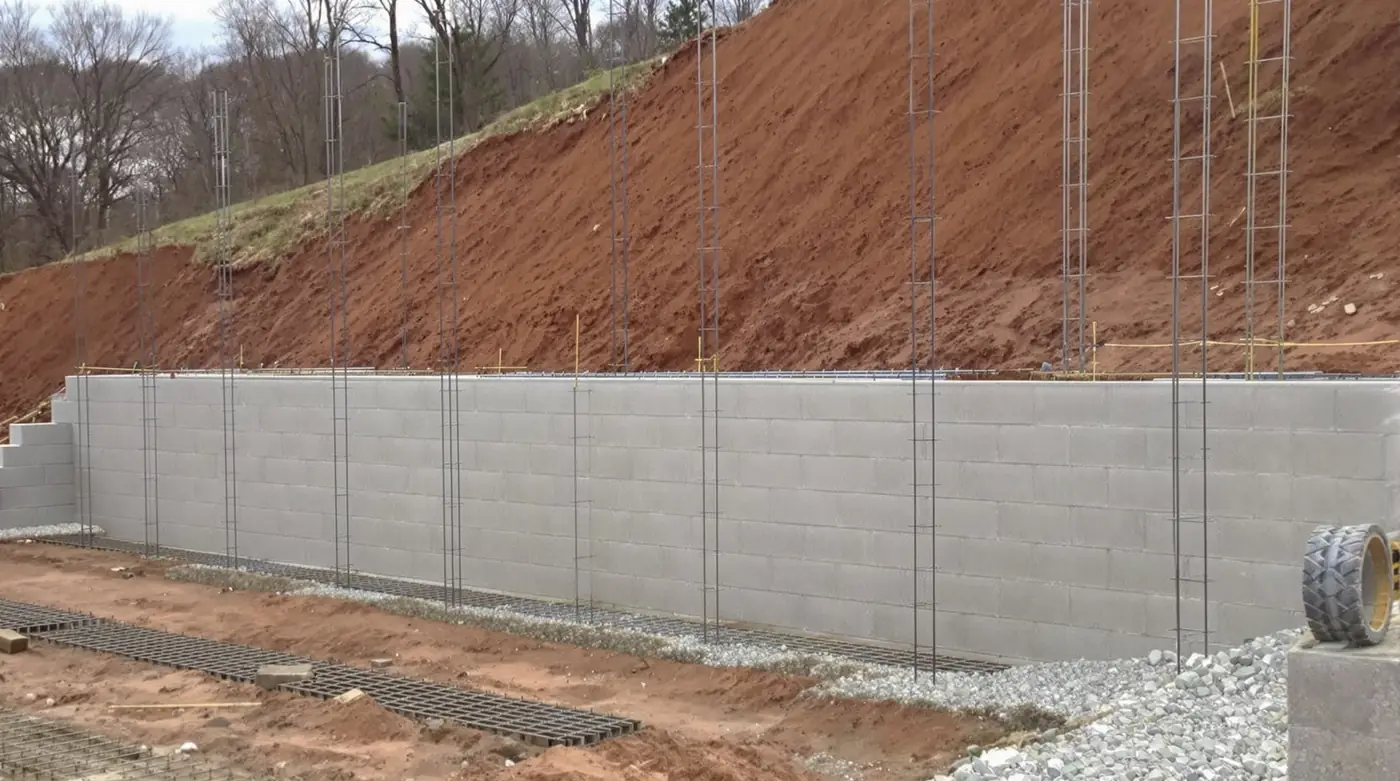
Retaining Wall Foundation Cost Ranges in Kansas City
| Component | Typical Range | Notes |
|---|---|---|
| Retaining wall footing (in place) | $50 – $150 / LF | Width and wall height dependent |
| Drainage system (pipe + aggregate) | $15 – $35 / LF | Perforated pipe, fabric, gravel |
| Waterproofing membrane | $5 – $12 / SF | Spray-applied or sheet membrane |
| Over-excavation & structural fill | $15 – $30 / CY | Standard on Wymore clay sites |
| Granular backfill (placed & compacted) | $25 – $45 / CY | Crushed limestone drainage zone |
Retaining wall foundation costs in the Kansas City area depend on wall height, footing width, soil conditions, drainage requirements, and waterproofing specification. Higher walls on deeper clay require wider footings and more extensive drainage. Contact us at (816) 339-8133 with your site survey and structural drawings for a detailed bid.
What Kansas City Contractors Ask About Retaining Wall Foundations
How is a retaining wall foundation different from a standard footing?
How wide does a retaining wall footing need to be in Kansas City?
Why is drainage behind a retaining wall so critical on KC clay?
Do you waterproof retaining wall foundations?
Can you build retaining walls over 6 feet tall in Kansas City?
How much do retaining wall foundations cost in Kansas City?
Retaining Wall Foundation Work Across the Kansas City Metro
Other Commercial Foundation Types We Build
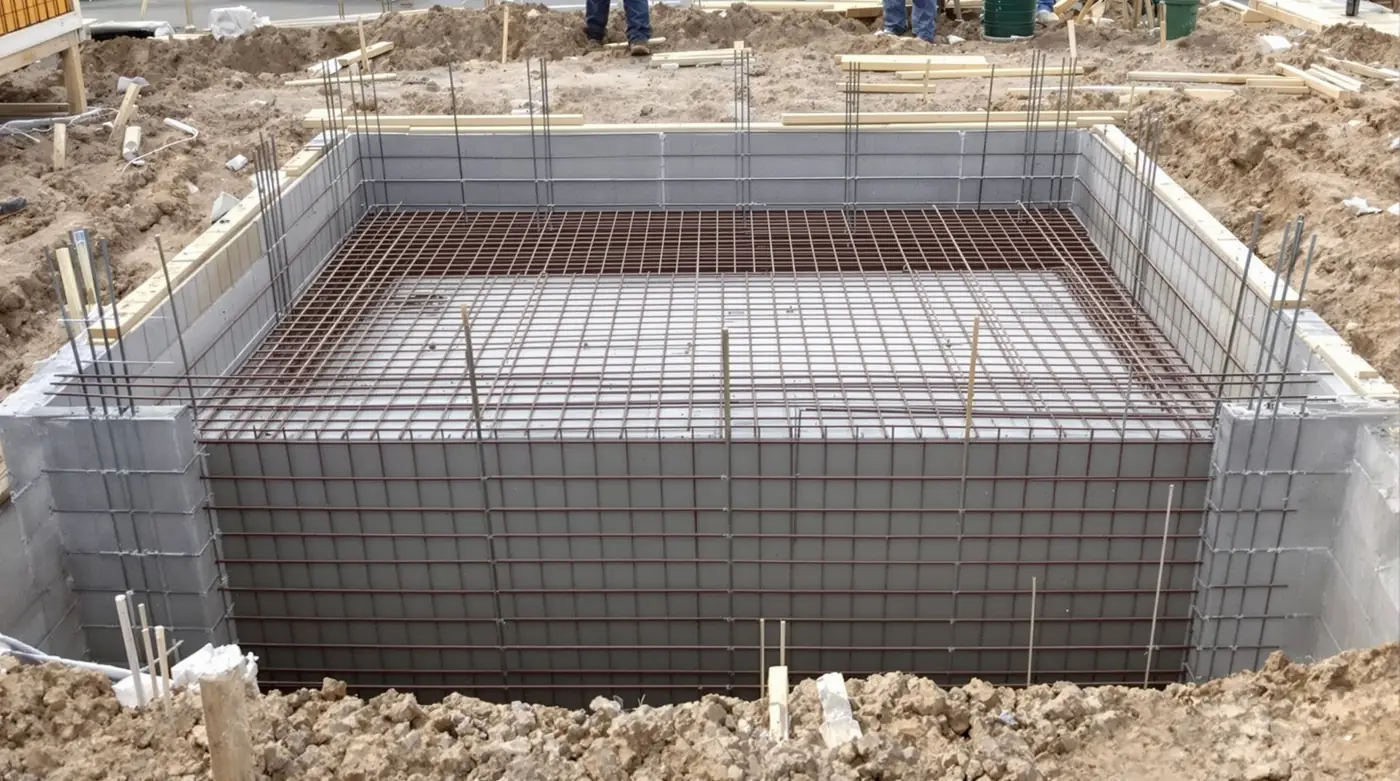
Spread Footings
Individual column footings engineered for KC clay bearing pressures.
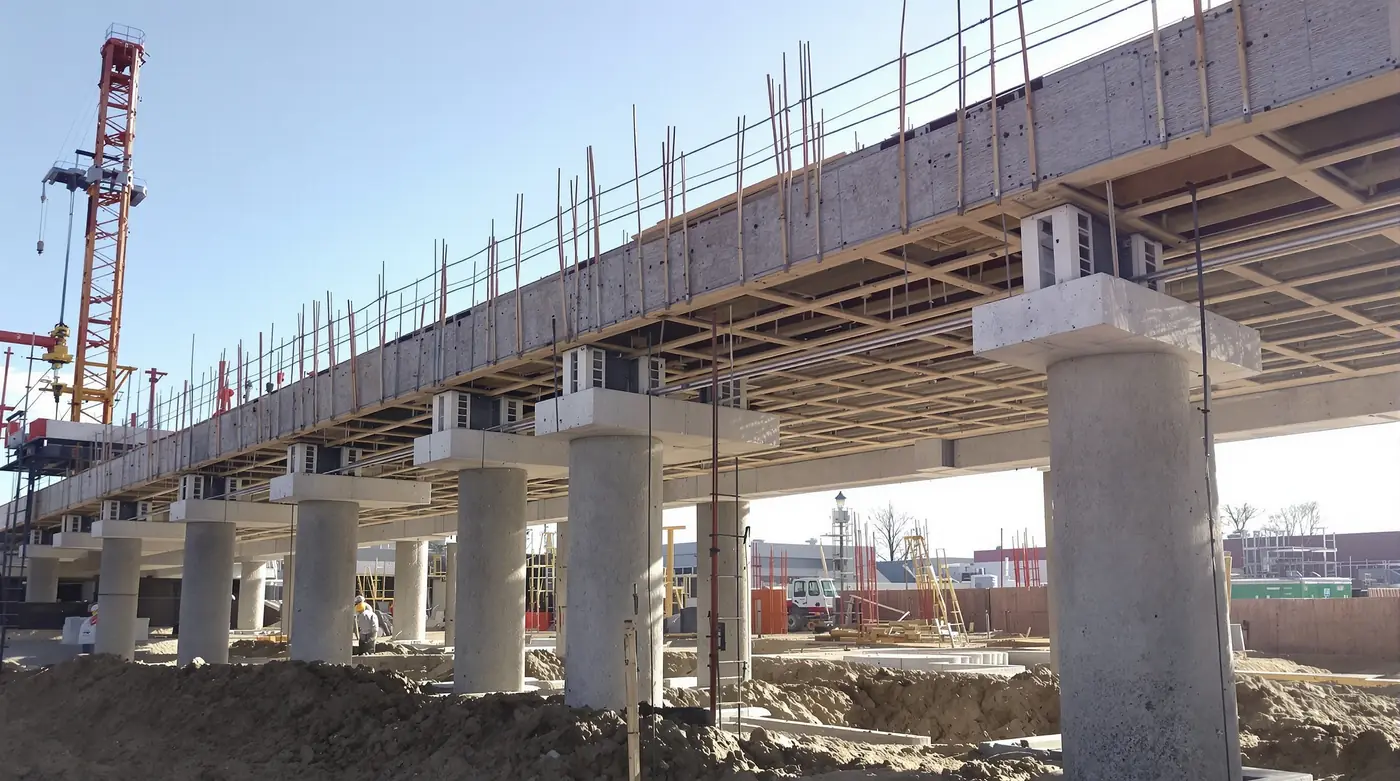
Grade Beams
Beams spanning drilled piers to competent bearing strata below KC clay.
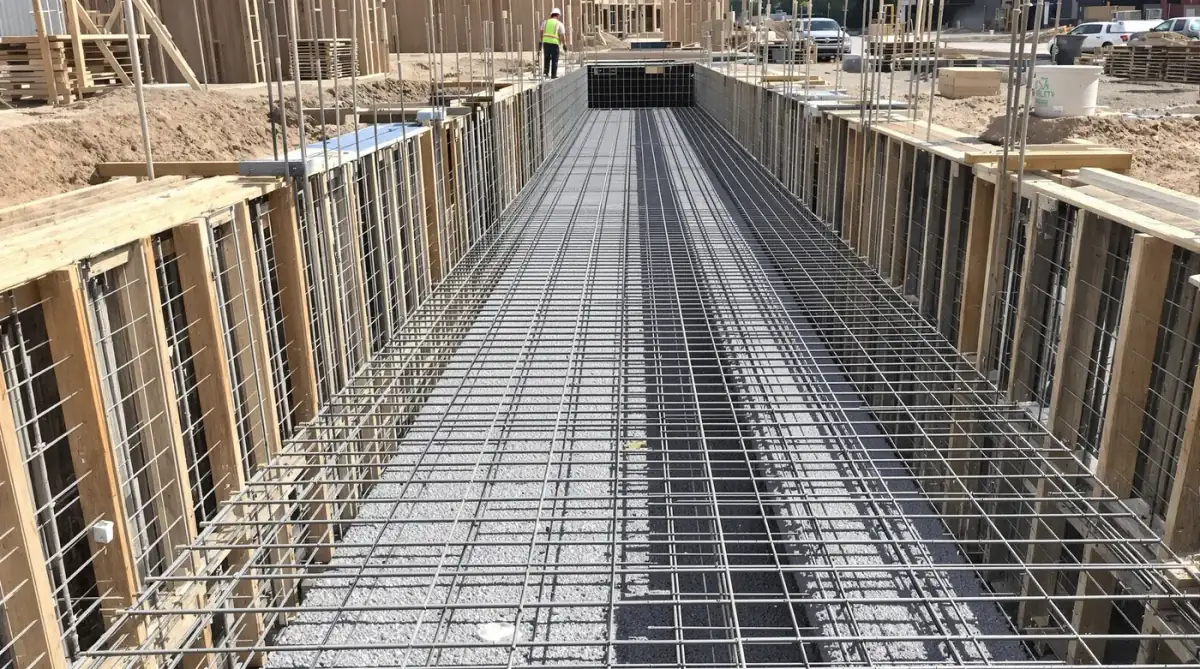
Continuous Footings
Strip footings for bearing walls with void forms for KC clay heave protection.
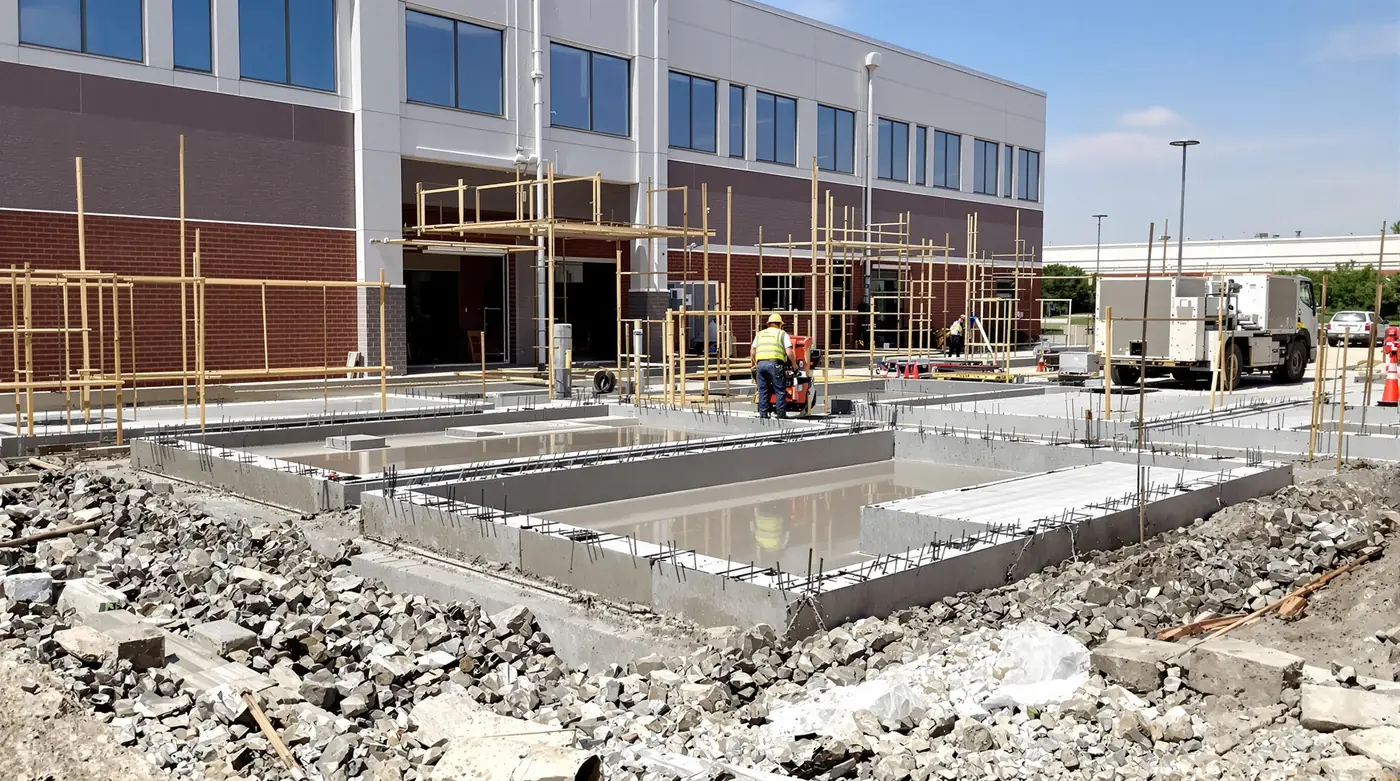
Equipment Pads
HVAC, generator, and machinery pads with precision anchor bolt patterns.
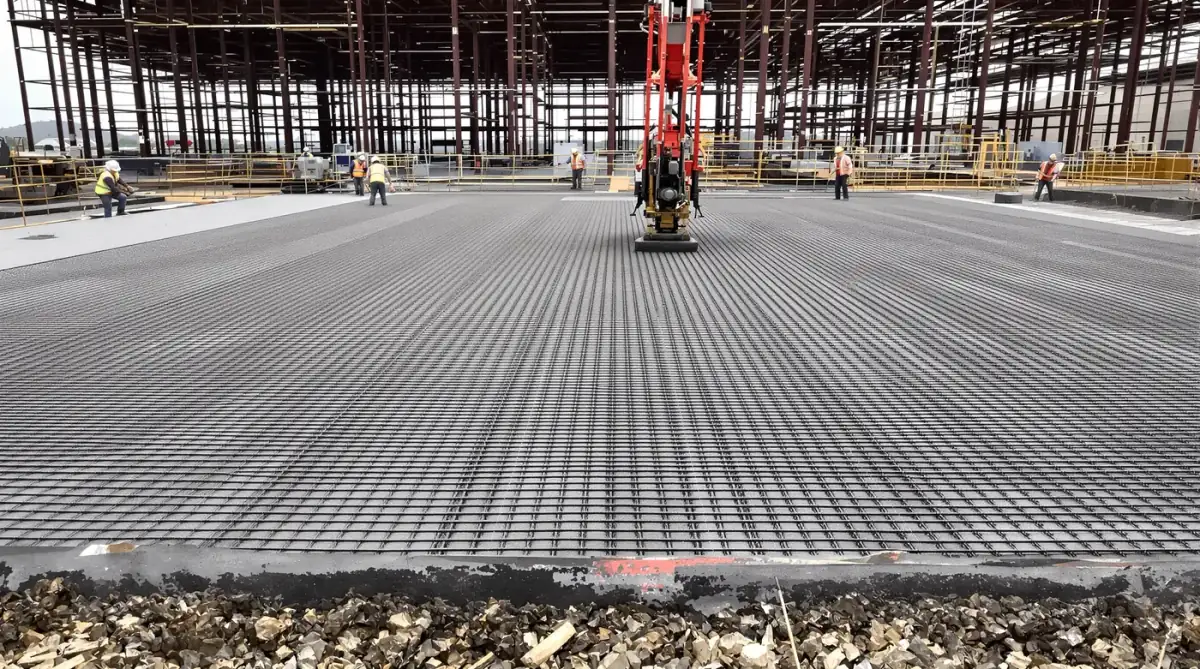
All Foundation Types
Full commercial foundations hub — spread, mat, grade beam, dock, and more.
Ready to Bid Your Retaining Wall Foundation?
Send us your structural drawings, geotechnical report, and site survey showing the grade change and retained height. We return a detailed line-item bid that separates the footing, wall stem, drainage system, waterproofing, and backfill — so your team can evaluate the full scope and compare directly against other subcontractors.
- ✓Lateral pressure engineering for KC clay conditions
- ✓French drain system on every retaining wall
- ✓Foundation + wall stem + drainage under one contract
- ✓Licensed in Missouri and Kansas
Start Your Retaining Wall Bid
Click below to open the bid request form. Provide the project address, retained height, wall length, and any structural drawings or geotech reports you have available. We respond within one business day to confirm receipt and request any additional information needed for a complete bid.