
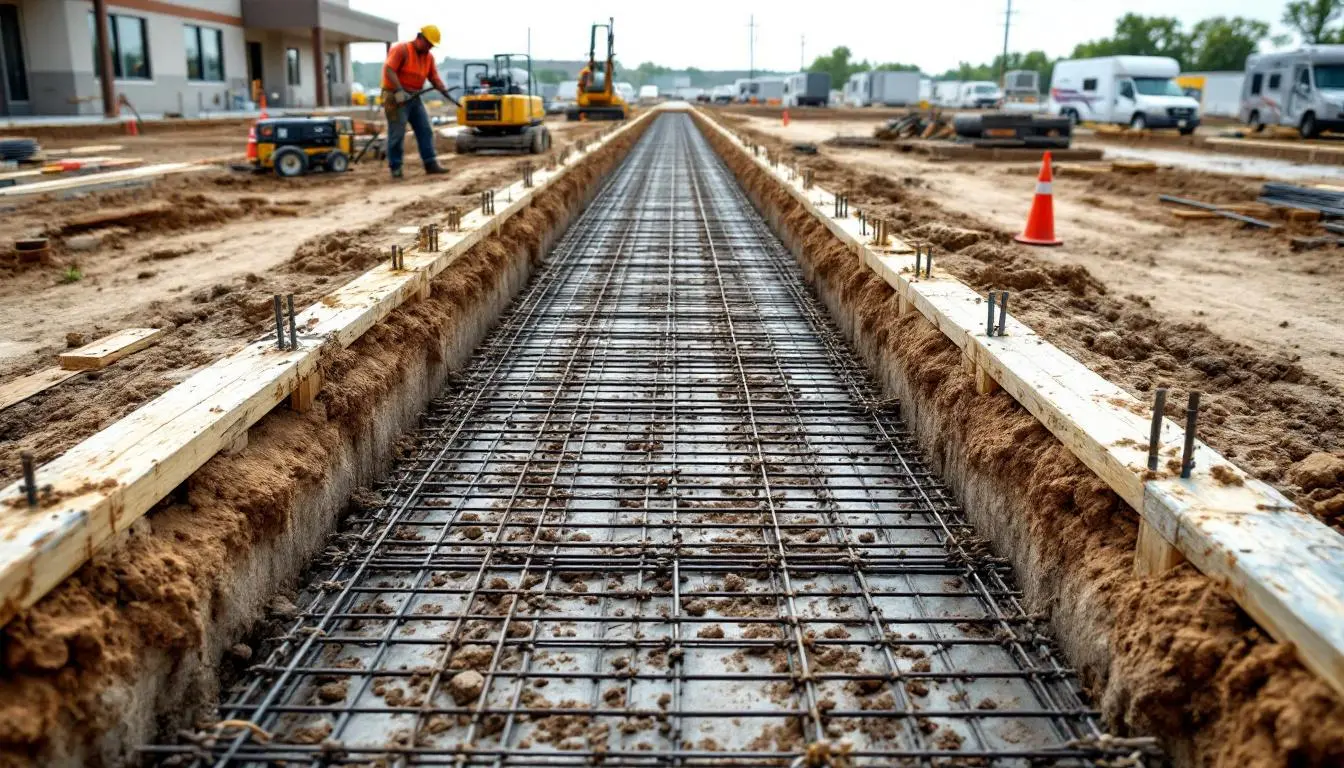
Continuous & Strip Footing Contractors in Kansas City
Load-bearing wall foundations and perimeter footings built below KC’s frost line with void forms, waterstops, and compacted structural fill.
How Do Continuous Footings Differ From Spread Footings?
Wall-Load Distribution vs Point Loads
Spread footings are individual reinforced concrete pads placed beneath single columns, each one distributing a concentrated point load across enough soil area to stay within the allowable bearing pressure. Continuous footings — also called strip footings — serve a fundamentally different structural purpose. They run the full length of a load-bearing wall, distributing the wall's linear load uniformly along the entire footing rather than concentrating it at discrete points. In commercial construction across the Kansas City metro, most buildings use both types simultaneously: spread footings under steel columns and continuous footings under masonry walls, tilt-up concrete panels, elevator shafts, stairwell enclosures, and building perimeters.
When Each Footing Type Is Specified
The structural engineer selects the footing type based on the load path, not the soil conditions. A steel-frame building with moment connections at every column delivers concentrated loads that require spread footings sized to the individual column reaction. A CMU masonry building or tilt-wall warehouse distributes its weight along the wall line, making continuous footings the correct foundation element. The choice becomes more nuanced in hybrid structures: a tilt-wall warehouse with interior steel columns uses continuous footings at the perimeter walls and spread footings under the interior columns, with grade beams tying the system together where the structural engineer requires it.
KC Frost Line Requirements
Regardless of footing type, every exterior foundation element in the Kansas City metro must extend below the 30 to 36 inch frost line established by local building codes. This depth requirement applies to both spread and continuous footings — but continuous footings carry the additional complexity of maintaining uniform depth across their entire run, which can span hundreds of linear feet along a building perimeter. Any section that rises above the frost line creates a weak point where frost heave can lift the wall and crack the masonry above. On Wymore CH clay, the over-excavation depth below the footing bottom adds another 24 to 36 inches, meaning total excavation depths of 5 to 7 feet are standard for exterior continuous footings in Jackson, Johnson, and Clay counties. Kansas City Concrete Contractors verifies frost depth compliance at every point along the continuous footing alignment before placing concrete.
Why Does Kansas City Clay Make Continuous Footings More Complex?
Continuous footings support the heaviest walls in any commercial building — perimeter masonry, tilt-up panels, elevator cores, stairwell enclosures. When these footings are undersized or installed without accounting for the Wymore CH clay that dominates the Kansas City metro, the consequences show up within the first few seasonal moisture cycles. Cracks propagate through masonry courses. Doors and windows bind in their frames. Load-bearing walls shift differentially, transferring unplanned loads to the structural frame above.
The root cause is almost always the same: the contractor poured footings directly on native clay without over-excavation, skipped void forms on grade beams, or failed to extend the footing below KC's 30 to 36 inch frost line. Wymore clay swells with a force that exceeds most contractors' expectations — seasonal moisture variation of 15 to 25 percent generates uplift pressures that crack concrete and displace walls. Frost heave adds a second failure mechanism during KC winters, pushing shallow footings upward and dropping them back down each spring.
Building a CMU or Tilt-Wall Structure? Your Continuous Footings Start Here.
Send your structural drawings and geotechnical report. Detailed line-item bid returned within 5 business days.
What Role Do Void Forms Play in KC Continuous Footing Design?
On Kansas City clay sites, void forms are a critical component of continuous footing and grade beam construction. These 4 to 6 inch thick cardboard or degradable fiber forms are placed between the soil surface and the bottom of any elevated beam or footing that spans between bearing points. The engineering principle is straightforward: when Wymore clay absorbs moisture and swells — which it does with seasonal regularity in the KC metro — the void form compresses instead of transmitting uplift force to the concrete above.
Without void forms, clay swell generates forces strong enough to crack grade beams and lift building sections several inches. The Wymore series clay that covers most of Jackson, Johnson, and Clay counties has a "very high" shrink-swell rating, with seasonal moisture swings of 15 to 25 percent driving significant volume changes. During wet seasons — spring rains, winter thaws — the clay expands and pushes upward against any rigid structure in contact with it. During summer drought and fall drying, the clay contracts, creating voids beneath footings and allowing the structure to settle back down. This annual cycle of heave and settlement produces cumulative differential movement that cracks foundations and distorts structural frames.
The void forms are designed to degrade over 3 to 5 years, by which time the soil moisture beneath the building has typically reached equilibrium with the structure's drainage pattern and the seasonal swell pressure has dissipated. Kansas City Concrete Contractors installs void forms precisely to the structural engineer's specifications, ensuring the correct thickness is maintained across the full span and that the forms are protected from premature saturation during construction. We coordinate with the waterproofing contractor and the structural inspector to verify void form placement at every hold point before concrete placement begins.
- Frost Depth
- KC metro: 30–36 inches
- Void Form Thickness
- Standard: 4–6 inches
- Clay Shrink-Swell Rating
- Wymore CH: Very High
- Concrete Strength
- Standard: 4,000–5,000 psi
- Compaction Standard
- ASTM D1557: 95% Modified Proctor
Perimeter Walls
Continuous footings beneath building perimeter walls — masonry, tilt-up, or cast-in-place. Full frost depth compliance on all exterior runs. Waterstops at every construction joint. Keyways for wall-to-footing mechanical connection.
Interior Bearing Walls
Strip footings supporting interior load-bearing walls that divide warehouse bays, separate tenant spaces, or carry mezzanine loads. May be exempted from frost depth in heated buildings per structural engineer direction. Dowels set for wall starter courses.
Elevator & Stairwell Cores
Continuous footings forming the pit and shaft perimeter for elevator cores and stairwell enclosures. Tight dimensional tolerances for cab clearance. Waterproofing critical at pit level. Void forms required on all KC clay sites to prevent differential heave between core and adjacent structure.
How Are Continuous Footings Installed in Kansas City?
Six phases from plan review through backfill. Every phase verified before advancing to the next.
Plan Review & Layout
Review structural drawings, geotechnical boring logs, and soil classification data specific to the continuous footing alignment.
Verify footing widths, depths, and reinforcement schedules against the geotech-recommended bearing pressures. Identify KC-specific risks along the footing line: Wymore clay shrink-swell zones, frost depth compliance, utility crossings, and any rock encounters flagged in the boring logs. Layout footing centerlines with survey control points before any excavation begins.
Trench Excavation
Excavate continuous footing trenches to the depth specified on the structural drawings — minimum 30 to 36 inches below finished grade for frost line compliance on all exterior footings.
On Wymore CH clay sites, over-excavate an additional 24 to 36 inches below the footing bottom to remove expansive native soil. Trench walls are cut plumb to minimize over-pour waste. Spoils are classified and stockpiled or hauled off-site with the 25 to 35 percent swell factor accounted for in truck counts.
Soil Treatment & Compaction
Import structural fill — typically crushed limestone or approved granular material — and place in 8-inch uncompacted lifts within the over-excavated trench.
Moisture-condition each lift to within 2 percent of optimum and compact with vibratory plate compactor or trench roller to 95 percent modified proctor per ASTM D1557. Nuclear density gauge verification on every lift at depth, not just the surface. This phase is where most KC continuous footing failures originate — and where our single-source model delivers the most value.
Void Form & Waterstop Installation
Install 4 to 6 inch cardboard void forms beneath any elevated grade beam or continuous footing section that spans between bearing points, per the structural engineer's specifications.
Position PVC or rubber waterstops at all planned construction joints below grade — footing-to-wall joints, pour-section joints, and utility penetrations. Protect void forms from premature saturation during construction with temporary covers. Waterstop alignment is critical: half the profile must extend into each pour section to create a continuous moisture barrier across every cold joint.
Formwork, Rebar & Pour
Set steel or heavy-gauge wood forms to structural dimensions along the full continuous footing alignment.
Laser-check for level and alignment. Place longitudinal and transverse reinforcing steel per the structural schedule — typically two to four longitudinal bars with transverse bars at 12 to 18 inches on center. Set dowels for wall-to-footing connections at the spacing and projection specified on the drawings. Pour 4,000 to 5,000 psi air-entrained concrete by line pump, consolidating every lift with internal vibrators to eliminate voids around reinforcement and waterstops. Pull break test cylinders for 7-day and 28-day strength verification.
Strip & Backfill
Strip forms after concrete reaches sufficient early strength — typically 24 to 48 hours depending on temperature and mix design.
Apply waterproofing membrane to below-grade footing surfaces per the project specification. Backfill against the foundation in compacted lifts without displacing the waterproofing or void forms. Verify final grade elevations match the structural and civil drawings for the wall construction that follows. Document all as-built dimensions and provide closeout package including compaction reports, concrete break test results, and special inspection records.
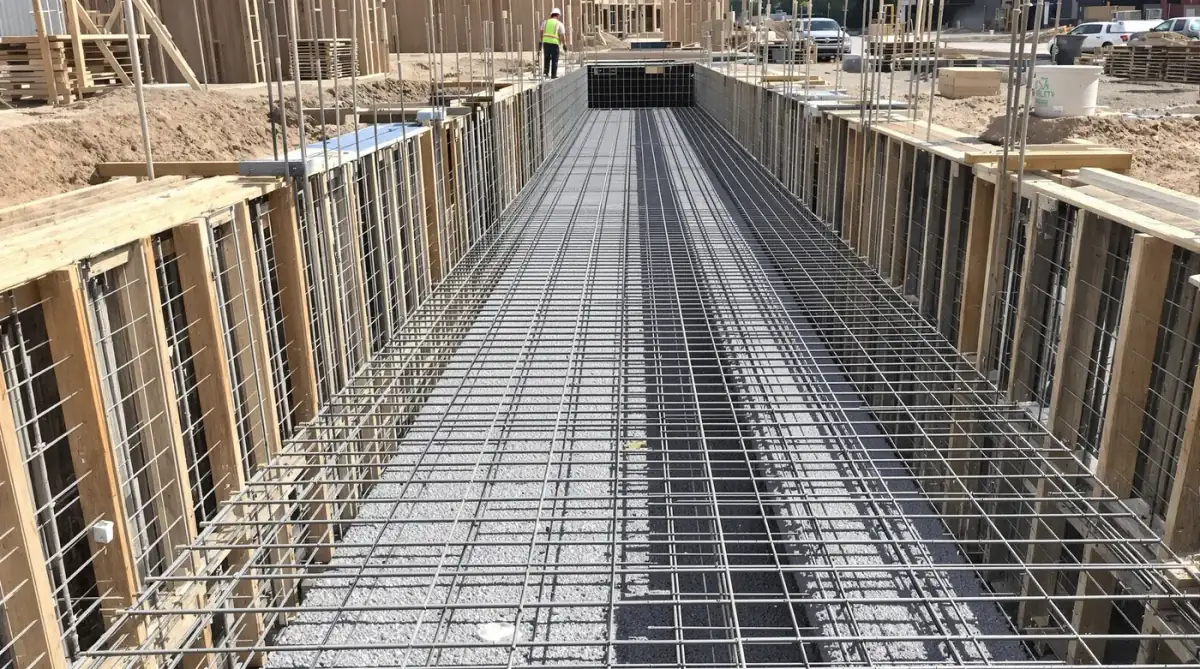
What Connections Tie Continuous Footings to the Structure Above?
The continuous footing is only the first element in the wall system. The connection between the footing and the wall above determines whether the structure performs as a unified system or as two independent pieces that eventually separate. Three primary connection methods are used on Kansas City commercial projects, and the structural engineer selects the appropriate method based on the wall type, the load magnitude, and the seismic design category.
Dowel connections are the most common method for CMU masonry walls. Vertical rebar dowels are cast into the footing at the spacing specified by the structural engineer — typically 24 to 48 inches on center — and project upward into the hollow cores of the first masonry course, which are then grouted solid. The dowels transfer both vertical load and lateral shear between the wall and the footing.
Keyways are formed grooves cast into the top surface of the footing that create a mechanical interlock with the wall or slab poured above. The keyway prevents horizontal sliding between the footing and the wall — critical in seismic design categories where lateral forces must be transferred through the foundation to the soil.
Wall-to-footing rebar extends continuously from the footing into the wall above for cast-in-place concrete walls and tilt-up panel connections. The rebar schedule, lap lengths, and development lengths are specified by the structural engineer and verified by special inspection before concrete placement. Kansas City Concrete Contractors sets all dowels and keyways during the footing pour to ensure precise alignment with the wall construction that follows.
Continuous Footing Cost Ranges in Kansas City
| Component | Typical Range | Notes |
|---|---|---|
| Continuous footing (in place) | $25 – $75 / LF | Width and depth dependent |
| Void form installation | $3 – $6 / SF | 4-6" cardboard void forms |
| Waterstop (PVC) | $4 – $8 / LF | At all below-grade joints |
| Over-excavation & structural fill | $15 – $30 / CY | Standard on Wymore clay sites |
| Compaction testing | $250 – $500 / day | Nuclear density gauge, per visit |
Continuous footing pricing in the Kansas City area depends on wall length, footing width, soil conditions, and whether void forms and waterstops are specified. Projects on Wymore clay with deep over-excavation and void form requirements cost more than sites on granular soils or shallow limestone. Contact us at (816) 339-8133 with your structural drawings for a detailed bid.
What Kansas City GCs Ask About Continuous Footings
What is the difference between continuous footings and spread footings?
How deep are continuous footings installed in Kansas City?
What are void forms and why are they used under footings in KC?
How are continuous footings reinforced for commercial buildings?
Can continuous footings be poured in winter in Kansas City?
How much do continuous footings cost in the Kansas City area?
Continuous Footing Installation Across the Kansas City Metro
Other Commercial Foundation Types We Build
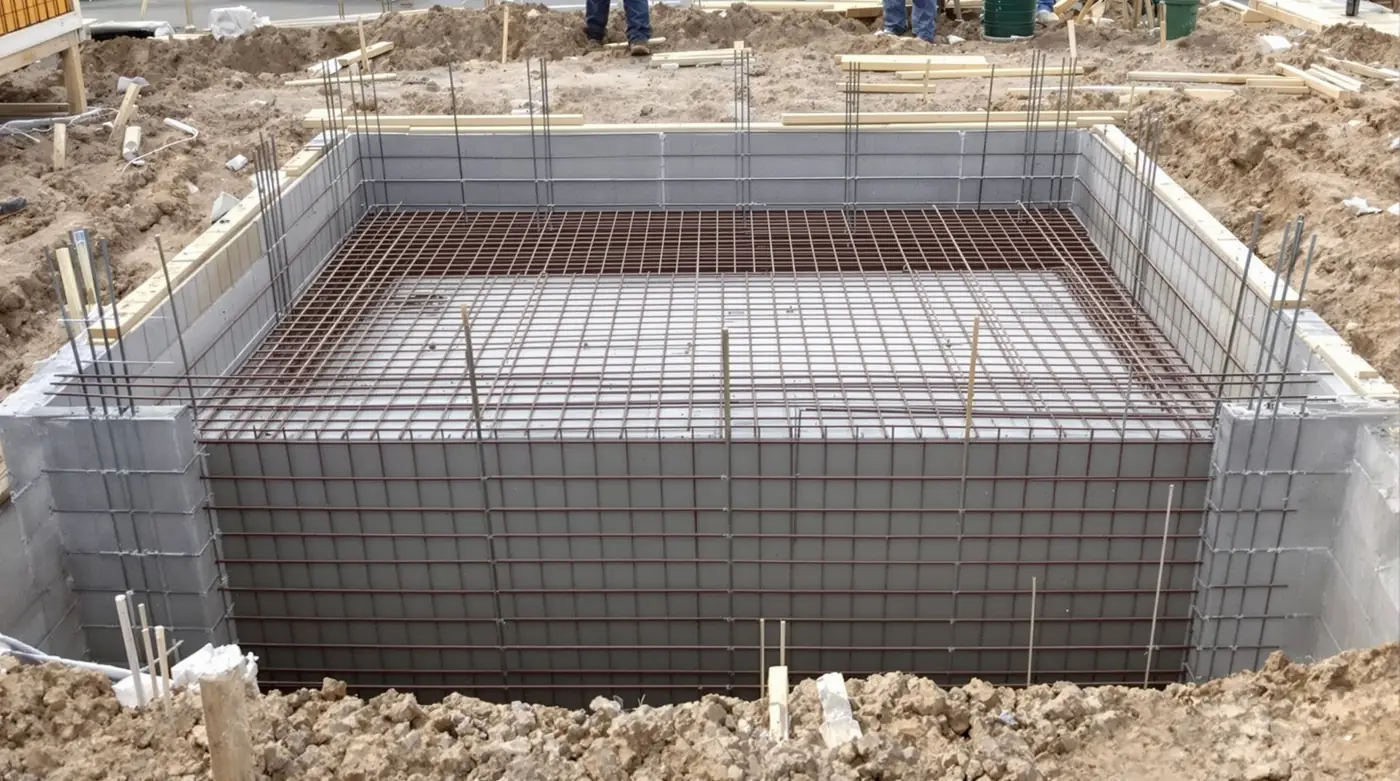
Spread Footings
Individual column pads for concentrated point loads on commercial structures.
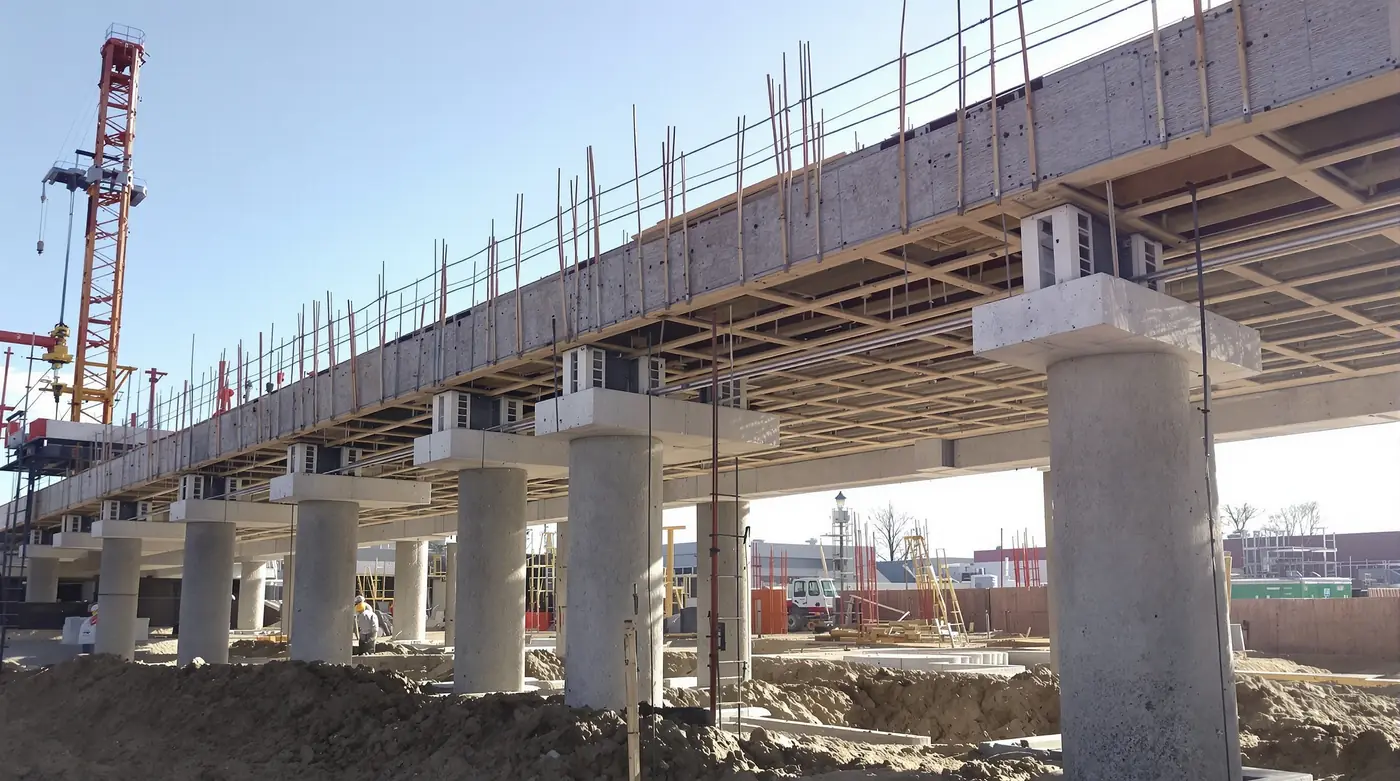
Grade Beams
Reinforced beams spanning drilled piers for deep foundation systems.
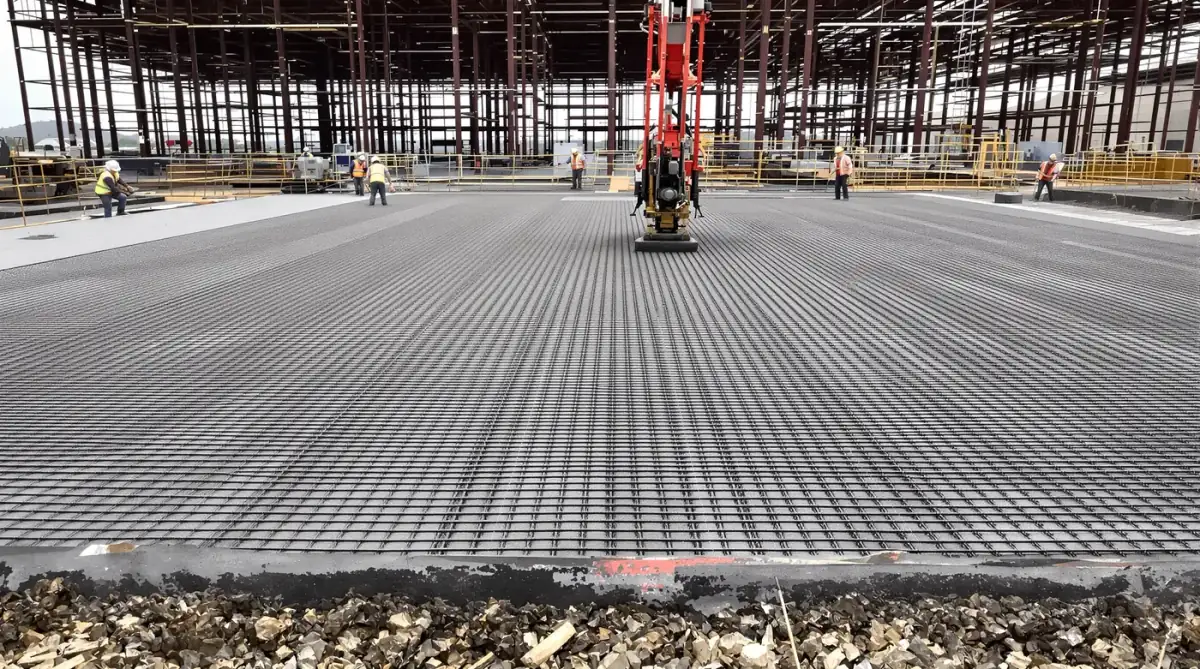
Mat Foundations
Full-footprint slabs distributing building loads on weak or variable soils.
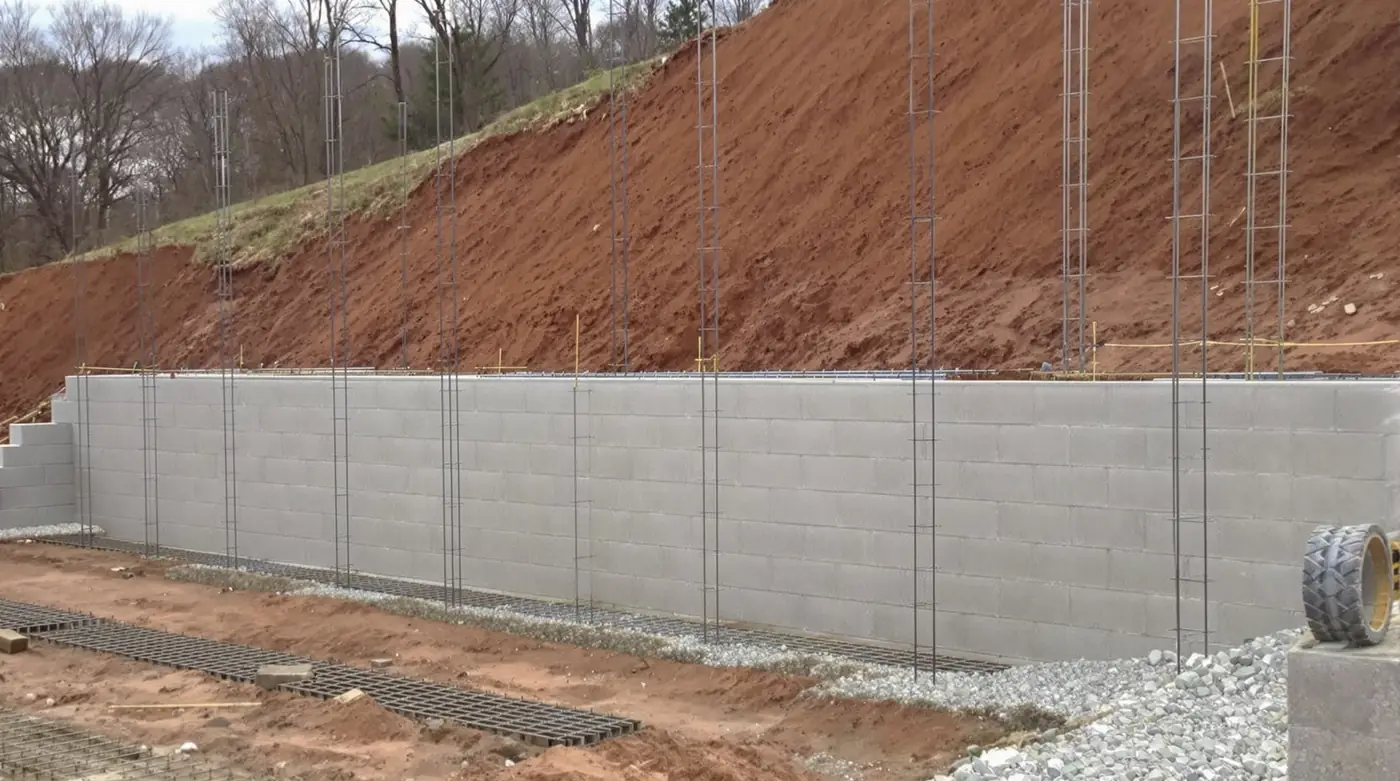
Retaining Wall Foundations
Foundation systems for lateral earth pressure and grade change retention.
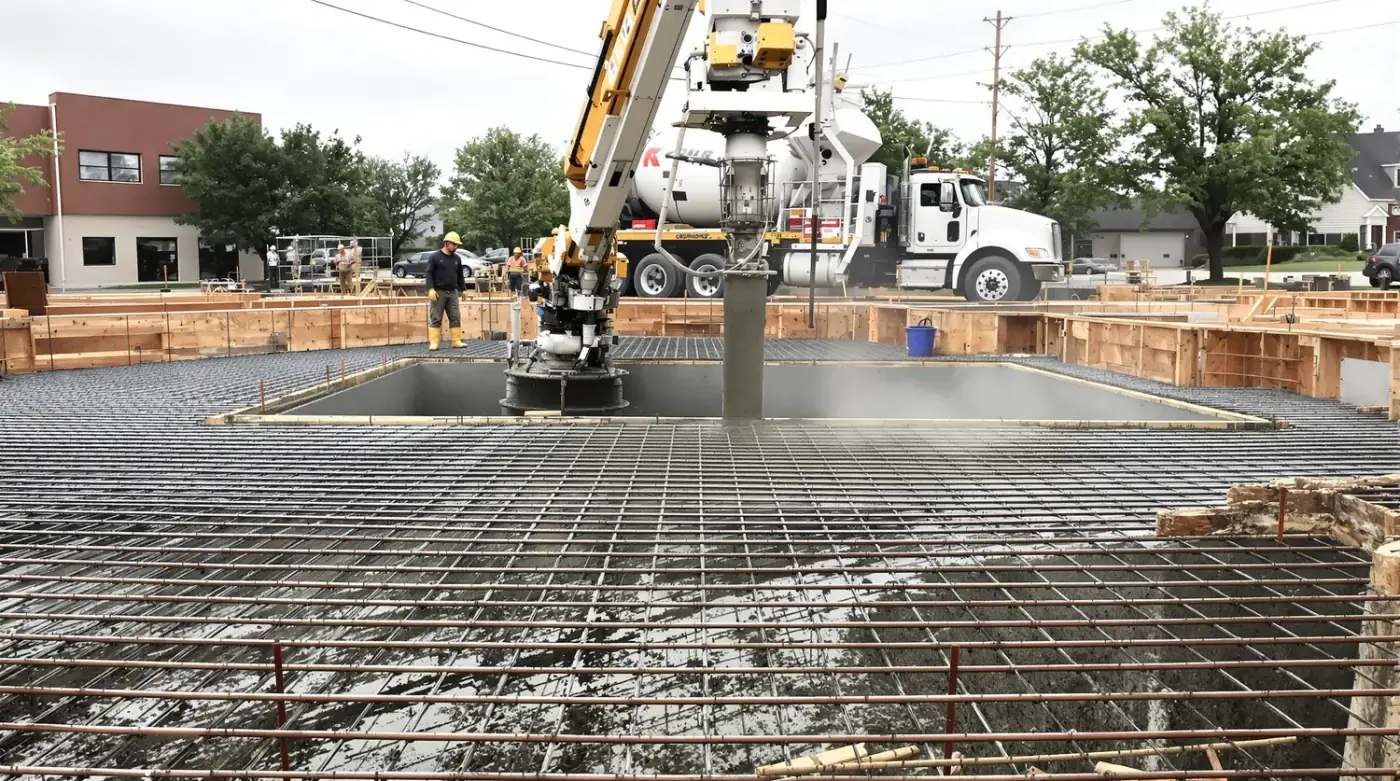
Commercial Foundations Hub
All foundation types: spread footings, mats, grade beams, equipment pads, and more.
Ready to Bid Your Continuous Footing Project?
Kansas City Concrete Contractors builds continuous footings that account for KC's demanding clay soils and frost depth requirements. We handle the full sequence — from over-excavation and structural fill through void form installation, formwork, reinforcement, pour, and backfill — under one contract with one crew and one accountability. Send us your structural drawings, geotechnical report, and project timeline. We return a detailed line-item bid within 5 business days.
- ✓5-day bid turnaround on complete plan sets
- ✓Line-item breakdown for scope-to-scope comparison
- ✓Void forms, waterstops, and compaction included
- ✓Licensed in Missouri and Kansas
Start Your Bid Request
Click below to open the bid request form. Provide the project address, building type, wall lengths, and any structural drawings or geotech reports you have available. We respond within one business day to confirm receipt and request any additional information needed for a complete bid.