
Grade Beam Contractors in Kansas City
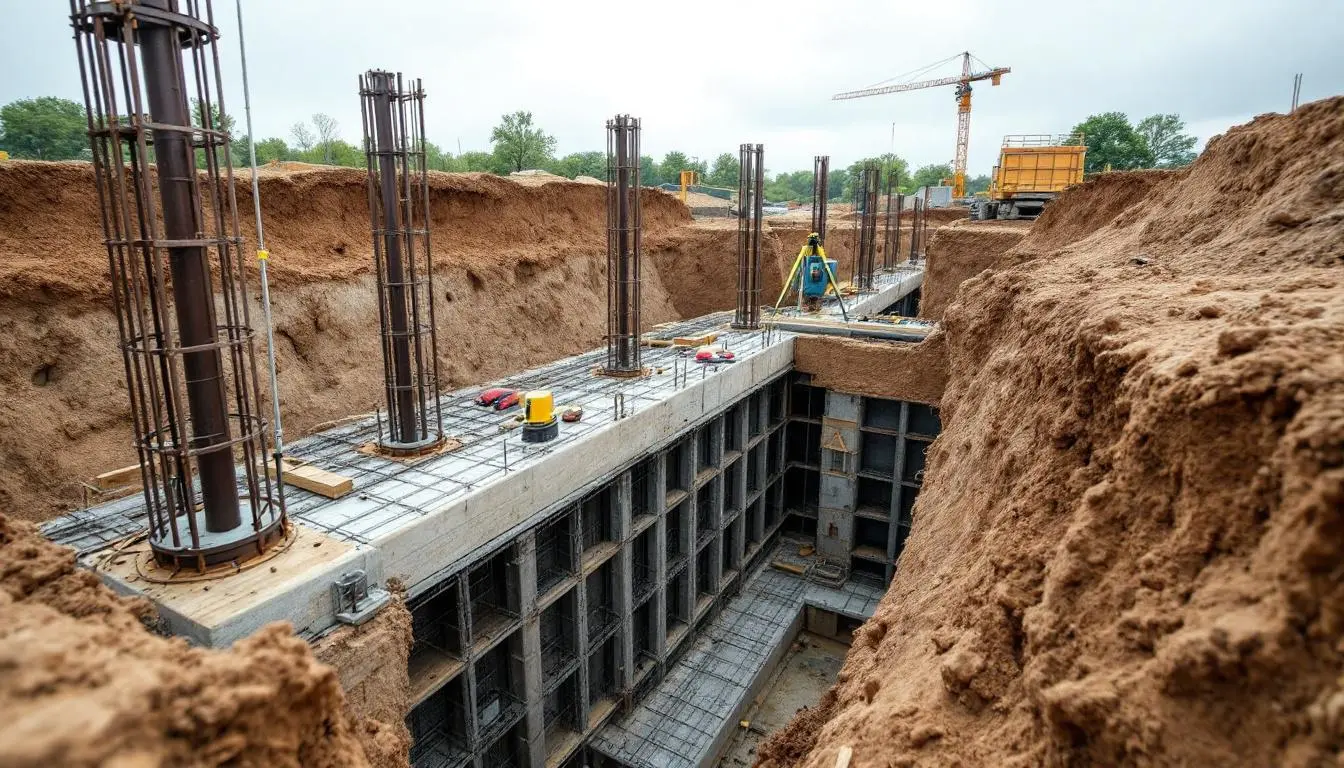
Structural concrete beams spanning between drilled piers — bridging through KC’s deep clay to reach limestone bearing at 15 to 30 feet.
What Is a Grade Beam and How Does It Differ From a Continuous Footing?
A grade beam is a reinforced concrete beam poured at or near grade level that spans between drilled piers, caissons, or pile caps. Unlike a continuous footing that bears directly on the soil beneath it and transfers wall loads through direct bearing pressure, a grade beam does not bear on the soil at all. It spans freely between deep foundation elements and carries building loads to those elements through bending and shear — functioning as a horizontal structural beam rather than a bearing surface. The loads travel down through the pier shafts to competent bearing strata at depth, bypassing the unstable surface soils entirely.
This distinction matters enormously in the Kansas City metro. The Wymore series CH clay that dominates Jackson, Johnson, and Clay counties has a "very high" shrink-swell rating and limited bearing capacity of 1,500 to 3,000 psf. For lighter structures, oversized spread footings on compacted structural fill can distribute the load adequately. But for heavier commercial and industrial buildings — tilt-up warehouses, multi-story steel-frame structures, and buildings with significant column or wall loads — the surface clay simply cannot support the structure regardless of footing size. The loads must travel deeper, to the limestone bedrock that underlies most of the KC metro at depths of 15 to 30 feet below grade.
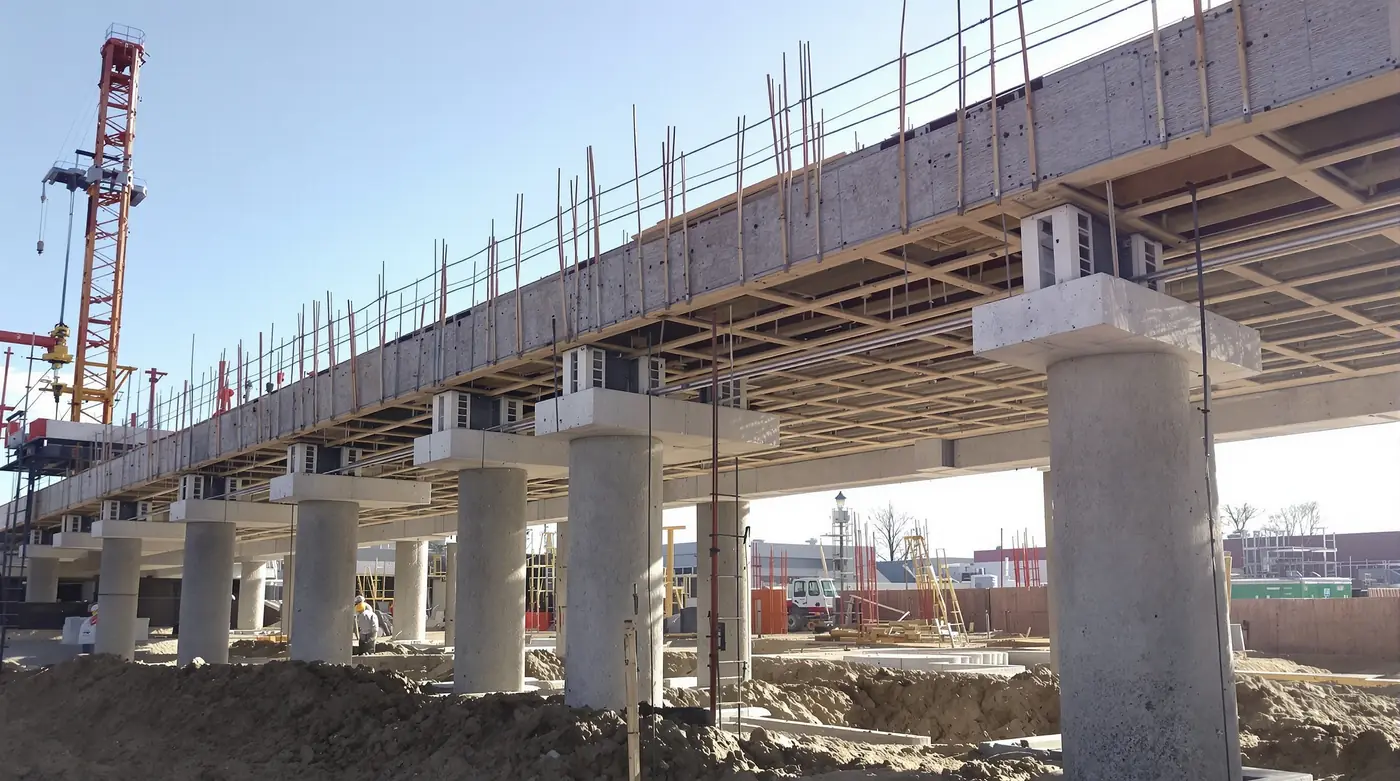
The deep foundation system works as a chain: drilled piers are socketed into limestone bedrock, providing 10,000 psf or more of bearing capacity at depth. Pier caps — enlarged concrete sections at the top of each pier — create a platform for the grade beams. The grade beams span between pier caps, tying the pier system together and supporting the building walls, columns, and slab edges above. Void forms beneath the grade beams prevent contact with the expansive clay, ensuring that seasonal moisture swings and soil heave do not impose uplift loads on the structure. Every link in this chain must perform — a poorly developed rebar connection at a pier cap, a missing void form, or an undersized beam section can compromise the entire deep foundation system.
Kansas City Concrete Contractors forms, reinforces, and pours grade beams for commercial and industrial projects across the KC metro. We coordinate directly with drilled pier subcontractors to verify pier cap dimensions, dowel projections, and cure schedules before setting our formwork. From tilt-up warehouses in southern Johnson County to multi-story steel-frame buildings in downtown Kansas City, our crew delivers precision grade beam construction that passes special inspection on the first call. Call (816) 339-8133 to discuss your project.
Why Does Kansas City’s Deep Clay Overburden Require Grade Beam Foundations?
The Kansas City metro sits on some of the most challenging foundation soils in the Midwest. The Wymore series CH clay that dominates Jackson, Johnson, and Clay counties has 60 to 80 percent clay content and a "very high" shrink-swell rating. Seasonal moisture swings of 15 to 25 percent cause the soil volume to change dramatically between wet and dry seasons, exerting uplift pressure during expansion and leaving voids beneath structures during contraction. Surface bearing on this soil is unreliable for heavy commercial structures at any reasonable footing dimension.
Below the Wymore clay layer, limestone bedrock provides the stable bearing surface that KC's commercial structures need. But that limestone sits at 15 to 30 feet below grade across most of the metro — too deep for conventional footings to reach. Grade beams on drilled piers solve this problem by transferring building loads through the clay to the limestone below, while void forms beneath the beams prevent clay heave from reaching the structure above. Without void forms, the first few seasonal moisture cycles can impose uplift forces that crack beams and displace structural connections.
Have a Deep Foundation Project? Send Us Your Pier Layout and Structural Drawings.
We return a detailed line-item bid within 5 business days. Grade beam dimensions, void form spec, connection details, and pour sequence — all broken out for scope-for-scope comparison.
How Do Grade Beams Connect to Drilled Piers on KC Limestone?
The connection between grade beam and pier cap is the most critical structural detail in any deep foundation system. The pier cap — an enlarged concrete section at the top of each drilled pier — provides the bearing platform where the grade beam lands. Dowels projecting vertically from the pier cap must develop into the grade beam with sufficient embedment length to transfer the full design load through the connection. A poorly developed splice at this point creates a hinge that defeats the purpose of the entire deep foundation system.
Shear transfer at the pier cap connection requires careful detailing. The grade beam carries horizontal loads from the building structure — wind, seismic, and eccentric gravity loads — that must pass through the connection into the pier and down to the limestone bearing surface. Stirrup spacing tightens at pier cap connections to handle the concentrated shear. Embed plates and anchor bolt patterns for the building structure above are cast into the top of the grade beam at precise locations, checked against the structural steel erection drawings with template bolts before every pour.
Snap ties, strongbacks, and walers brace the forms against blowout during the pour. On complex grade beam systems with intersecting beams and varying depths, the pour sequence matters: beams must be poured in a logical order that allows concrete to flow to all areas without trapping air or creating cold joints. Temporary shoring supports the forms and the fresh concrete until the beam reaches sufficient strength to span on its own — typically 70 to 75 percent of design strength per ACI 347. Kansas City Concrete Contractors develops a detailed pour sequence plan for every grade beam project, including form staging, concrete delivery timing, pump positioning, and shoring removal schedule. The plan is reviewed with the structural engineer and the special inspection agency before mobilization.
Grade Beam Specifications — KC Metro
Tilt-Wall Warehouse
Grade beams supporting tilt-up panels with embed plates cast at precise locations matching panel layout. Widest beam sections required.
Multi-Story Steel Frame
Anchor bolt patterns set to ⅛″ tolerance. Template bolts checked against erection drawings before every pour.
Masonry Commercial
Narrower grade beams with rebar dowels for CMU wall reinforcement. Keyway connections for slab-on-grade intersection.
How Does a Grade Beam Project Move From Drawings to Finished Foundation?
Geotech & Pier Layout Review
Review geotechnical boring logs and structural pier layout drawings. Verify limestone bearing depth, pier spacing, pier cap dimensions, and dowel patterns. Flag any discrepancies between the geotech report and the structural design before mobilization. Confirm void form thickness and beam dimensions with the structural engineer.
Pier Installation Coordination
Coordinate with the drilled pier subcontractor to verify pier cap elevations, dowel projections, and cure schedule. Our crew inspects every pier cap for dimensional accuracy and dowel alignment before accepting the work. Pier caps that are out of tolerance get corrected before grade beam formwork begins — a misaligned dowel at this stage becomes an expensive field fix after the beam is poured.
Grade Beam Excavation & Void Forms
Excavate the grade beam trenches to the required depth, install 4 to 6 inch cardboard void forms on the soil surface beneath the beam footprint. The void forms prevent Wymore clay heave from contacting the bottom of the grade beam. Void forms are placed continuously between pier caps with lapped joints and taped seams to prevent concrete leakage during the pour.
Formwork & Rebar
Set heavy-gauge steel or wood forms to structural dimensions, braced with snap ties, strongbacks, and walers to resist the lateral pressure of wet concrete. Rebar per the structural schedule — longitudinal bars top and bottom, stirrups at specified spacing, and dowel development into pier caps. All reinforcement inspected against the drawings before calling for special inspection.
Connection Details & Pre-Pour
Set embed plates, anchor bolt templates, and column connection hardware to tolerances of plus or minus one-eighth inch. Template bolts dry-set and checked against structural steel erection drawings. Special inspection agency verifies formwork, rebar placement, embeds, and void form installation. Hold point — no concrete placed until inspection is passed and documented.
Pour, Strip & Backfill
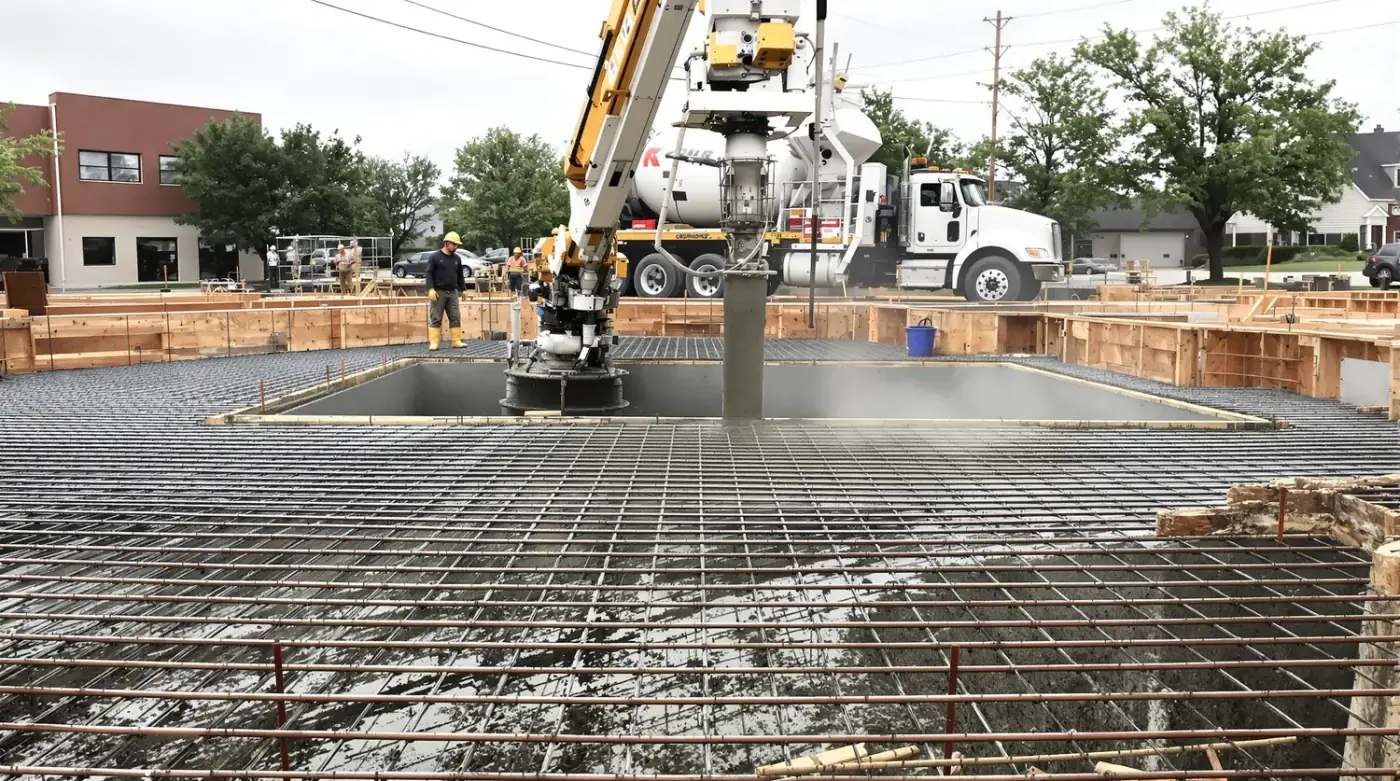
4,500 to 5,000 psi air-entrained concrete placed by boom pump or line pump. Internal vibrators consolidate every lift to eliminate honeycombing around rebar and at pier cap connections. Curing compound applied immediately. Forms stripped after 24 to 48 hours depending on temperature. Backfill placed in lifts and compacted without disturbing void forms. Break test cylinders verified at 7 and 28 days.
What Makes Void Forms Critical Under Grade Beams on KC Clay?
Grade beams are designed to span freely between pier caps — they should not bear on the soil between piers. When Wymore CH clay absorbs seasonal moisture and swells, it pushes upward with significant force. Without void forms, this swell force acts directly on the bottom of the grade beam, generating uplift loads the beam was not designed to carry. The result is cracking, displacement of structural connections, and potential failure of the grade beam as a spanning member.
The 4 to 6 inch cardboard void forms are placed on the soil surface before the grade beam forms are set. The forms sit on top of the void material, and when concrete is placed, the void remains beneath the beam. Over 3 to 5 years, the void form material degrades, leaving an air gap that allows the clay to swell freely without contacting the beam. On KC clay sites with known heave history, void forms are not an optional detail — they are a structural requirement that prevents damage within the first few seasonal moisture cycles.
At pier cap connections, the grade beam carries embed plates, anchor bolts, or rebar dowels for the building structure above. Tilt-up panel connections require embed plates cast flush with the top of the grade beam at precise locations matching the panel layout. Steel frame connections require anchor bolt patterns set to tolerances of plus or minus one-eighth inch. Template bolts are dry-set and checked against the structural steel erection drawings before every pour. The void form installation beneath the grade beam must be continuous — any gap in the void material creates a point where clay swell can reach the beam, generating concentrated uplift that can shear the beam at that location.
Grade Beam Cost Ranges in Kansas City
| Component | Typical Range | Notes |
|---|---|---|
| Grade beam (in place) | $40 – $120 / LF | Width, depth, and rebar dependent |
| Drilled piers (by deep foundation sub) | $50 – $150 / LF | Pier diameter and depth dependent |
| Void form installation | $3 – $6 / SF | 4-6" beneath all grade beams |
| Shoring & temporary supports | $5 – $15 / LF | Complex beam intersections |
| Embed plates & anchor bolt templates | $50 – $200 / each | Complexity and tolerance dependent |
Grade beam costs in the Kansas City metro vary based on beam dimensions, reinforcement, connection complexity, and the number of pier caps being tied together. Projects with tilt-up panel connections require more precise embed placement than standard masonry supports. Call (816) 339-8133 with your structural drawings for a detailed bid.
What Kansas City GCs and Engineers Ask About Grade Beams
What is a grade beam and when is it used in Kansas City?
How deep do drilled piers go in the Kansas City area?
What is the difference between a grade beam and a continuous footing?
Why are void forms critical under grade beams on KC clay?
How are grade beams reinforced?
How much do grade beams cost in Kansas City?
Grade Beam Construction Across the Kansas City Metro
Other Foundation Types & the Commercial Foundations Hub
Spread Footings
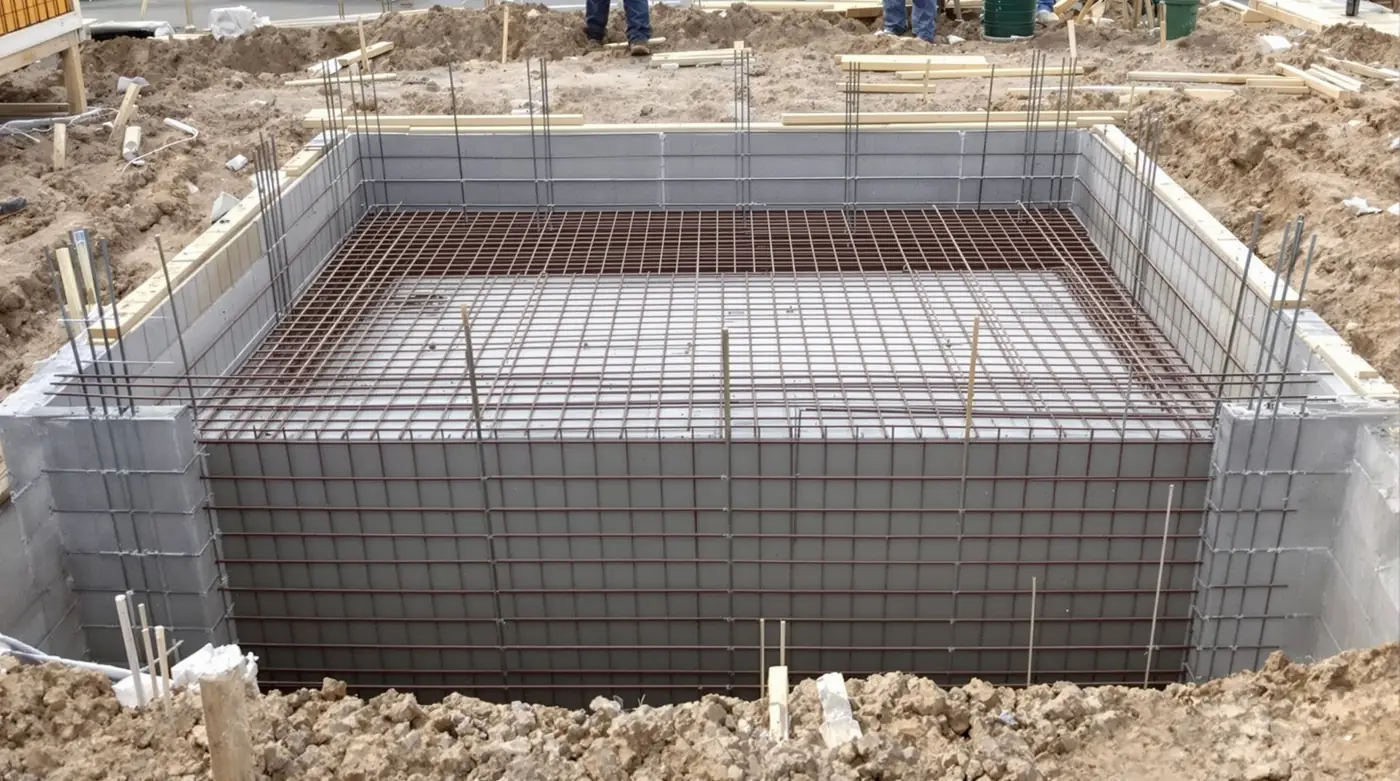
Individual column footings engineered for KC clay bearing capacity.
Continuous Footings
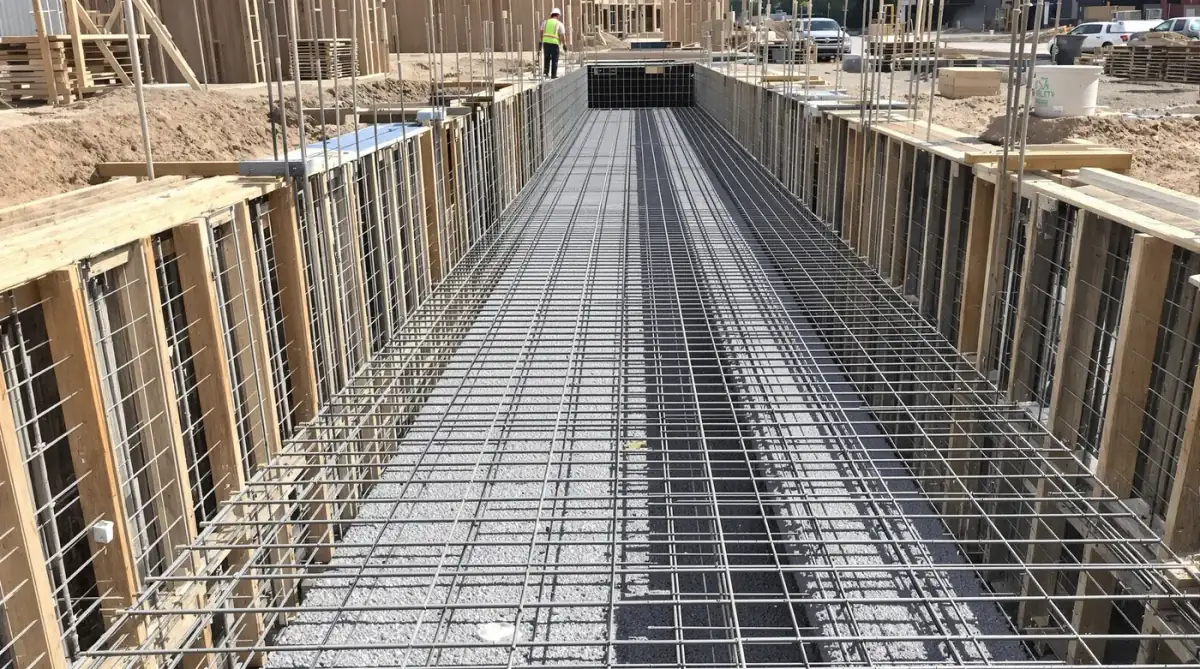
Strip footings for load-bearing walls on prepared subgrade.
Mat Foundations
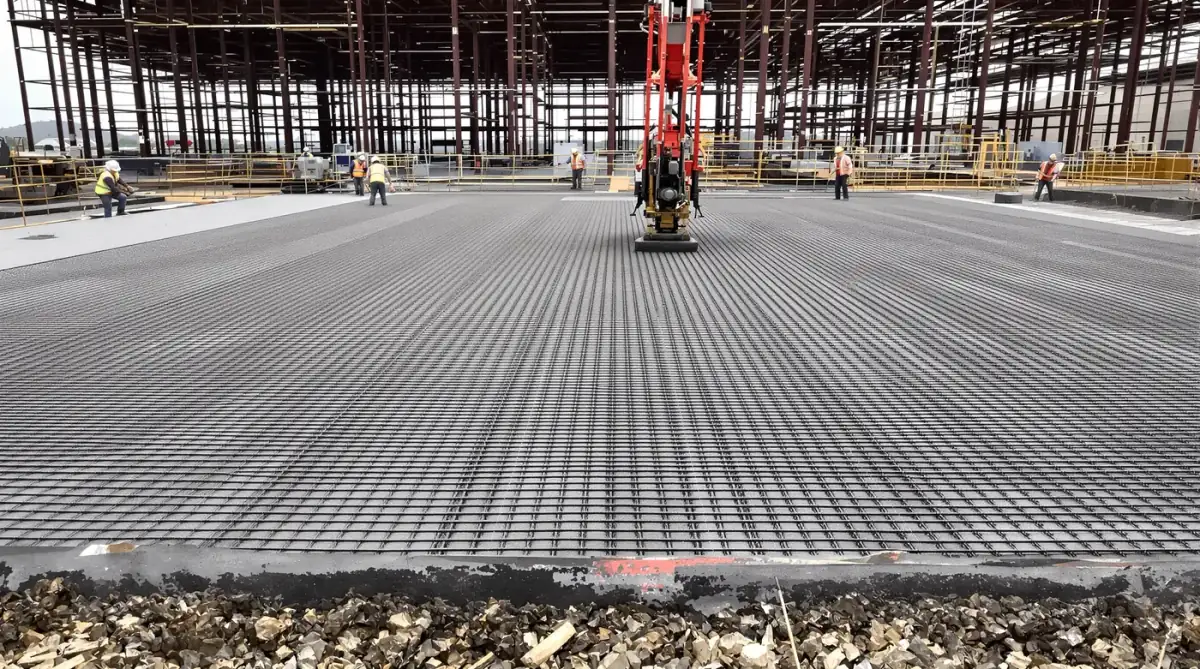
Full-footprint slabs for heavy or variable loading on soft soils.
Retaining Wall Foundations
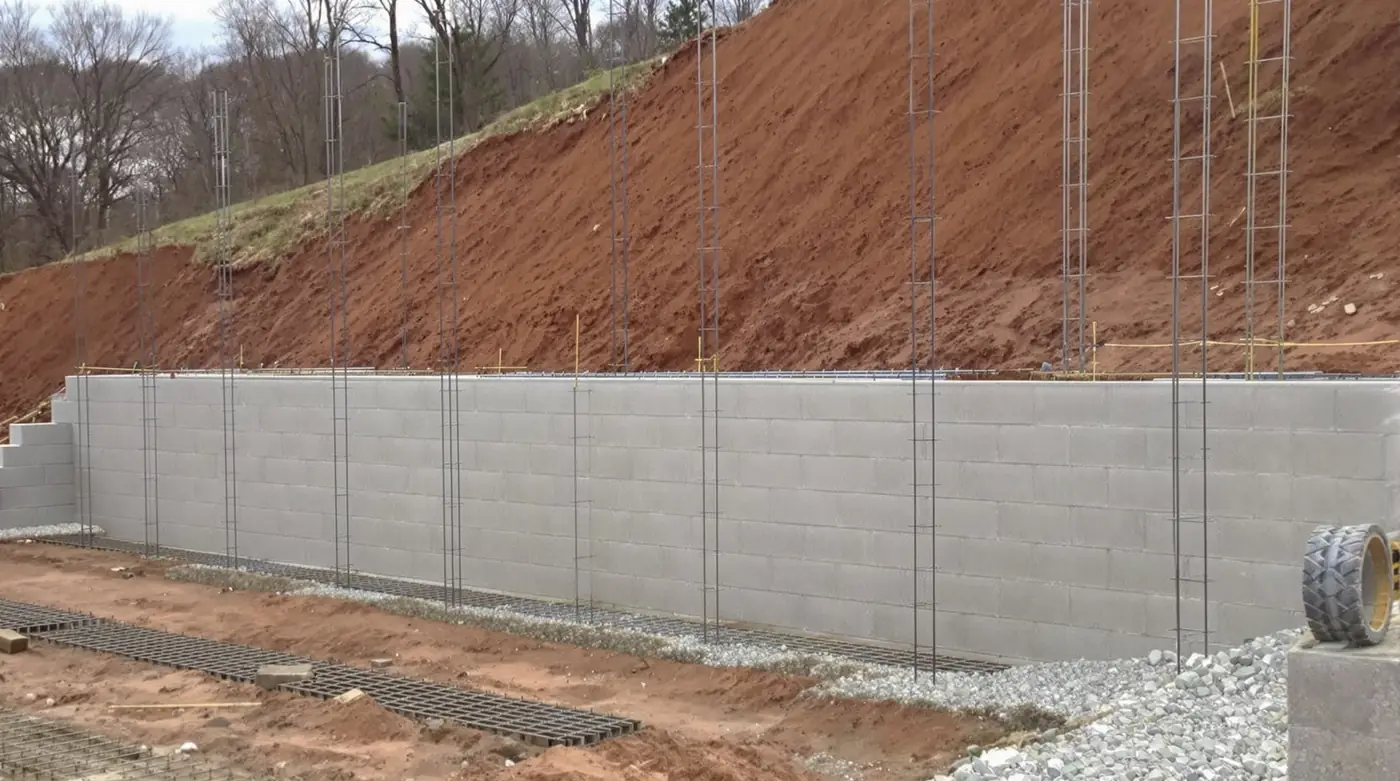
Foundations for cantilevered, gravity, and tied-back retaining walls.
Commercial Foundations Hub
Full overview of all commercial and industrial foundation services.
Get a Detailed Bid on Your Grade Beam Project
Send us the structural drawings, pier layout, and geotechnical report. We return a detailed bid within 5 business days that separates grade beam formwork, reinforcement, void forms, concrete, shoring, and connection hardware as discrete line items — so your team can compare scope-for-scope against other subcontractors.
- ✓5-day bid turnaround on complete plan sets
- ✓Line-item breakdown for apples-to-apples comparison
- ✓Pier sub coordination included in scope
- ✓Licensed in Missouri and Kansas
Start Your Grade Beam Bid Request
Click below to open the bid request form. Provide the project address, building type, pier layout, and any drawings or geotech reports you have available. We respond within one business day to confirm receipt and request any additional information needed for a complete bid.