
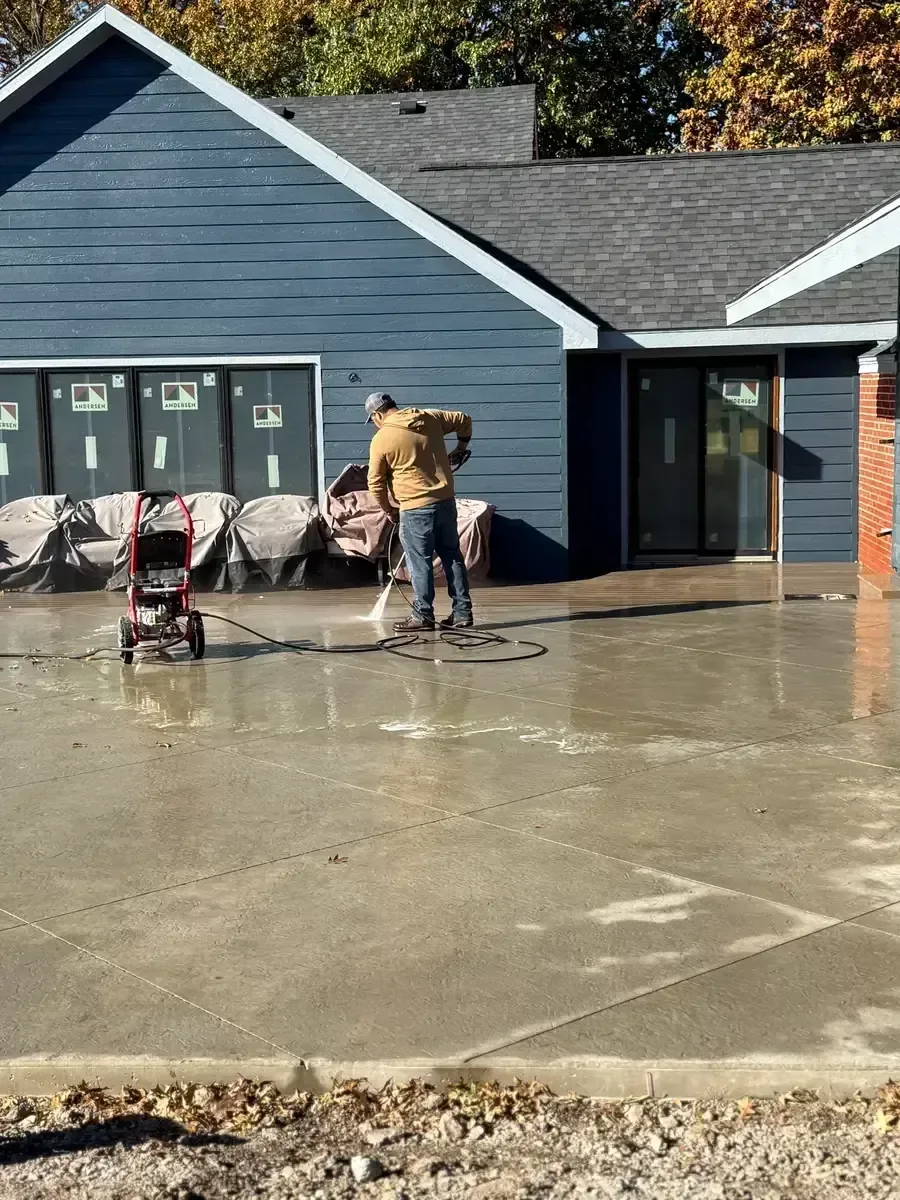
Residential Concrete Contractors in Kansas City
We pour driveways, patios, walkways, pool decks, and decorative concrete for homes across the KC metro, each one built on a proper base so it holds up to clay soil and hard winters. It starts with a free estimate visit and a written quote that lists every part of the job.
What Concrete Projects Do We Build for Kansas City Homes?
We build every part of a home’s hardscape: driveways, patios, walkways, pool decks, decorative surfaces, retaining walls, and steps, plus the repair work that keeps existing concrete safe. Each service has its own page with the details; this is the map.
Driveways
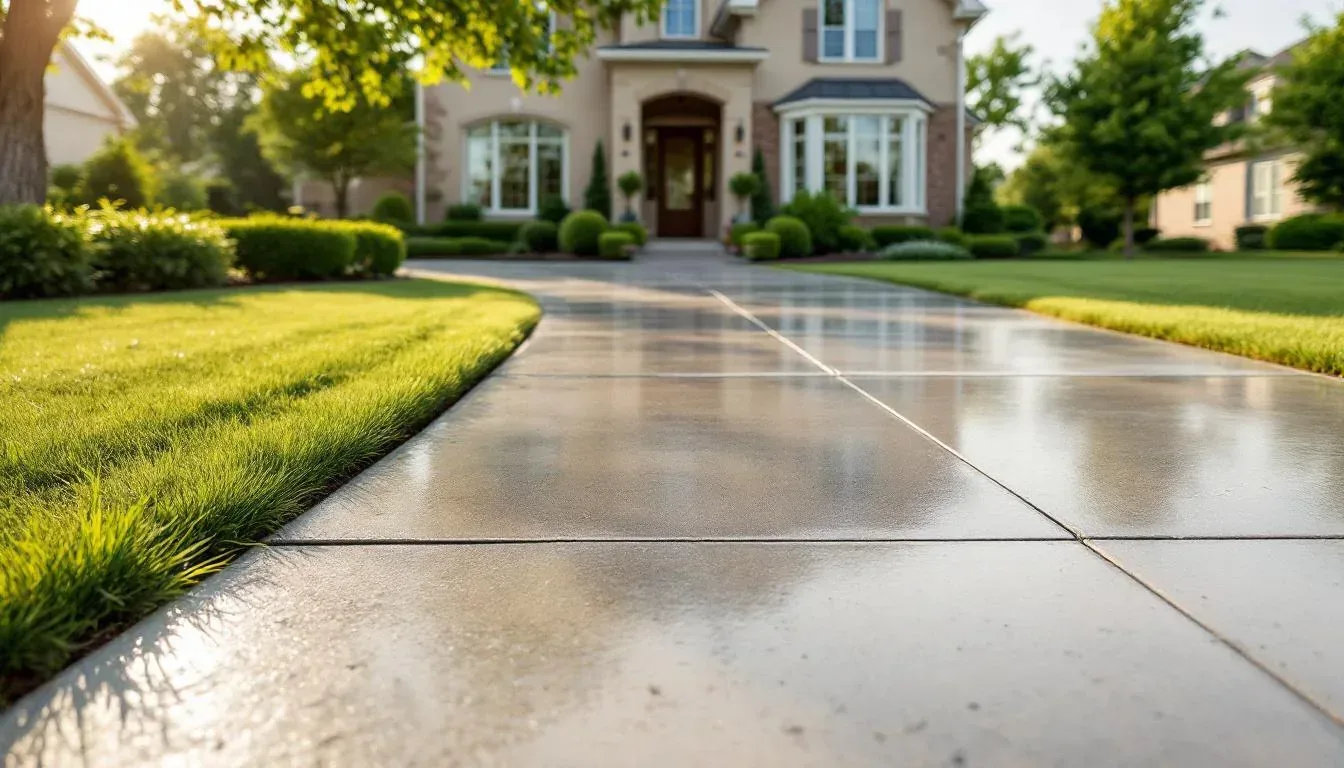
The driveway carries the heaviest loads on a residential property, so it gets the deepest base and reinforcement of anything we pour at a home. We remove the old slab, correct the grade so water runs toward the street instead of the garage, and lay out joints before the truck arrives. Our concrete driveway installation page covers finishes, approaches, and turnarounds.
Patios
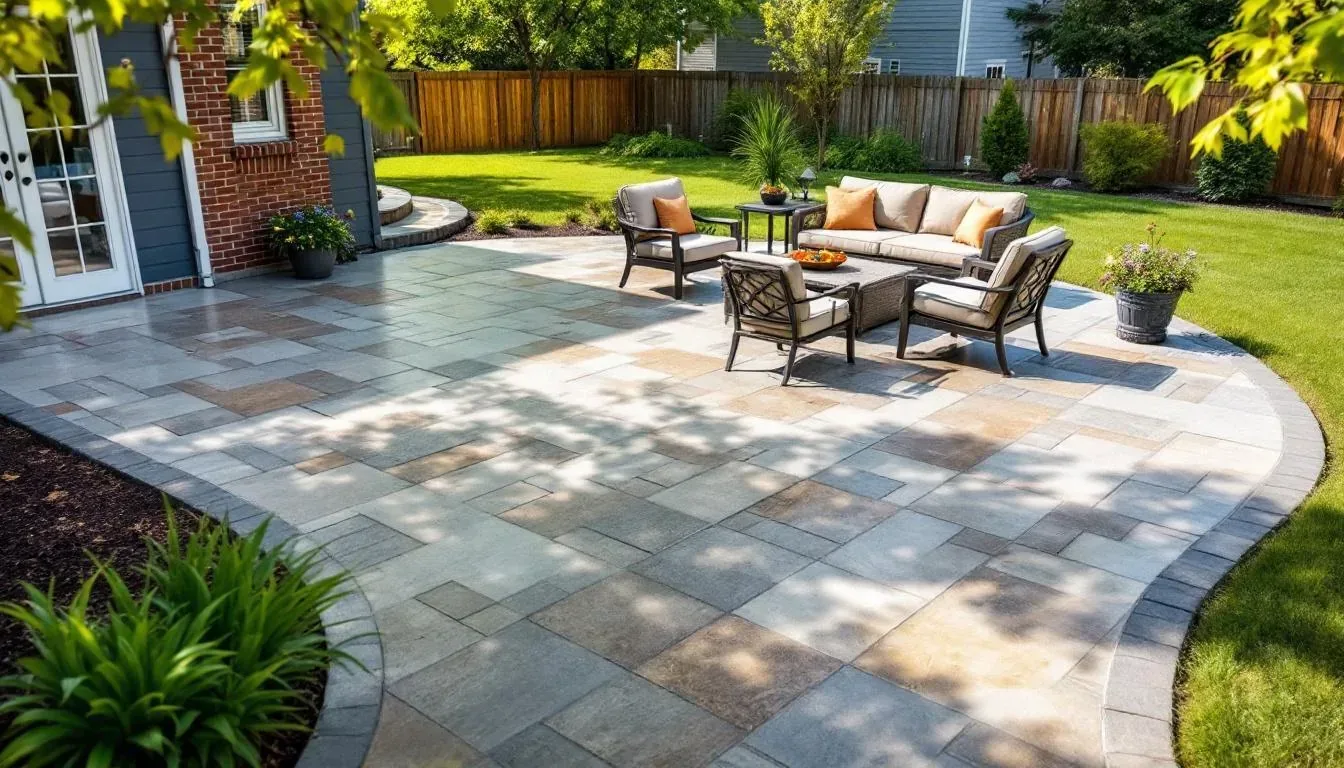
A patio is sized around how you will use it: a dining table and grill, a fire pit circle, or room for a crowd. We slope it away from the house, plan joints so they fall where furniture does not, and tie cleanly into steps and doors. See our concrete patios page for shapes, sizes, and add-ons such as seating walls.
Sidewalks & Walkways
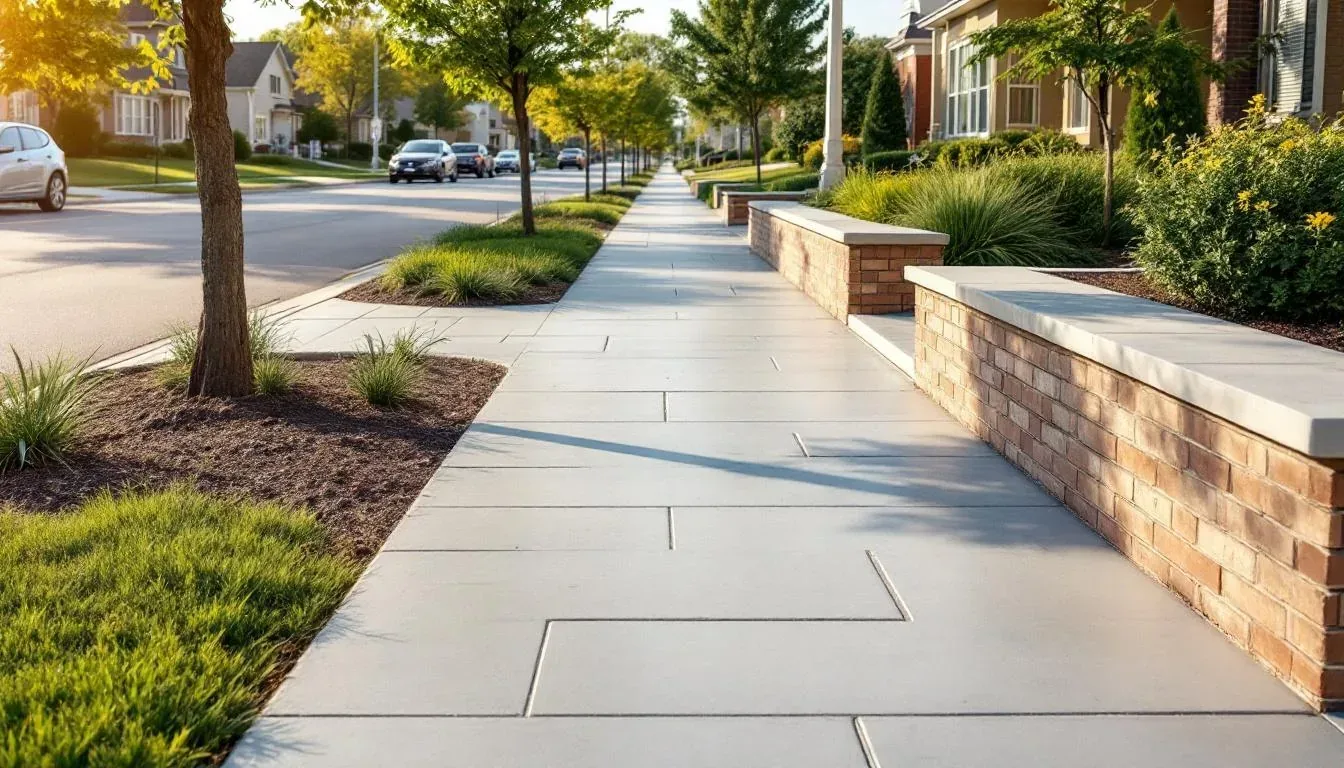
Front walks, side paths to the gate, and the city sidewalk along your lot. New walks sit on a compacted base with a slight cross slope for drainage, and replacements are usually done a panel at a time. Our sidewalks and walkways page explains who is responsible for the public sidewalk.
Stamped Concrete
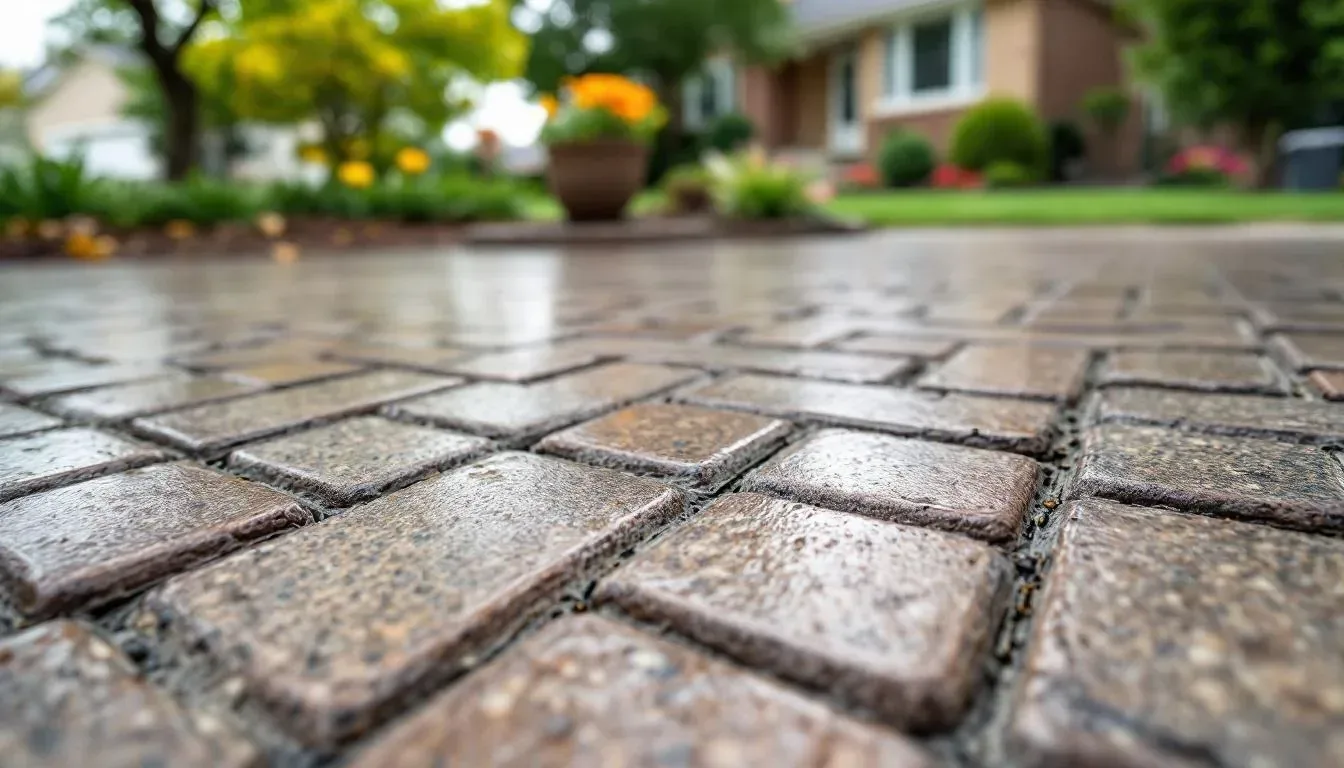
Stamped concrete gives the look of slate, flagstone, brick, or wood plank in one continuous slab, without the gaps where weeds grow between pavers. Color is built into the concrete, and a contrasting release agent adds depth to the pattern. Pattern and color options are on our stamped concrete page.
Stained & Colored Concrete
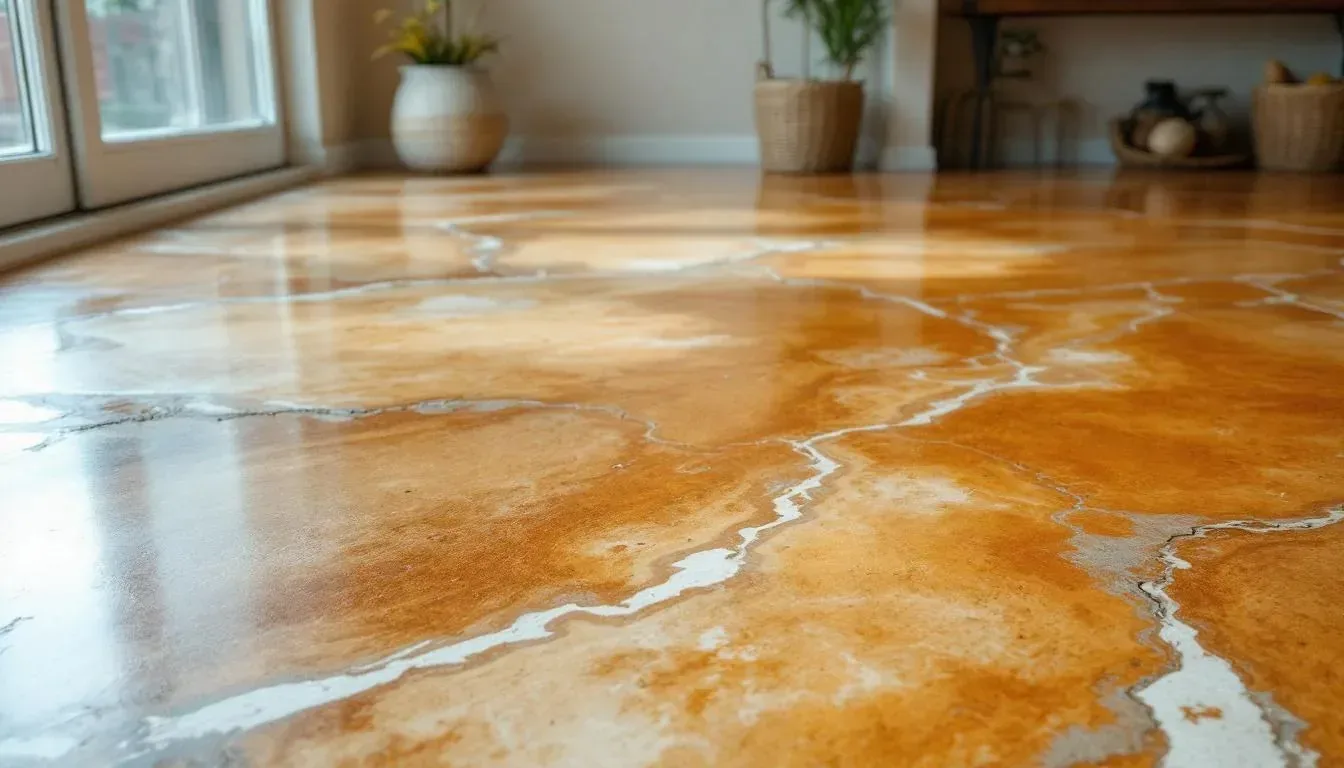
Stains and integral color change the look of a surface without changing its texture. Acid stains create variegated, natural tones, while integral color runs through the full depth of the slab so chips do not show gray. Browse the palette on our stained and colored concrete page.
Decorative Concrete
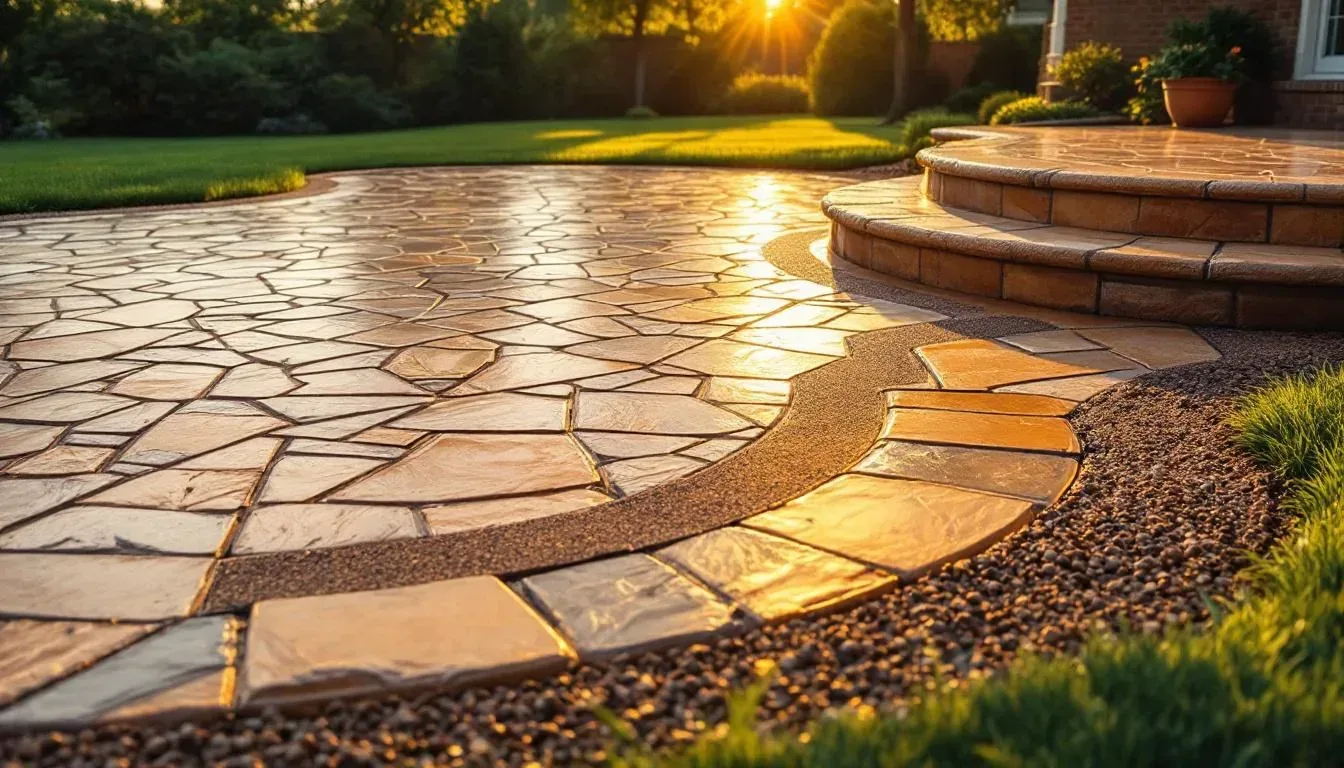
Exposed aggregate, borders and banding, and combinations of stamped and stained finishes on the same project. Our decorative concrete page is the place to compare the options side by side before you choose.
Pool Decks & Pool Installation
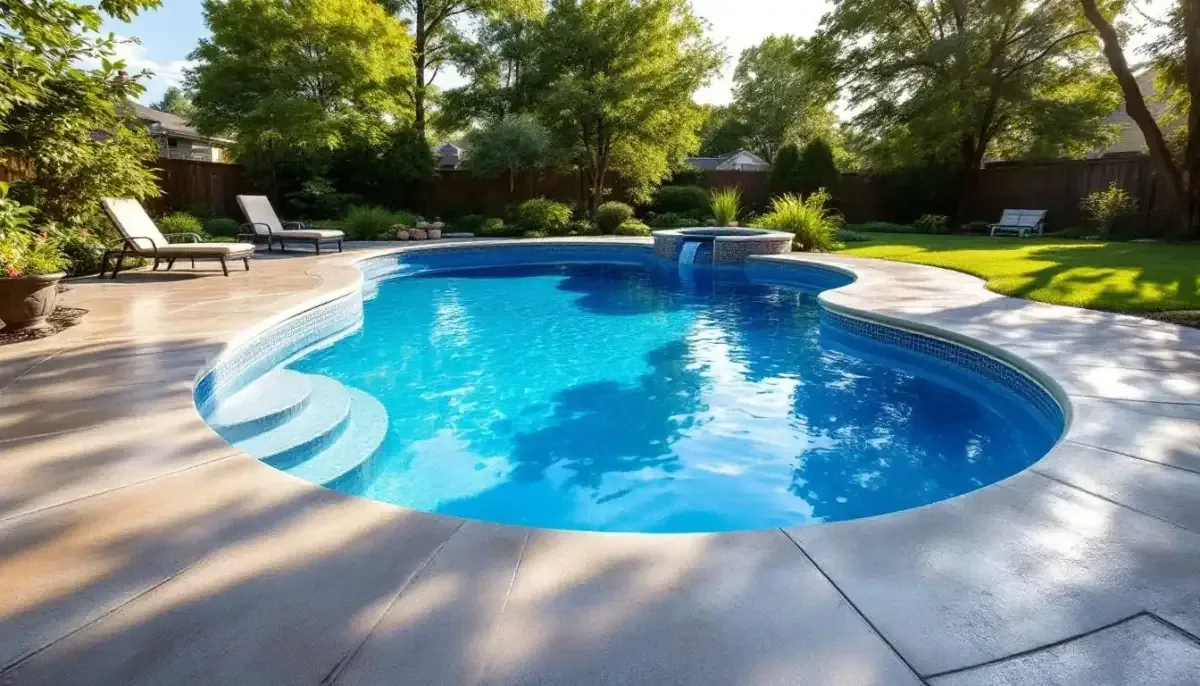
A pool deck needs a slip-resistant finish, joints that work with the coping, and drainage away from the water. We also install fiberglass pools and pour the surrounding deck as one project. See concrete pool decks and fiberglass pool installation.
Retaining Walls
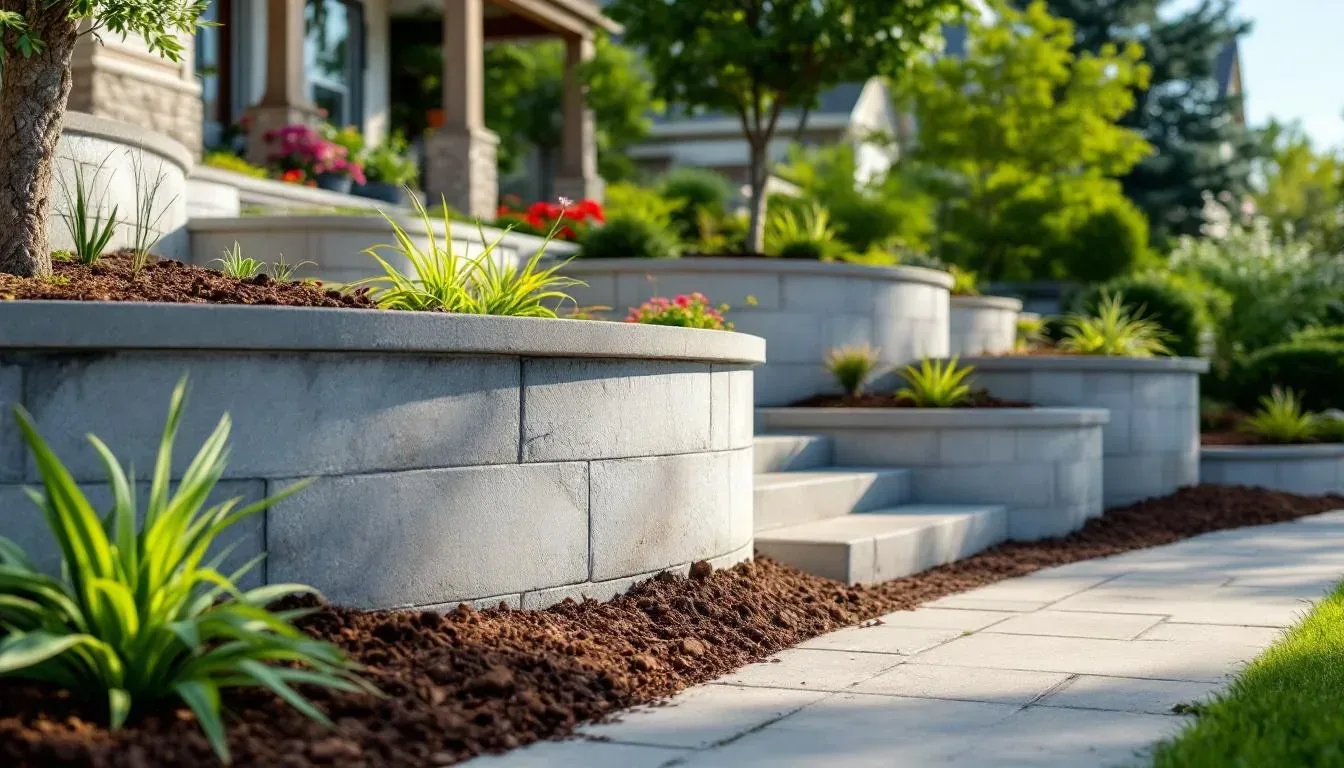
Walls that hold back a sloped yard, create a level area for a patio, or keep soil off a driveway. What happens behind the wall, especially drainage, matters more than the face you see. Our retaining walls page walks through the choices.
Steps, Footings & Structural
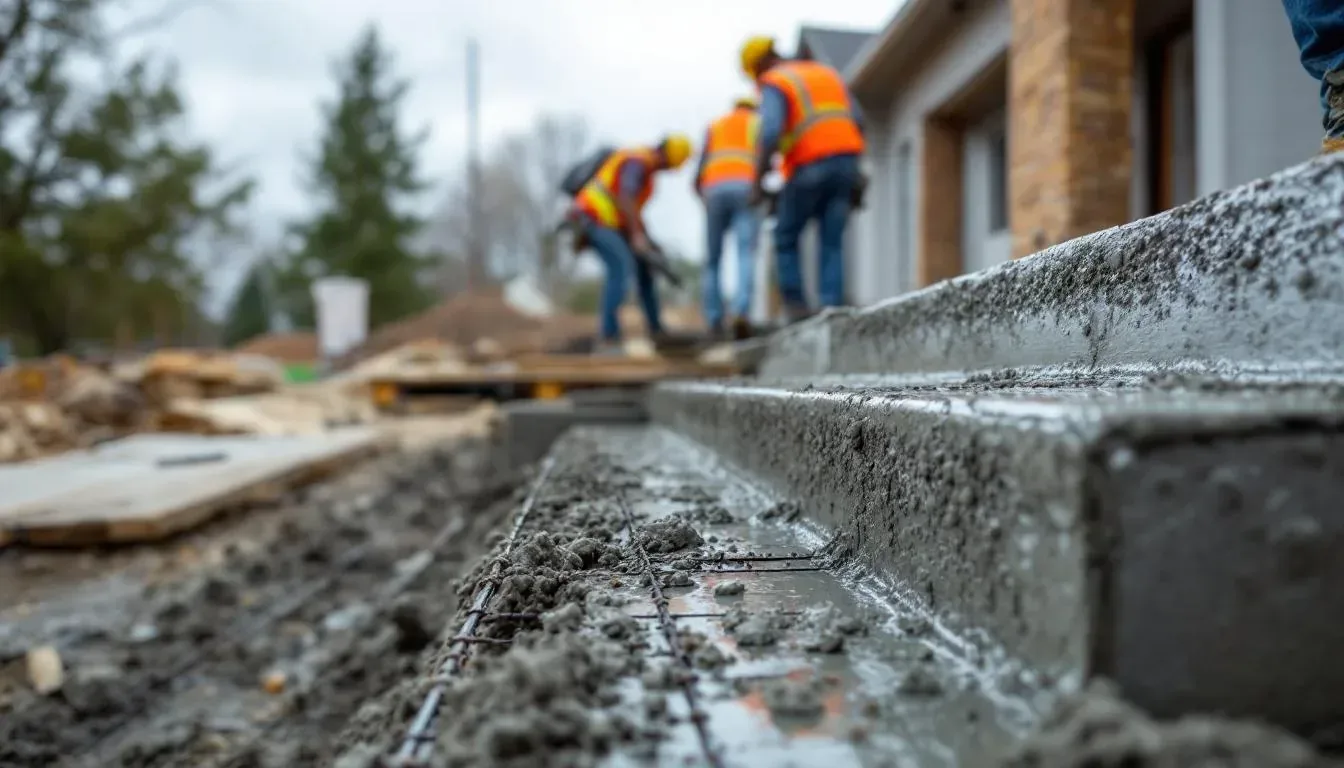
Front steps, deck footings, and piers carried below the frost line so they do not heave in winter. Reinforced steps hold their shape far longer than thin, unreinforced sets. See steps, footings, and structural concrete for details.
Repair & Resurfacing
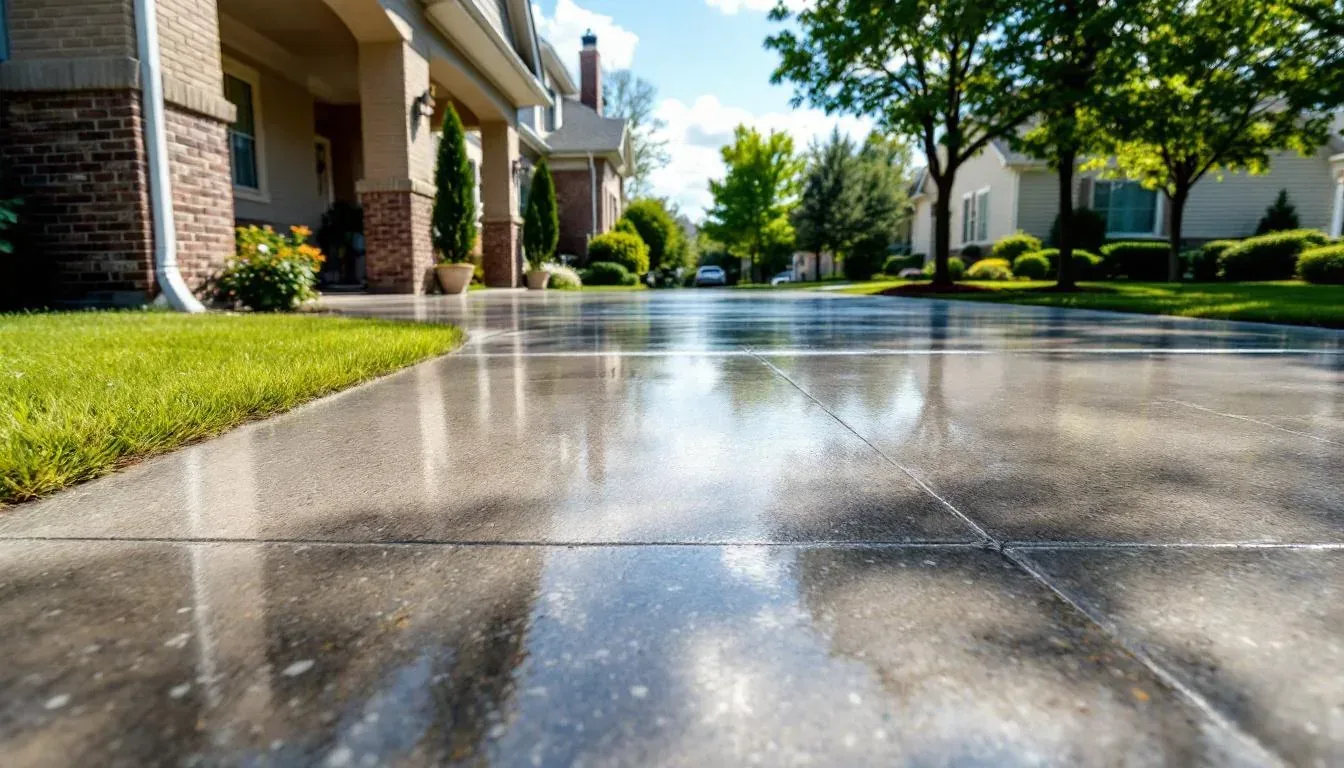
Not every problem needs new concrete. Concrete repair handles cracks, sunken sections, and trip hazards, while resurfacing restores a worn surface on a slab that is still solid.
Which Concrete Finish Is Right for Your Home?
A plain broom finish is the most economical and the most slip-resistant choice for everyday surfaces. Stamped, stained, and exposed aggregate finishes cost more and ask a little more upkeep in exchange for a custom look.
Many homes mix them: a broom-finish driveway with an exposed aggregate border, or a stamped patio beside a plain side walk. For pattern and color choices, see stamped patterns, stain and color options, and our decorative finishes overview.
| Finish | Cost Compared to Plain | Maintenance | Where It Fits |
|---|---|---|---|
| Broom finish | The baseline. The most economical choice. | Reseal every 2 to 3 years. | Driveways, walkways, side yards, and anywhere grip matters most. |
| Stamped | Noticeably more than plain, because of color, pattern mats, extra finishing labor, and sealing. | Reseal every 2 to 3 years to keep the color rich and the texture protected. | Patios, front entries, and pool surrounds (with a non-slip additive in the sealer). |
| Stained & colored | More than plain. Integral color adds to the concrete itself; stains add a finishing step. | A UV-stable exterior sealer, resealed on a regular schedule. | Patios, porches, covered areas, and matching the color of a home’s exterior. |
| Exposed aggregate | More than plain, with the stone selection and timing-sensitive finishing driving the difference. | Sealing is essential here to lock the stone in and resist freeze-thaw. | Driveways, walkways, and pool decks, thanks to natural slip resistance. |
Should You Pour New, Repair, or Replace?
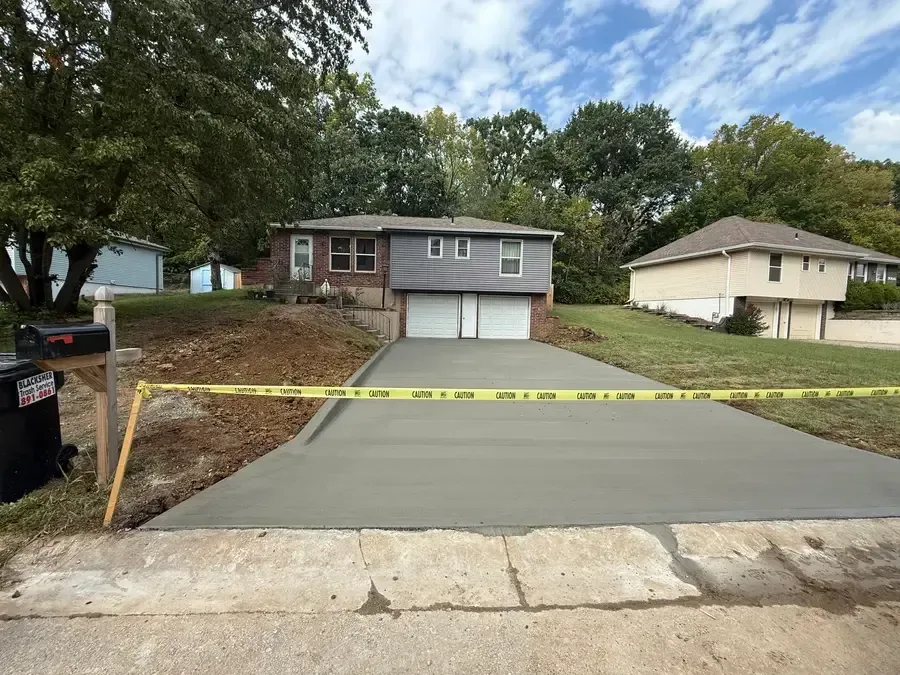
Pour new when the space does not exist yet, repair when the damage is local and the slab is solid, and replace when cracking is widespread or the slab has settled as a whole.
Pour New
When the space does not exist yet: a first patio, a wider driveway, a walkway where the lawn is worn to dirt.
Repair
When the damage is local and the slab around it is solid: a crack, one sunken panel, a single trip hazard.
Replace
When cracking is widespread, the slab has settled as a whole, or water runs toward the house because of the grade.
Our concrete repair guide compares repair, resurfacing, and replacement condition by condition.
Planning a Project This Season?
Book an estimate visit and get a written quote for your driveway, patio, or walkway.
How Do We Build Home Concrete for Kansas City Soil and Winters?
By getting the ground right before any concrete arrives: water drains away from the house, the base is compacted, joints control where the slab cracks, and the surface is protected against freeze-thaw.
Drainage & Slope
Every slab near the house slopes away from the foundation, and we look at where downspouts empty before setting forms. Water that runs toward the house is the most common problem we fix.
A Real Base on Clay
Kansas City clay swells when wet and shrinks when dry. Compacted soil and a layer of base rock under the slab keep that movement from reaching the concrete.
Joints in the Right Places
Concrete shrinks as it cures, and control joints decide where the resulting cracks go: in straight lines, hidden in the joint, rather than across the middle of a panel.
Freeze-Thaw & Sealing
Air-entrained concrete resists winter damage, and a sealer applied every 2 to 3 years keeps water and salt out. Skip rock salt; it is hard on any concrete surface.
How Does a Residential Concrete Project Work?
A home project moves through six steps, from the estimate visit to the day you first park on or walk across the new concrete.
Estimate Visit
We come to your home, measure, and talk through how you want to use the space. We also look at drainage, the existing slab, and access for equipment.
Written Quote
Your quote breaks the job down line by line: demolition, base preparation, concrete specifications, reinforcement, finishing, and sealer. No lump sum to guess at.
Scheduling
Exterior concrete is poured from spring through fall. We schedule around the weather and confirm the date with you before the crew arrives.
Demolition & Prep
Old concrete is removed and hauled away, the grade is set, the base is compacted, and forms and reinforcement go in.
Pour & Finish
The concrete is placed and finished to the look you chose, joints are cut, and decorative finishes get their color and texture. Most residential projects wrap up in 1 to 3 days.
Cure & First Use
You can typically walk on new concrete after 24 to 48 hours and drive on it after about 7 days. We tell you when to reseal and how to care for it through its first winter.
What Affects the Cost of Residential Concrete?
Size, what is there now, the finish, the grade, and access drive the cost of a residential project, which is why a written quote after an estimate visit is the only accurate number.
If you are budgeting for a new driveway, our guide to concrete driveway cost in Kansas City explains what goes into the number.
Size & Thickness
Square footage matters, and so does thickness: a driveway carries more weight than a walkway and is built for it.
What Is There Now
Removing and hauling an old slab, or building up a low spot, adds work before the pour.
Finish
Broom finish is the most economical. Stamped, stained, and exposed aggregate each add material and labor.
Grade & Drainage
Correcting a slope that sends water toward the house, or adding steps to handle a grade change, changes the scope.
Access
A backyard patio behind a fence takes more handling than an open driveway at the street.
Add-Ons
Seating walls, fire pit pads, borders, and steps are priced on their own lines in your quote.
What Do Kansas City Homeowners Say About Our Work?
Two homeowners, one driveway and one pool deck, in their own words.
“They replaced our entire driveway and the result is incredible. The crew was professional, on time, and the finished product exceeded what we expected. Highly recommend.”
“Excellent communication from start to finish. The pool deck they installed is exactly what we wanted — slip-resistant and looks amazing.”
Kansas City Concrete Contractors has poured driveways, patios, and walkways for homeowners across the Kansas City metro since 2015.
Read Our Reviews on Google →What Do Homeowners Ask Before a Concrete Project?
Can you pour a driveway, patio, and walkway as one project?
Which home concrete project should come first if I cannot do everything at once?
What should I look for when comparing residential concrete contractors?
What happens during the estimate visit at my home?
Do decorative finishes add time to a residential project?
What does "air-entrained concrete" on my quote mean?
Why does new concrete have straight lines cut into it?
Own a business property too? We also handle commercial concrete work across the metro.
Ready for Concrete You Will Love?
Book a free estimate visit and get a written quote for your home project.