
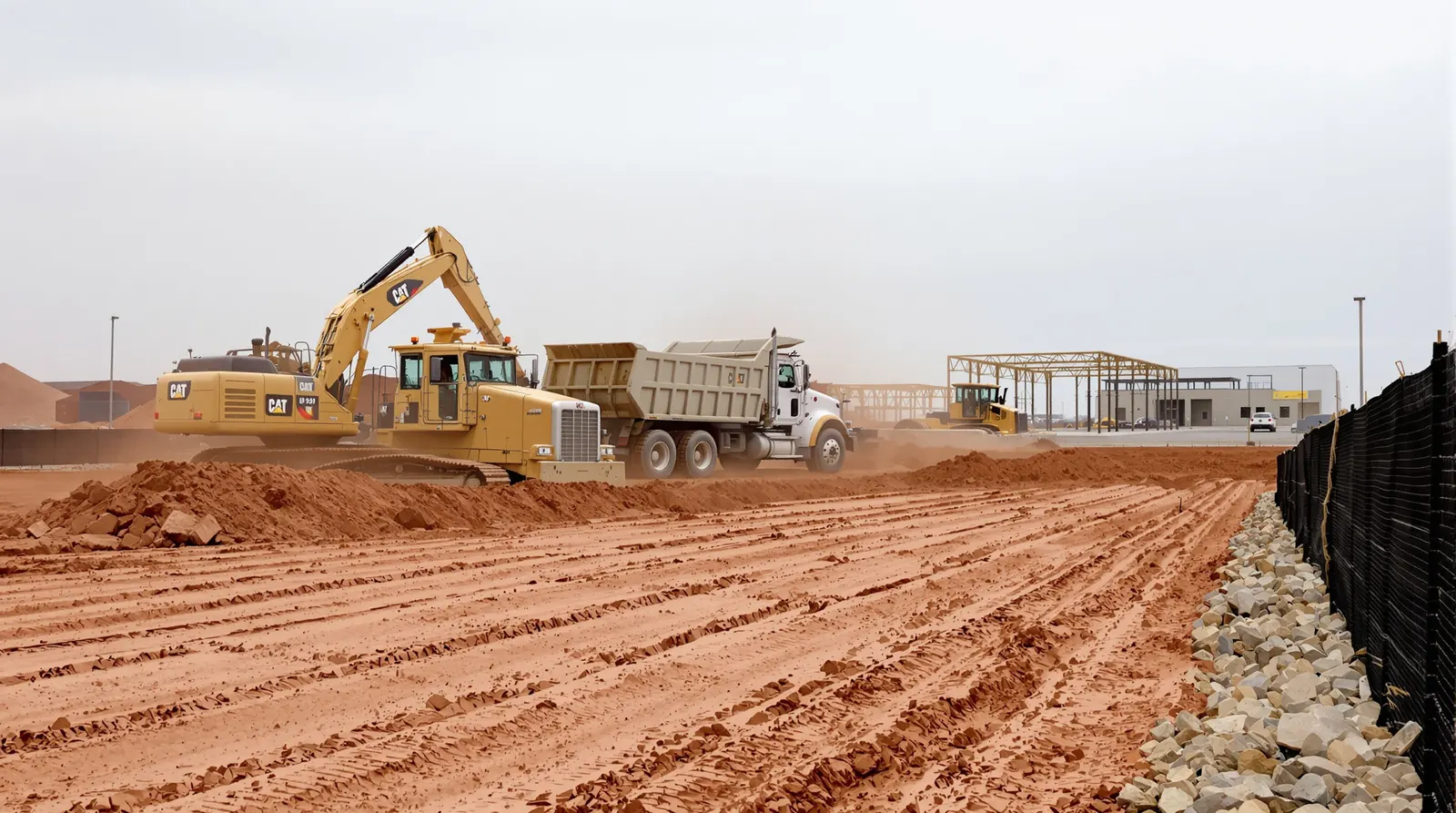
Commercial Sitework Contractor in Kansas City
From raw ground to finished concrete — one contractor, one schedule, zero coordination failures.
The Phase That Decides Whether Your Project Finishes on Time — or Doesn’t
Sitework is the umbrella term for everything that happens between raw ground and the moment a foundation can be poured. On most commercial projects in the Kansas City metro, it represents 15–25% of total construction cost — and 100% of the schedule risk if any phase is sequenced wrong.
Industry terms like site preparation, earthwork, and civil construction all describe pieces of the same picture. Sitework is the broadest correct term for the entire phase. Here’s what it actually includes:
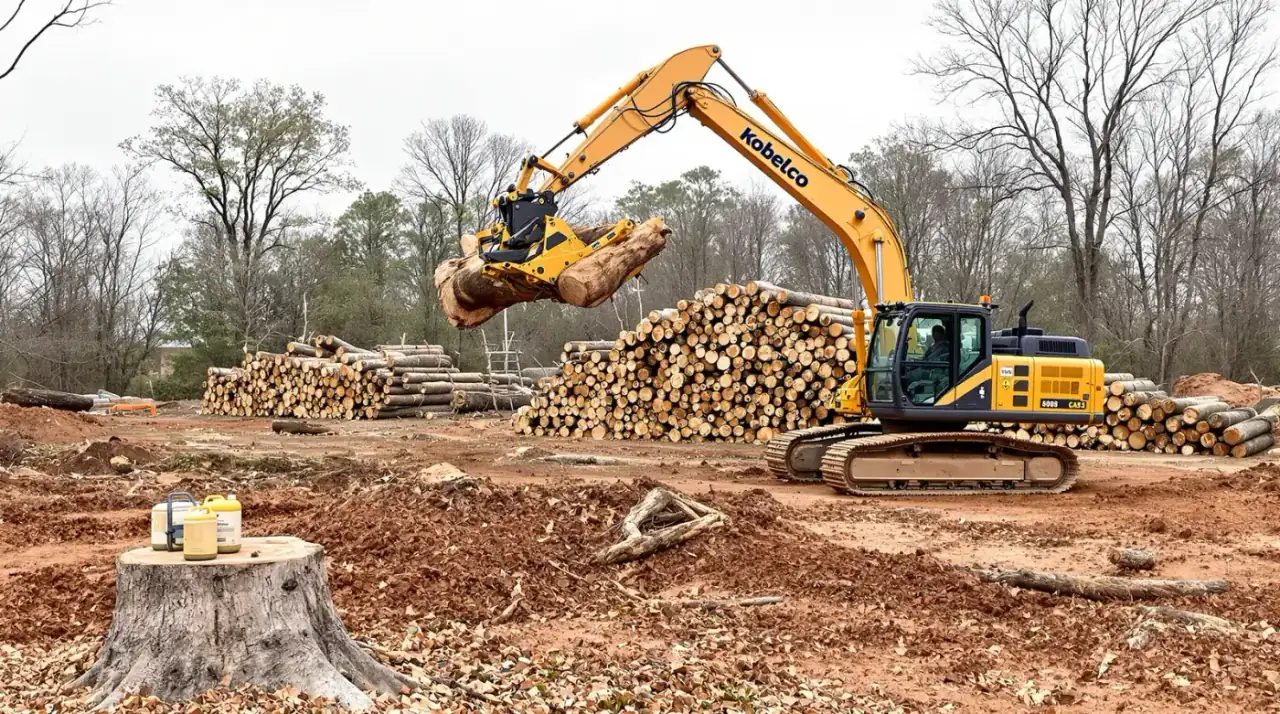
Pre-Con & Clearing
Geotech, civil engineering, MoDNR or KDHE permits, 811 locates, demolition, clearing, grubbing, and topsoil strip — before anything else moves.
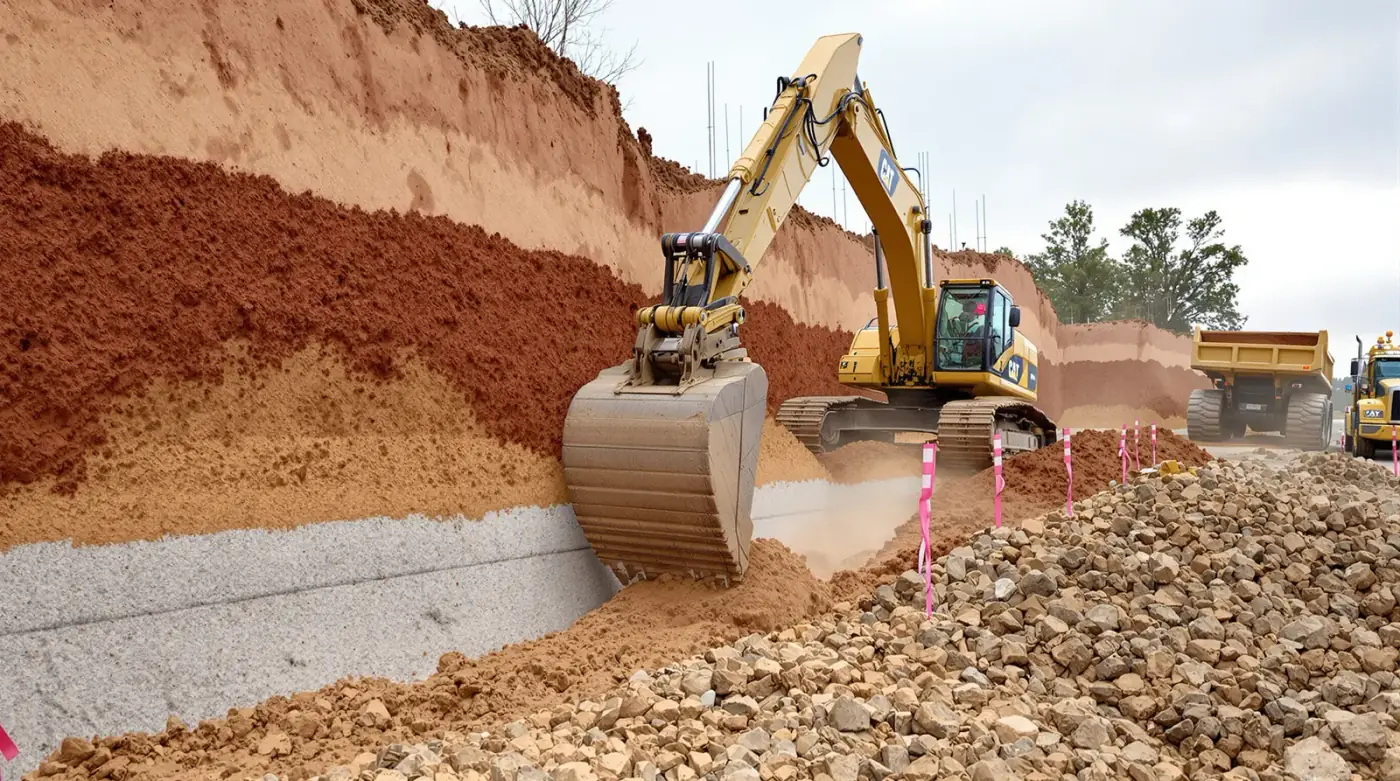
Earthwork
Mass excavation, cut/fill balance, 8-inch lifts compacted to 95% modified proctor, KC clay moisture-conditioned to ±2% of optimum.
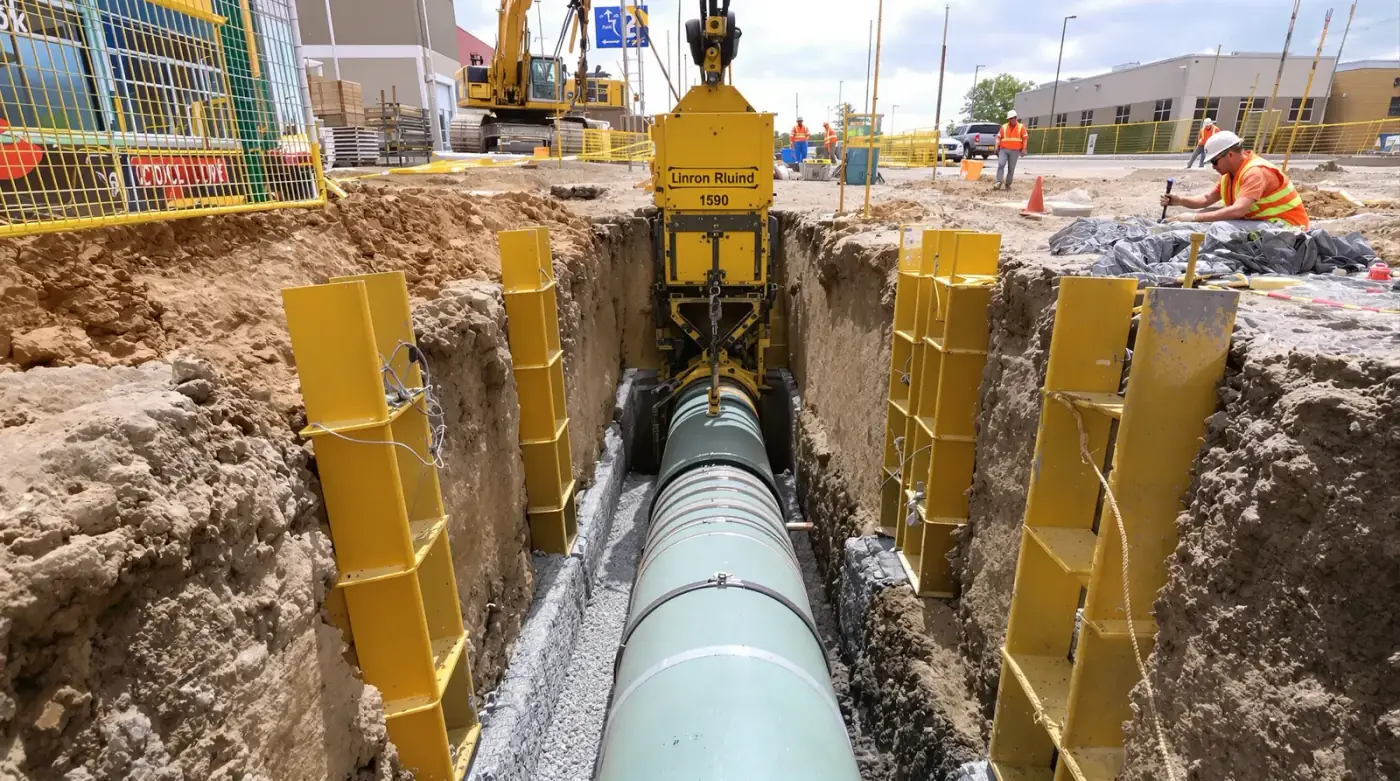
Grading & Utilities
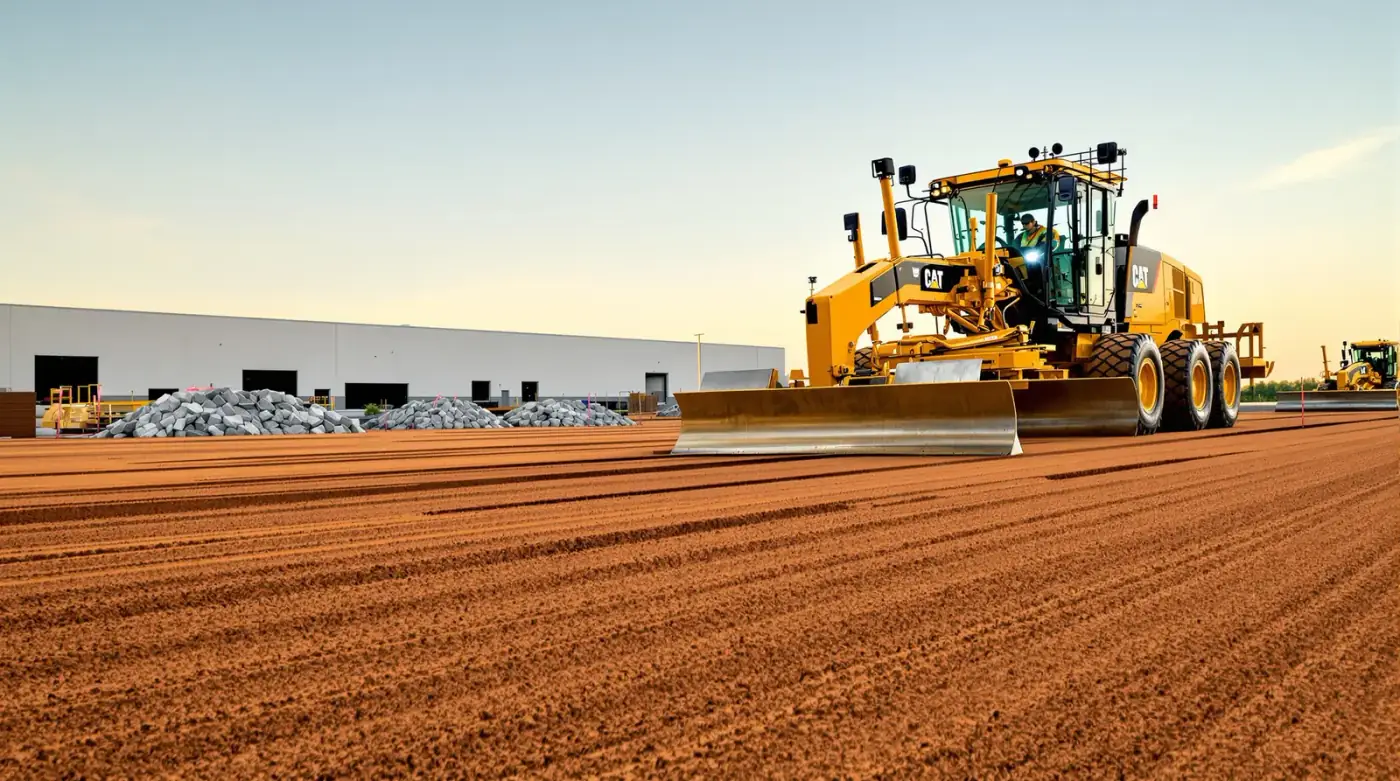
Rough grade to ±0.1 ft, proof roll with loaded tandem dump truck, then sanitary, storm, water below frost line, electric, gas, and telecom.
Sub-Base & Concrete
Fine grade to ±0.05 ft, AB-3 or Type 5 base rock compacted and density-verified, then the concrete pour — by the same crew, no handoff gap.
An excavation-only contractor can handle most of it. A concrete-only contractor can handle none of it. The gap between those two specialties is where most Kansas City commercial projects lose days, dollars, and warranties.
Our entire model exists to close that gap — by being both companies at the same time, on the same crew, under the same contract.
One Contractor for Sitework and Concrete. No Handoff. No Gap.
The traditional commercial construction model splits sitework and concrete between two separate subcontractors. The sitework sub finishes rough grading, demobilizes, and bills out. A 1–3 week gap opens up while the concrete sub schedules and mobilizes. By the time the concrete crew arrives, the sub-base has settled, eroded, or lost moisture — and you’re paying to re-grade a pad you already paid to prepare. The slab gets poured on a foundation nobody fully owns, and when it cracks twelve months later, the fingers point in both directions while the owner writes the repair check.
Site Grading
Rough grading to ±0.1 ft, fine grading to ±0.05 ft, and finish grading with GPS machine control. Drainage engineering that actually works on Wymore-Ladoga clay — minimum 5% slope for the first 10 feet off any foundation, because code minimum is not enough for KC clay.
- → Rough grading to ±0.1 ft tolerance
- → Fine grading to ±0.05 ft with GPS machine control
- → Building pad proof-rolling with loaded tandem dump truck
- → Drainage grading engineered for KC clay, not generic spec
- → Sub-base prep with AB-3 (Kansas) or Type 5 base rock (Missouri)
Mass & Precision Excavation
Bulk earthwork for 1–10 acre commercial pads, precision excavation for footings and foundations, and rock excavation through Bethany Falls and Argentine limestone south of 135th Street. Everything dug, classified, placed, and verified by the same crew that pours the concrete on top of it.
- → Mass excavation and cut/fill balance
- → Rock excavation through southern JoCo limestone (3–15 ft depth)
- → Structural fill placed in 8-inch lifts to 95% modified proctor
- → Nuclear density gauge verification at depth, not just surface
- → OSHA 29 CFR 1926 Subpart P competent person on every dig
Bidding a Commercial Project?
Send us your civil plans and geotech report. Detailed bid returned within 5 business days.
Land Clearing & Grubbing
Raw-land clearing, tree removal, grubbing below finish grade, stump extraction, debris haul-off, and topsoil strip and stockpile for commercial, industrial, and subdivision development across the KC metro. Nothing left in the ground to rot under a future slab.
- → Tree removal and selective clearing
- → Root systems grubbed below finish grade
- → Stump grinding and extraction
- → Debris haul-off and wood recycling
- → Topsoil stripped, stockpiled, and preserved for final stabilization
Utility Trenching
Sanitary, storm, water, electric, gas, and telecom — trenched, bedded, backfilled, and pressure-tested by our own crew. Water mains below the 36-inch frost line. Tracer wire on every non-metallic run. Missouri One-Call and Kansas One-Call 811 compliance before anyone touches a shovel.
- → Sanitary and storm sewer installation
- → Water mains below 36-inch KC frost line
- → Electric, gas, and telecom conduit coordination
- → Tracer wire and locatable warning tape on every run
- → Pressure testing before close-out, every time
Single-Source. Two States. No Coordination Failures.
Concrete & Structure Demolition
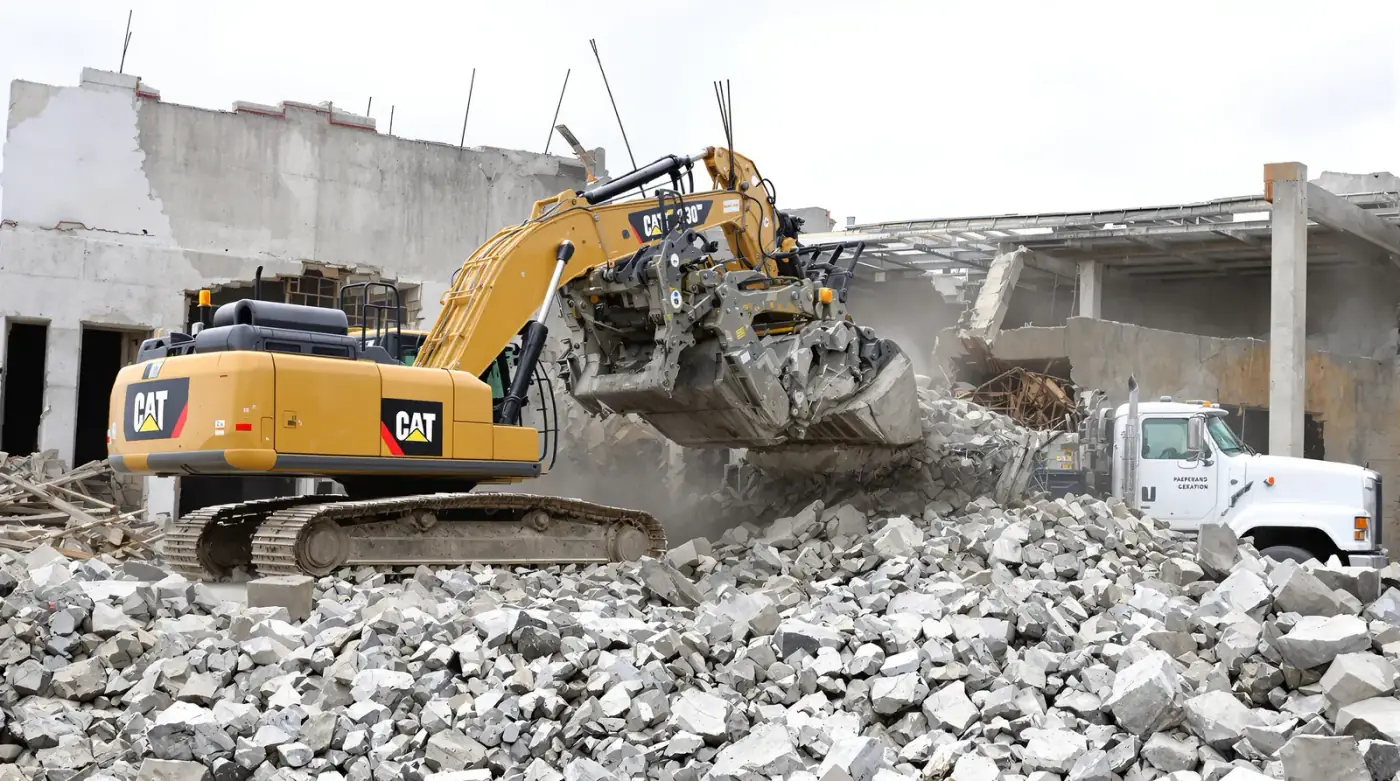
Concrete slab, structural, and selective demolition with on-site concrete recycling. KCMO and Johnson County permits handled in-house. Debris hauled off and, wherever possible, crushed and reused as base rock on the same project — because hauling clean concrete to a landfill is a waste of money and a waste of a material.
- → Concrete slab and flatwork demolition
- → Structural and selective demolition
- → On-site concrete crushing and recycling
- → KCMO and Johnson County demolition permits in-house
- → Asbestos and environmental abatement coordination
Erosion Control & SWPPP
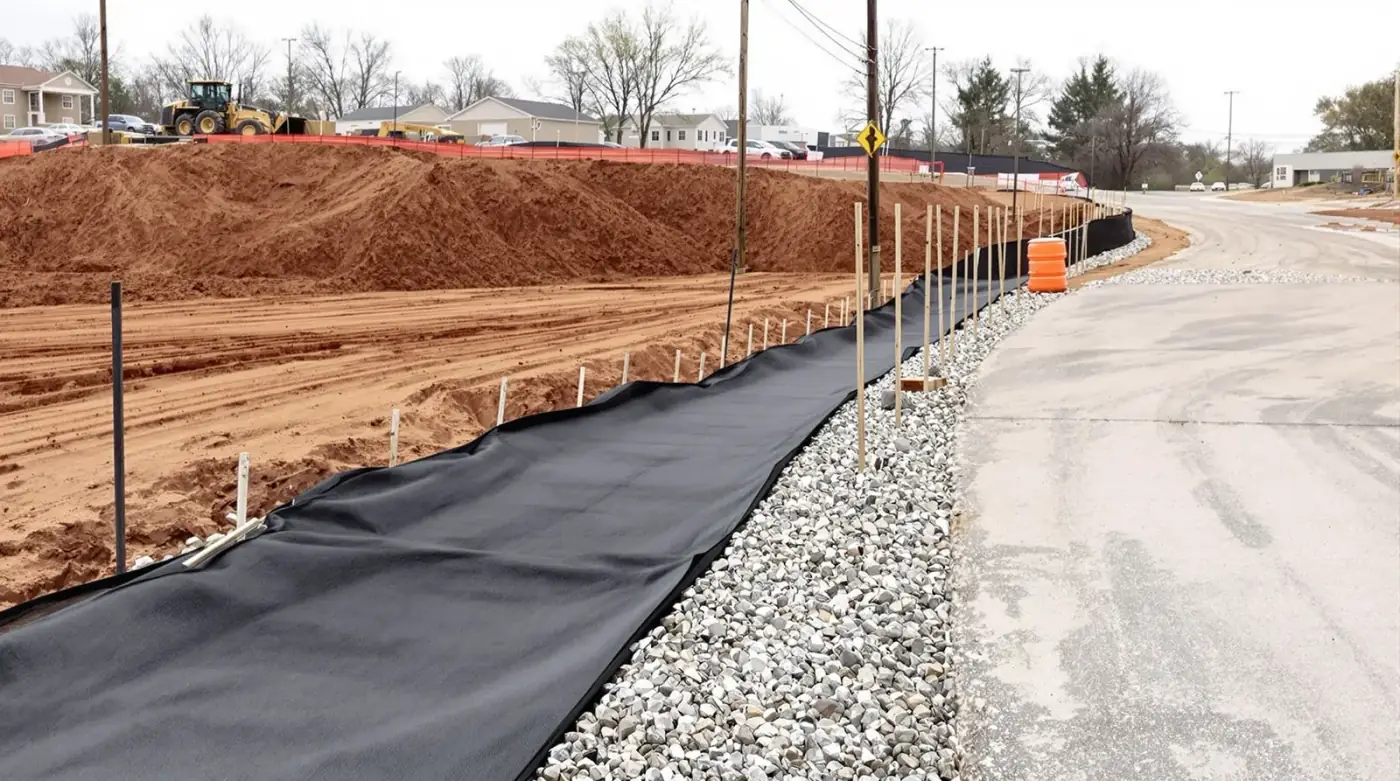
NPDES Construction Stormwater compliance through MoDNR on the Missouri side and KDHE KEIMS on the Kansas side. BMP installation, weekly inspection logs, BMP maintenance, and Notice of Termination filed at 70% vegetative cover. Written by people who actually read the permit.
- → NPDES Construction Stormwater filing (MoDNR or KDHE)
- → SWPPP preparation and on-site binder maintenance
- → Silt fence, wattles, inlet protection, construction entrance
- → Weekly inspections and rain-event documentation
- → Notice of Termination at 70% vegetative cover closeout
The 8 Phases of a Kansas City Commercial Pad
For a typical 1–3 acre commercial pad in the KC metro, this sequence runs 4–10 weeks of active work depending on volume, weather, and utility complexity.
Pre-Construction & Permitting
Geotechnical review, civil engineering coordination, survey, pre-construction meeting, and permit filings. KCMO grading permits run 4–6 weeks. MoDNR Land Disturbance Permit needs 30+ days. KDHE NPDES through the KEIMS portal runs 10–20 business days with a $90 application fee. We start the paperwork the day a project is awarded so plan review runs concurrently with engineering.
Mobilization & Erosion Control
Stone construction entrance, perimeter silt fence, inlet protection, and concrete washout area — installed BEFORE any other ground disturbance, per NPDES Construction Stormwater requirements. This sequence is non-negotiable for both MoDNR and KDHE inspectors, and skipping it is the fastest way to earn a stop-work order in the KC metro.
Clearing, Grubbing & Demolition
Vegetation removed, root systems grubbed below finish grade, existing structures and slabs demolished, debris hauled off, and topsoil stripped to its full organic depth and stockpiled on-site for final stabilization. Nothing organic gets buried under future concrete on our projects.
Mass Excavation & Earthwork
Cut/fill executed per the grading plan. KC clay placed in 8-inch lifts, moisture-conditioned to within 2% of optimum (typically 16–20%), and compacted with sheepsfoot rollers to 95% modified proctor for structural fill, 90% for general fill. Nuclear density gauge testing on every lift, at depth. Rock excavation south of 135th Street handled with hoe-ram when Bethany Falls limestone appears.
Rough Grading & Proof Roll
Building pads and drive lanes brought to within ±0.1 ft of plan grade. Drainage paths cut and verified. The pad is proof-rolled with a loaded tandem dump truck, and any soft spots are over-excavated and replaced with structural fill before utility installation begins.
Underground Utilities
Sanitary sewer first (deepest), then storm sewer, water line below the 36-inch frost line, then electric, gas, and telecom. Granular bedding stone, pipe-zone backfill, tracer wire on all non-metallic pipe, locatable warning tape, and pressure testing on water and sewer before backfill is closed.
Sub-Base Preparation
Fine grading to ±0.05 ft. Geotextile fabric over expansive clay where the geotech specifies it. 4–8 inches of AB-3 aggregate base (Kansas) or Type 5 base rock (Missouri), placed and compacted to 95% modified proctor with a vibratory roller. Density verified before any forms go down.
The Handoff — Concrete Construction
This is where the traditional sitework-to-concrete handoff fails on most KC commercial projects, and where our single-source model wins. The same crew that prepared and density-tested the sub-base sets forms and pours the slab. No demobilization. No 1–3 week gap. No re-grading. Schedule compresses 5–10 business days on a typical 1–3 acre commercial pad.
The Soil You’re Building On — and Why It Matters to Your Slab
The dominant soil across Jackson, Johnson, and Clay counties is the Wymore-Ladoga complex. The Wymore series is classified as CH (fat clay) under the Unified Soil Classification System and A-7-6 under the AASHTO classification used by the Missouri and Kansas DOTs. The Ladoga series, which interfingers with Wymore across the metro, is classified as CL (lean clay) and A-6 AASHTO. Both run 60 to 80 percent clay content in most areas. Both carry a “very high” shrink-swell rating. Both behave very differently from the granular soils that form the textbook examples in most engineering courses.
The Missouri River bluffs and parts of Leavenworth and Wyandotte counties are mantled with loess deposits classified as ML silt — highly erodible, easy to grade dry, and prone to collapse when saturated. The Missouri River alluvial belt through Riverside, Parkville, and the Fairfax industrial district holds SM and SC silty/clayey sand: it drains beautifully and compacts well, but it can liquefy under hydrostatic pressure in a hundred-year flood event. Southern Johnson County sits over Bethany Falls and Argentine limestone formations that can appear at three to fifteen feet of depth. Northern Johnson County and most of Jackson County have deeper clay overburden with limestone at ten to thirty-plus feet. Platte County river bottom pushes bedrock down to forty to eighty-plus feet.
Compaction of KC clay requires holding moisture within two percent of optimum — typically sixteen to twenty percent for modified proctor — and lifts cannot exceed eight inches uncompacted. The swell factor when KC clay is excavated runs twenty-five to thirty-five percent: every 1,000 bank cubic yards you cut becomes 1,250 to 1,350 loose cubic yards on the haul trucks. Grades set in fall move when spring rains arrive. Grades set in spring move when summer drying begins. Setting a building pad in November and pouring a slab in March without re-verifying compaction is one of the most common causes of slab failure in this market — and the kind of failure an excavation-only contractor will never see, because they will already be off the project by the time the concrete cracks.
- Wymore Series
- USCS: CH (Fat Clay)
- AASHTO: A-7-6
- Shrink-Swell: Very High
- Ladoga Series
- USCS: CL (Lean Clay)
- AASHTO: A-6
- Shrink-Swell: High
- Loess (River Bluffs)
- USCS: ML (Silt)
- AASHTO: A-4
- Collapse risk when saturated
- Alluvial (MO River)
- USCS: SM / SC
- Drains well, liquefaction risk
- KC Metro Baseline
- Frost depth: 30–36 in
- Swell factor: 1.25–1.35
- Compaction target: 95% mod proctor
The Clay Belt
Wymore-Ladoga fat and lean clay, 60–80% clay content, very high shrink-swell. The default soil beneath most of the KC metro.
The River Bluffs
Loess deposits (ML silt). Stable dry, highly erodible and collapsible when saturated. Careful dewatering required.
The Limestone Belt
Bethany Falls and Argentine limestone at 3–15 ft depth. Rock excavation contingency on every project south of 135th.
The Fleet We Bring to Every Kansas City Job Site
Our fleet runs on owned and leased equipment sized to the project. We match the machine to the scope: compact excavators and skid steers for urban infill and tight-access commercial, full-size CAT 320 and 330 excavators and D6/D8 dozers for mass earthwork on retail and industrial pads, CAT 140M motor graders with GPS machine control for fine grading to ±0.05 ft on parking lot and warehouse sub-grades, and nuclear density gauge testing at depth on every compacted lift — performed by our own crew, not a third-party lab that shows up after the fact.
The Kansas City Metro Spans Two States. Your Permit Path Depends on Which Side.
MoDNR
- NPDES Land Disturbance Permit Filed through MoDNR online portal for any project over 1 acre. 30+ day review window.
- PE Supervision Not required at state level, though many MO cities require PE-stamped plans as a city condition.
- KCMO City Grading Permit 4–6 weeks of agency review — the longest in the metro.
- 811 Utility Locates Missouri One-Call, 2 business days minimum notice, ticket valid 14 days.
KDHE
- NPDES Construction Stormwater Filed through KDHE KEIMS electronic system. $90 application fee. 10–20 business day review.
- PE Supervision Required Kansas-licensed Professional Engineer must supervise the SWPPP.
- City Grading Permits Overland Park 2–3 weeks (fastest). Olathe/Lenexa/Shawnee 2–4 weeks.
- 811 Utility Locates Kansas One-Call, 2 business days minimum notice, ticket valid 14 days.
OSHA 29 CFR 1926 Subpart P — Excavation Safety
Federal OSHA Subpart P requires soil classification (Type A, B, or C), mandates a designated competent person on-site for any excavation, and requires protective systems — sloping, benching, shoring, or trench boxes — in any trench five feet deep or greater. Our crew runs a competent person on every dig that triggers Subpart P, and trench boxes are standard equipment on our utility installations. Applies to both sides of the state line without exception.
What Sitework Actually Costs in the Kansas City Metro
| Scope | Unit | Typical KC Range | Notes |
|---|---|---|---|
| Mass Excavation (common soil) | per BCY | $8–15 | Wymore-Ladoga clay, on-site |
| Mass Excavation w/ Haul-Off | per BCY | $14–22 | 25–35% swell factor |
| Rock Excavation | per BCY | $25–50+ | Bethany Falls / Argentine limestone |
| Rough Grading | per SF | $0.40–0.90 | ±0.1 ft tolerance, GPS |
| Fine Grading | per SF | $0.30–0.60 | ±0.05 ft tolerance |
| Sub-Base (AB-3 / Type 5) | per SF | $1.50–3.50 | 4–8 in, compacted to 95% |
| Utility Trenching | per LF | $15–45 | Depth and pipe dependent |
| Land Clearing | per acre | $1,500–12,000 | Density of growth dependent |
| Concrete Slab Demo | per SF | $4–10 | Includes recycling |
| SWPPP (plan + BMPs + closeout) | per project | $2,000–8,000 | MoDNR or KDHE filing |
| Compaction Testing | per test | $150–300 | Nuclear density gauge, ASTM D6938 |
| Mobilization | per project | $1,500–5,000 | Commercial scope |
BCY vs LCY vs CCY — The Measurements That Matter
BCY (bank cubic yard) is dirt in place, before it’s disturbed. LCY (loose cubic yard) is the same dirt after it’s excavated and dumped loosely on a truck. CCY (compacted cubic yard) is that same dirt after it’s placed, moisture-conditioned, and compacted in a structural fill. KC clay has a 25–35% swell factor from BCY to LCY, meaning every 1,000 BCY removed becomes 1,250–1,350 LCY on haul trucks. That matters for hauling cost. Shrinkage factor from LCY back to CCY as it’s compacted into fill is another 10–15%. Bids that don’t differentiate between these three measurements are bids written by people who haven’t actually moved KC dirt.
What We Build For
Restaurant Pads
Quick-service and fast-casual builds on 0.5–1 acre infill sites with aggressive schedules.
Retail Strip Centers
1–3 acre pads, parking lots, and curb-and-gutter for shopping centers and pad-site retail.
Warehouse & Industrial
3–10 acre pads with FF/FL flatness specs and heavy-axle truck loading design.
Multi-Family & Mixed-Use
2–5 acre sites with structured parking and complex stormwater detention.
Church & School Sites
Campus development with parking, ADA walks, drop-off lanes, and play surfaces.
Office & Medical Campus
Professional and medical office with detention basins and patient drop-off geometry.
Parking Lots & Curb
Stand-alone lot construction, reconstruction, milling, and sub-base remediation.
Subdivisions
10–50 lot residential subdivisions: mass earthwork, streets, utility mains, lot certification.
Bidding a Project? Send Us Your Plans.
Send us your civil plans, geotech report, SWPPP scope, and any bonding requirements. We return a detailed bid that breaks out earthwork, utilities, sub-base, and concrete as discrete line items — so your project manager can compare apples to apples across multiple subs.
- ✓Typical bid turnaround: 5 business days
- ✓Line-item breakdown: earthwork, utilities, sub-base, concrete
- ✓Bonded work · MO and KS licensed
- ✓MoDNR and KDHE permit filings handled in-house
Start Your Bid Request
Click below to open the bid request form. Provide the project address, scope, acreage, timeline, and upload any plans you have — we’ll respond within one business day to confirm receipt.
What Kansas City GCs and Developers Ask Us Most
How long does sitework take for a typical commercial pad in Kansas City?
What does sitework cost per cubic yard in Kansas City?
Do I need a SWPPP for my Kansas City project?
How long does a KCMO grading permit actually take?
What is the difference between MoDNR and KDHE stormwater permits?
Will my Olathe or southern Johnson County project hit limestone bedrock?
Can you handle the concrete after the sitework is done?
When is the best time of year for sitework in Kansas City?
What is OSHA 29 CFR 1926 Subpart P and do you comply?
Can you bid a Kansas City project bonded?
Where We Perform Sitework Across the KC Metro
Send Us Your Plans.
One contractor. Raw ground to finished concrete. Detailed bid in 5 business days.