
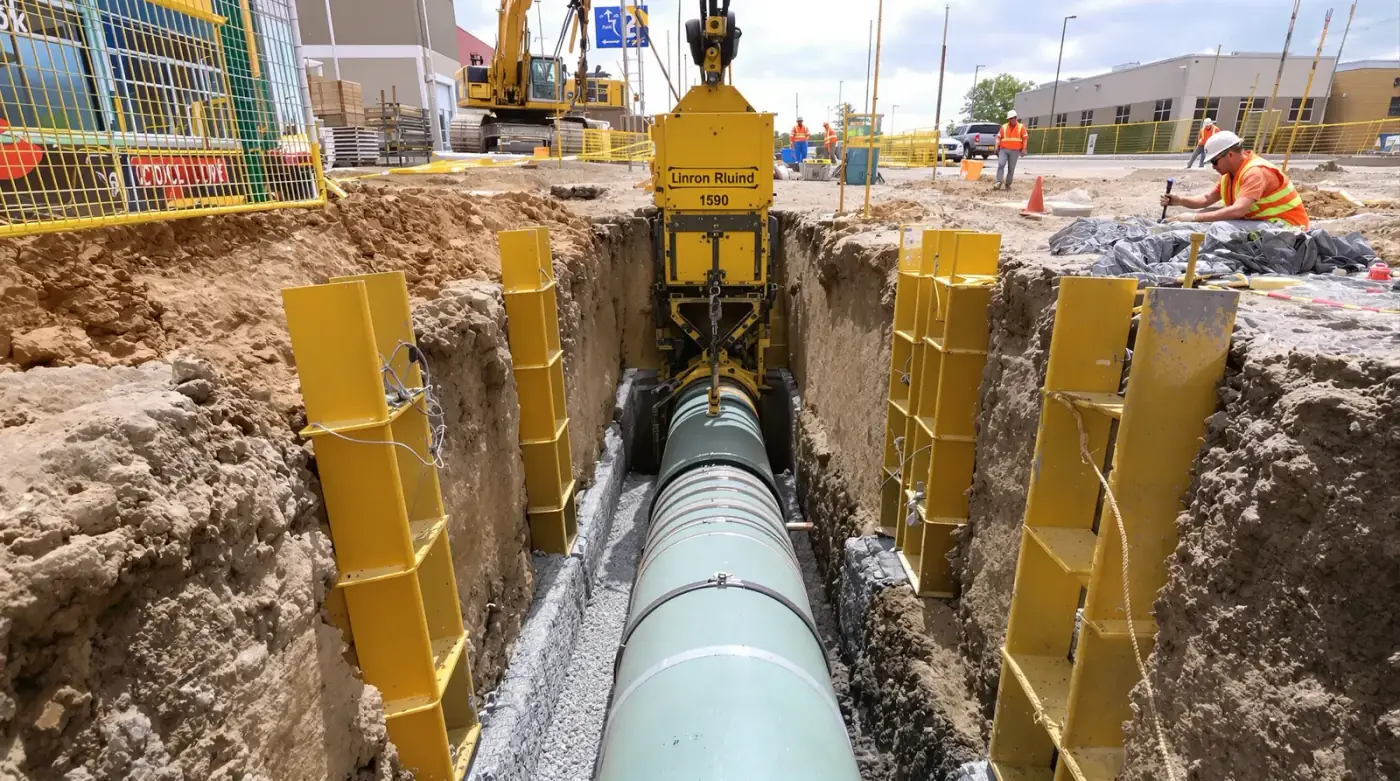
Utility Trenching Contractor in Kansas City
Sanitary, storm, water, electric, gas, and telecom trenching with proper granular bedding, 811 locate compliance, OSHA Subpart P trench safety, and pressure testing before backfill. All five utility types under one contract.
Why Utility Trenches Are Where Construction Schedules Quietly Die
Utilities are buried. Everything about them happens out of sight, and every shortcut taken underground stays hidden until it causes a failure — usually years later, usually at the worst possible time. The 811 locate ticket gets filed too late and the dig waits. The deepest sewer line gets trenched out of sequence and shallower utilities have to be relocated. Bedding stone gets skipped because the granular material did not show up on time and the crew was behind schedule. The pipe zone gets backfilled with native KC clay because it was faster. Tracer wire gets forgotten on the PVC water service. The pressure test gets failed once, then twice, then the inspector gets tired of coming back and the GC starts asking questions. The project slides three weeks while the utility sub argues with the GC about whose fault it is, and the concrete sub's mobilization window closes.
The consequences of bad utility work outlast every other phase of the build. A water line installed above the frost depth freezes the first hard Kansas City winter — the line bursts inside the ground, the surface stays dry until the erosion pattern reveals itself, and somebody is digging up your driveway in February to find the failure. A sewer line set on an improperly compacted trench bottom develops a sag over 3 to 5 years as the soil around it consolidates, wastewater holds in the low point, and the building starts backing up. A storm line backfilled with clay instead of granular material in the pipe zone settles unevenly along the run, creates surface depressions in the parking lot or street two years after the concrete was poured, and triggers a repair that requires cutting out perfectly good concrete to access the pipe below. Every one of these failures starts as a corner cut during the trench phase that nobody could see.
Kansas City Concrete Contractors trenches utilities to the specification that the spec actually requires — not the version that is faster or easier. Granular bedding under the pipe. Granular pipe-zone backfill. Tracer wire on every non-metallic line. Locatable warning tape 12 inches below finish grade. Pressure tests on water lines, video on sanitary sewer, air tests on storm — all before backfill goes above the pipe zone. 811 locates verified on the ground before any machine touches dirt. We do this work inside the same contract as the surrounding excavation, the finished site grading, and the concrete parking lot or walkway that goes over the trench. We have a direct interest in the trench staying compacted, because we are the ones repaving on top of it.
What's Involved in Utility Trenching for a KC Commercial Project?
Utility installation sequences from deepest to shallowest — because gravity-dependent utilities that cannot be re-routed must go first, and shallower utilities work around them. Sanitary sewer is always first. Gravity sewer requires a minimum slope of 0.5% (roughly 6 inches per 100 feet) per most KC engineering standards for lines serving commercial buildings. Connection depths at the street main in older parts of KCMO and KCK commonly run 8 to 15 feet, driving the sewer trench depth for the entire run. This is the deepest trench on most sites, which means OSHA Subpart P shoring requirements are nearly always triggered. We carry trench boxes sized for the expected depths and use them consistently — not situationally.
Storm sewer follows sanitary. RCP or HDPE pipe, sized per the civil plan, installed at minimum 1% pipe slope for adequate flow velocity. Catch basins, inlet boxes, and headwalls are set per plan. HDPE is specified on many newer projects in the KC metro because of its light weight and ease of installation; RCP remains the standard for large-diameter runs where structural strength is required. After storm comes water service — minimum 36 inches of cover in Missouri, 30 in Kansas, below the frost line. Four inches of granular bedding below the pipe creates a uniform bearing seat. Pipe zone backfill (granular material from below the pipe to 12 inches above the crown) is placed in layers and hand-tamped around the haunches before mechanical compaction above. Tracer wire runs the full length of the pipe and terminates at a tracer access point at each end. The line is pressure tested at 1.5 times working pressure for at least 2 hours before the trench is backfilled above the pipe zone.
Electric, gas, and telecom conduit are typically shallower — 24 to 36 inches for most applications — but each utility company has its own conduit specification, separation distance requirements from other utilities, and inspection process. Gas lines in Missouri and Kansas require coordination with the distribution company before and during installation; we do not connect gas service, but we trench and install the conduit to their specification and coordinate the inspection timeline. Telecom and fiber conduit typically runs in a shared trench or duct bank. Locatable warning tape goes in 12 inches below finish grade on every utility trench — blue for water, green for sewer, yellow for gas, red for electric, orange for telecom — providing a secondary warning layer above the tracer wire.
Backfill above the pipe zone uses native KC clay in 8-inch maximum lifts compacted to 90% modified proctor per ASTM D1557. Locatable warning tape goes in at 12 inches below finish grade as the trench backfill approaches that elevation. On trenches that cross under concrete pavement or that are in areas subject to traffic loading before final paving, we use imported granular material for the full trench depth — eliminating the differential settlement between the granular-backfilled trench and the native clay outside it that creates the surface depressions common on trenched-and-repaved streets.
811 Locates: How Kansas One-Call and Missouri One-Call Work
Federal and state law require any excavator to file a locate ticket through the state 811 service at least 2 business days before digging. Kansas One-Call covers the Kansas side; Missouri One-Call covers Missouri. Each service notifies member utilities, who field crews to mark their lines with paint and flags per the APWA color system. Locate tickets expire 14 calendar days after issue in both states — on long projects, we track expiration and re-file before work enters areas with expiring tickets. We walk every site to verify the physical locate marks on the ground before any machine moves, because GPS and GIS utility records have known accuracy limitations and older areas of the metro (particularly KCMO urban core and KCK) have significant unmapped or abandoned infrastructure. An unmarked line struck during excavation means the excavating contractor is liable for repair costs, property damage, service interruption, and potentially criminal penalties if the strike involved gas or high-voltage electric. We never break ground without verified locates. Full stop.
Your Utility Trenching Project in 4 Steps
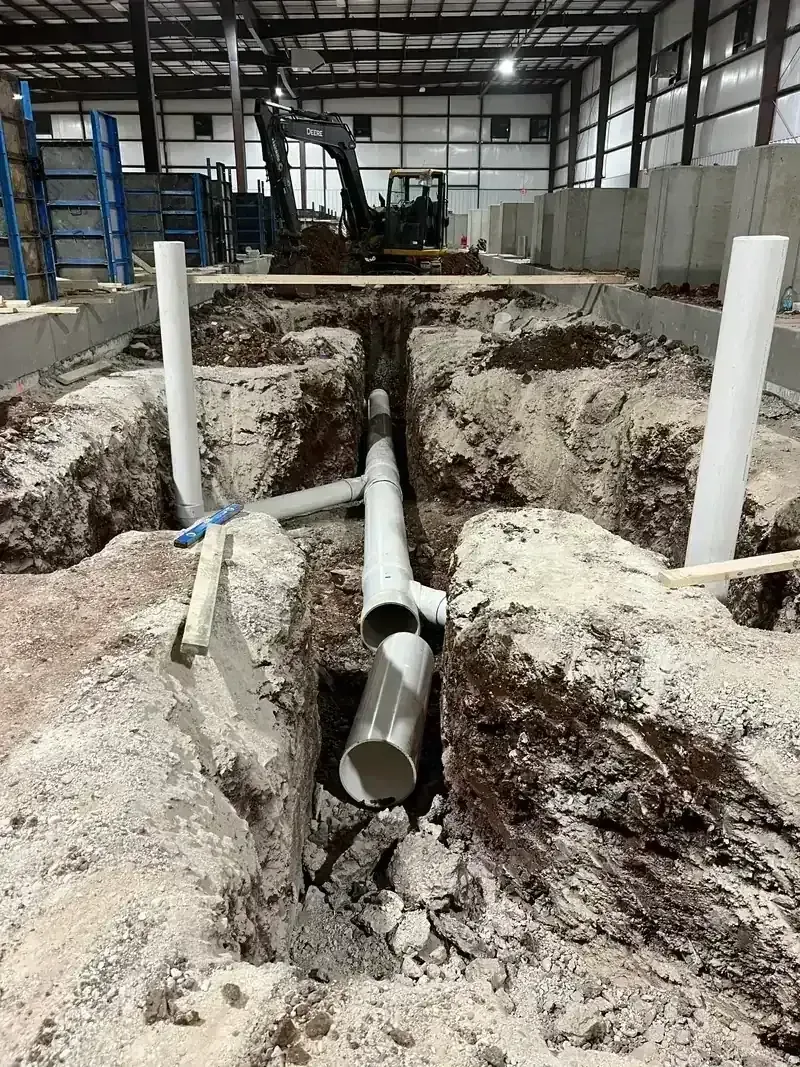
Free Consultation
We visit your property, discuss your vision, and provide a detailed estimate with no obligation. Every question answered up front.
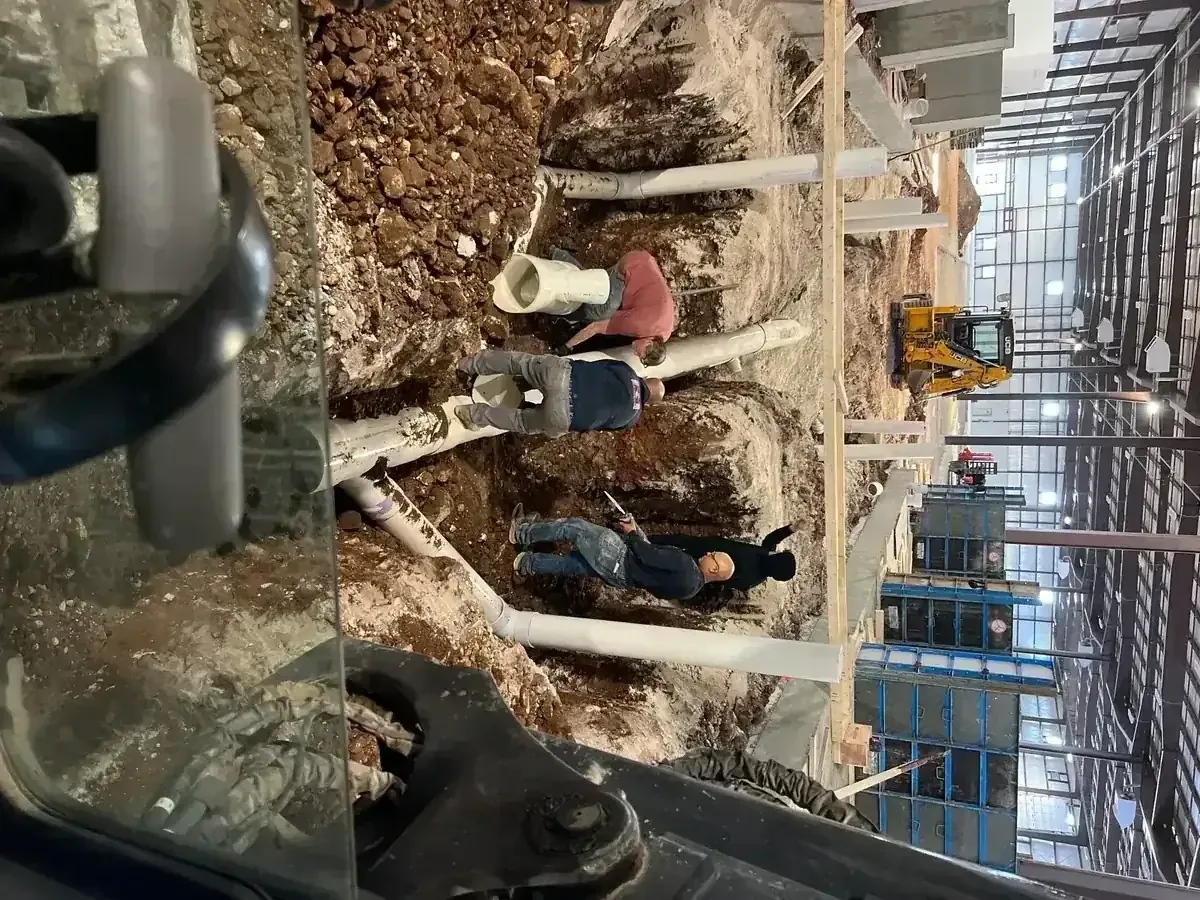
Design & Planning
Choose your materials, finish, and layout. We create a plan tailored to your property and KC's soil and climate conditions.
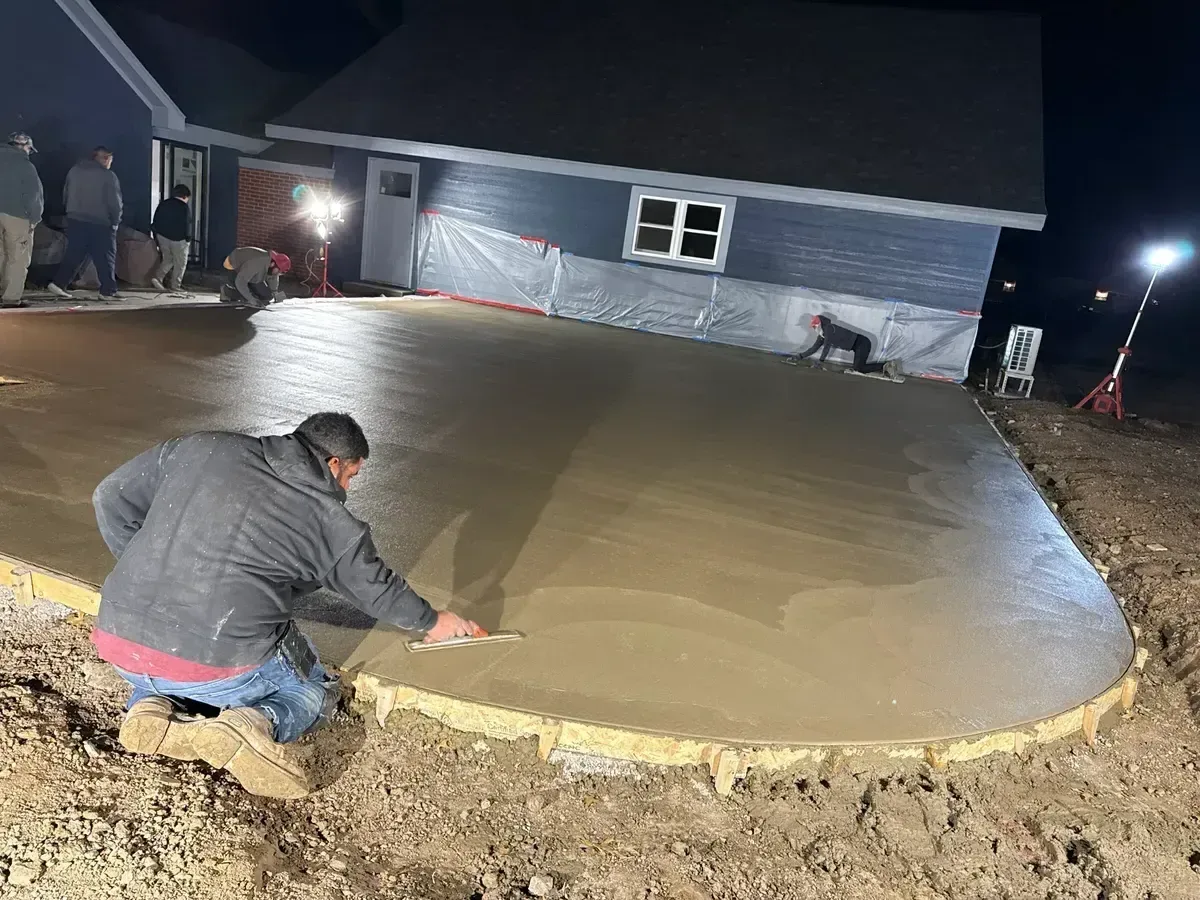
Professional Installation
Our crew preps the site, pours, and finishes your concrete with precision. Most residential projects wrap in 1-4 days.
Final Walkthrough
We inspect every inch with you. Sealant applied where needed. We don't leave until you're completely satisfied with the result.
Why Choose Kansas City Concrete Contractors for Utility Trenching
All Utility Types, Deepest First
Sanitary sewer, storm sewer, water service, electrical conduit, gas line, telecom and fiber. Sequenced deepest to shallowest so shallower lines are never in the way of gravity-dependent sewer installation.
811 Locates Filed on Every Dig
Kansas One-Call (KS) and Missouri One-Call (MO) tickets filed a minimum 2 business days before any excavation. Locates verified on the ground before equipment starts. Tickets re-filed when the 14-day validity window approaches.
Granular Pipe-Zone Backfill Standard
4 inches of granular bedding below pipe, granular backfill from pipe bottom to 12 inches above pipe crown. No clay in the pipe zone. Tracer wire on every non-metallic line, locatable warning tape 12 inches below finish grade.
OSHA Subpart P Trench Safety
Trench boxes on every excavation over 5 feet. Competent person on site for Type A/B/C soil classification and daily inspection documentation per 29 CFR 1926 Subpart P.
Below KC Frost Line — Every Water Line
Water service lines buried with 36-inch minimum cover in Missouri, 30 inches in Kansas (verify by city) — below the local frost depth so lines cannot freeze in the first hard winter.
Test Before Backfill Above Pipe Zone
Pressure test water lines, video inspect sanitary sewer, and air test storm sewer before any backfill goes above the pipe zone. Passing the test after backfill means digging up the trench to find the failure.
What Our Customers Say
"They handled all five utility types on our Olathe restaurant build — sanitary, storm, water, gas, and electric conduit. Coordinated with all five utility companies, managed the inspection callouts, and did not miss a single completion date. I never had to chase down a contact."
— Marco V., Olathe, KS
"Hit an unmapped abandoned utility line during a trench in KCK. Their crew stopped immediately, identified the line, coordinated with the utility to confirm it was dead, and had us back digging by afternoon. That response — no panic, just process — is what you need from an underground contractor."
— Devon H., Kansas City, KS
"Trenched and installed a new 2-inch water service from the street to our building in Liberty. Crew was careful with the existing lawn, backfilled in proper lifts, and the trench line is barely visible six months later. The pressure test passed on the first attempt."
— Hannah G., Liberty, MO
How Much Does Utility Trenching Cost in Kansas City?
| Utility Type | Cost / LF | Notes |
|---|---|---|
| Water Service (1"–2") | $25–55 | 36" cover MO / 30" KS, granular bedding, tracer wire, pressure test |
| Sanitary Sewer (4"–8") | $45–90 | Depth-dependent pricing; 0.5% minimum slope; video inspected |
| Storm Sewer (12"–24" RCP/HDPE) | $55–140 | Pipe size and depth; 1% minimum slope; inlet boxes extra |
| Electric / Telecom Conduit | $15–35 | 24–36" depth; conduit per utility company spec |
| Rock Trenching Surcharge | +$40–120 / LF | Hoe-ram or rock saw; southern JoCo limestone formations |
Linear foot pricing. Manholes, catch basins, cleanouts, inlet boxes, and tracer access points priced separately per civil plan. 811 locate filing, OSHA trench protection, granular pipe-zone backfill, tracer wire, and locatable warning tape included on every utility we install.
Prices vary by project scope, site conditions, and finish selections. Contact us for your exact quote.
Frequently Asked Questions About Utility Trenching
How deep are water lines buried in Kansas City?
Water service lines in Kansas City Missouri must be installed with a minimum of 36 inches of cover — this places the pipe below the local frost depth and satisfies KCMO Water Services specifications. On the Kansas side, the standard is 30 inches, though individual cities can and do require deeper installation; always verify with the specific municipality before finalizing the trench depth. The 36-inch MO standard is a minimum, not a recommended depth — on sites with shallow bedrock or other constraints, 36 inches of cover may be difficult to achieve and requires engineering coordination. Sewer lines are depth-driven by gravity grade requirements: the connection point at the street main and the required slope from building to main determine depth, typically ranging from 4 to 15 feet across the KC metro depending on the site and connection elevation. Deeper connections in older parts of KCMO and KCK can exceed 15 feet.
What is Kansas One-Call / Missouri One-Call and what is the 2-day rule?
Kansas One-Call and Missouri One-Call are the state 811 utility locate services for the two sides of the metro. Federal law (the Pipeline Safety Improvement Act) and state excavation safety acts in both Missouri and Kansas require any contractor planning to excavate to file a locate ticket through the applicable 811 service at least 2 business days (not calendar days) before breaking ground. Member utilities — gas, electric, water, telecom, cable, and others — then field crews to mark the location of their underground lines on the ground using colored paint and flags per the APWA color code. Locate tickets in Missouri and Kansas expire after 14 calendar days from issue, after which the work area must be re-staked before excavation can continue. Digging without a valid, unexpired locate is illegal, exposes the contractor to full liability for any utility damage, and is the most common cause of serious utility strikes. We file 811 tickets on every project, walk the site to verify the field marks, and track ticket expiration dates on every multi-week job.
What is pipe zone backfill and why does it matter more than surface compaction?
Pipe zone backfill is the material placed around and above the pipe from the bottom of the trench to approximately 12 inches above the pipe crown. This zone is critical because it provides uniform lateral support to the pipe barrel and prevents point loading that causes joint failures and pipe deflection. Proper pipe zone backfill is granular material — clean washed rock, pea gravel, or specified bedding aggregate — never native clay. KC's Wymore-Ladoga clay placed directly against a pipe in the pipe zone causes two problems: it transmits load unevenly as it shrinks and swells seasonally, and it is too cohesive to compact uniformly around the pipe haunches without mechanical vibration that could damage the joints. Below the pipe, 4 inches of granular bedding provides a uniform bearing seat. Above the pipe to 12 inches past the crown, granular material is hand-tamped around the haunches and compacted carefully above the crown. Only above the pipe zone can native KC clay be used, placed in 8-inch lifts compacted to 90% modified proctor.
What OSHA requirements govern utility trenching?
OSHA 29 CFR 1926 Subpart P governs all excavation and trenching. Any trench 5 feet or deeper requires protection against cave-in by one of four methods: sloping (cutting back at the soil-type appropriate angle — Type C, which includes saturated KC clay, requires 1.5H:1V), benching (stepping the trench wall), shoring (hydraulic or timber), or a trench box (a pre-fabricated steel shield). Trenches in Type C soil (which includes any wet or fissured material — the common state for KC clay during spring and after rain) cannot be benched. A "competent person" must be on site whenever a worker enters the trench, classify the soil type, inspect the excavation before each shift and after any rain event or change in conditions, and document the inspection in writing. Trenches 20 feet or deeper require a registered PE to design the protection system. We carry trench boxes for every job over 5 feet, have Subpart P competent persons on every utility crew, and document inspections on every project.
What pipe materials do you install and how is each type tested?
We work with all standard utility pipe materials specified by KC area engineers and utility companies. RCP (reinforced concrete pipe, per ASTM C76) is standard for larger storm drainage runs, typically 15 inches and above. HDPE (high-density polyethylene, per ASTM F714 or F894) is used for storm drainage and some water applications. PVC (polyvinyl chloride, per ASTM D3034 for sewer and D2241 for pressure) is the most common material for sanitary sewer and water service lines under 8 inches. Ductile iron (per AWWA C151) is used for larger water mains and where higher pressure or impact resistance is required. For electric and telecom, Schedule 40 or 80 PVC conduit or HDPE conduit is standard. Testing requirements: water lines are pressure tested at 1.5 times working pressure for a minimum 2-hour hold period. Sanitary sewer is video inspected per NASSCO PACP standards with a written report. Storm sewer is air tested per ASTM C828. All testing happens before backfill above the pipe zone.
What is tracer wire and when is it required?
Tracer wire is a copper conductor — typically 12 or 14 AWG insulated solid copper — run alongside non-metallic utility pipes (PVC, HDPE, fiber conduit) so they can be located in the future using standard electromagnetic utility locating equipment. Without tracer wire, any plastic or fiberglass utility pipe is invisible to 811 locators. The next contractor who trenches in the same area has no way to detect the existing line until they hit it. In Missouri and Kansas, most jurisdictions require tracer wire on all non-metallic utilities as a condition of the permit. We install tracer wire on every non-metallic utility we trench — water service, PVC sewer, HDPE storm, and conduit — brought up to a tracer access box at each end of the run so future locators can connect and trace the line without digging. Locatable warning tape in the APWA color corresponding to the utility type (blue for water, green for sewer, yellow for gas, red for electric) goes 12 inches below finish grade as a secondary warning layer.
Can you trench through rock in southern Johnson County?
Yes, and we price it correctly upfront. Bethany Falls and Argentine limestone in southern Johnson County (Olathe, Gardner, Spring Hill, and any site south of 135th Street) can appear at 3 to 15 feet below existing grade — directly in the path of utility trenches that need to reach those depths. Rock trenching production rates are dramatically slower than clay: 5 to 20 linear feet per hour with a hoe-ram, versus 100 to 300 linear feet per hour in clay. For narrower utility trenches, rock saws can be more efficient than a hoe-ram. The cost difference is real and significant, and it needs to be priced in the original bid, not discovered as a change order after the excavator hits the first boulder. We include a rock contingency line on every utility scope for sites in southern JoCo, based on the geotech report and the boring log. If no boring exists, we flag the risk explicitly and recommend a pre-construction investigation.
Other Concrete Services We Offer in Kansas City
Concrete Driveways
New installation, replacement, and repair for residential and commercial driveways.
Concrete Patios
Custom patios and outdoor living spaces — standard, stamped, or decorative finishes.
Stamped Concrete
Decorative stamped patterns that replicate stone, brick, slate, and wood at a fraction of the cost.
Stained & Colored Concrete
Acid stain, water-based stain, and integral color for interior and exterior surfaces.
Concrete Overlays & Resurfacing
Refresh existing concrete without full tear-out — new surface, new look, lower cost.
Pool Decks
Slip-resistant, heat-reflective concrete surfaces surrounding pools — safe and beautiful.
Pool Installation
Full-service fiberglass and concrete pool installation — from excavation through decking
Sidewalks & Walkways
New sidewalks, walkway installation, and trip-hazard repair for residential and commercial properties.
Retaining Walls
Concrete retaining walls for erosion control, slope stabilization, and landscape structure.
Parking Lots
Commercial concrete parking lots — new construction, repair, ADA compliance, and line striping.
Warehouse & Industrial Floors
Heavy-duty concrete floors for warehouses, factories, and industrial facilities. Year-round scheduling.
Sitework & Site Preparation
Commercial excavation, grading, utility trenching, and full-scope site preparation
ADA Ramps & Compliance
ADA-compliant concrete ramps, curb cuts, and accessibility upgrades for commercial properties.
Need Utility Trenching for Your KC Project?
Call today for a free estimate. No pressure. No obligation. Just honest answers and a detailed quote within 24 hours.