
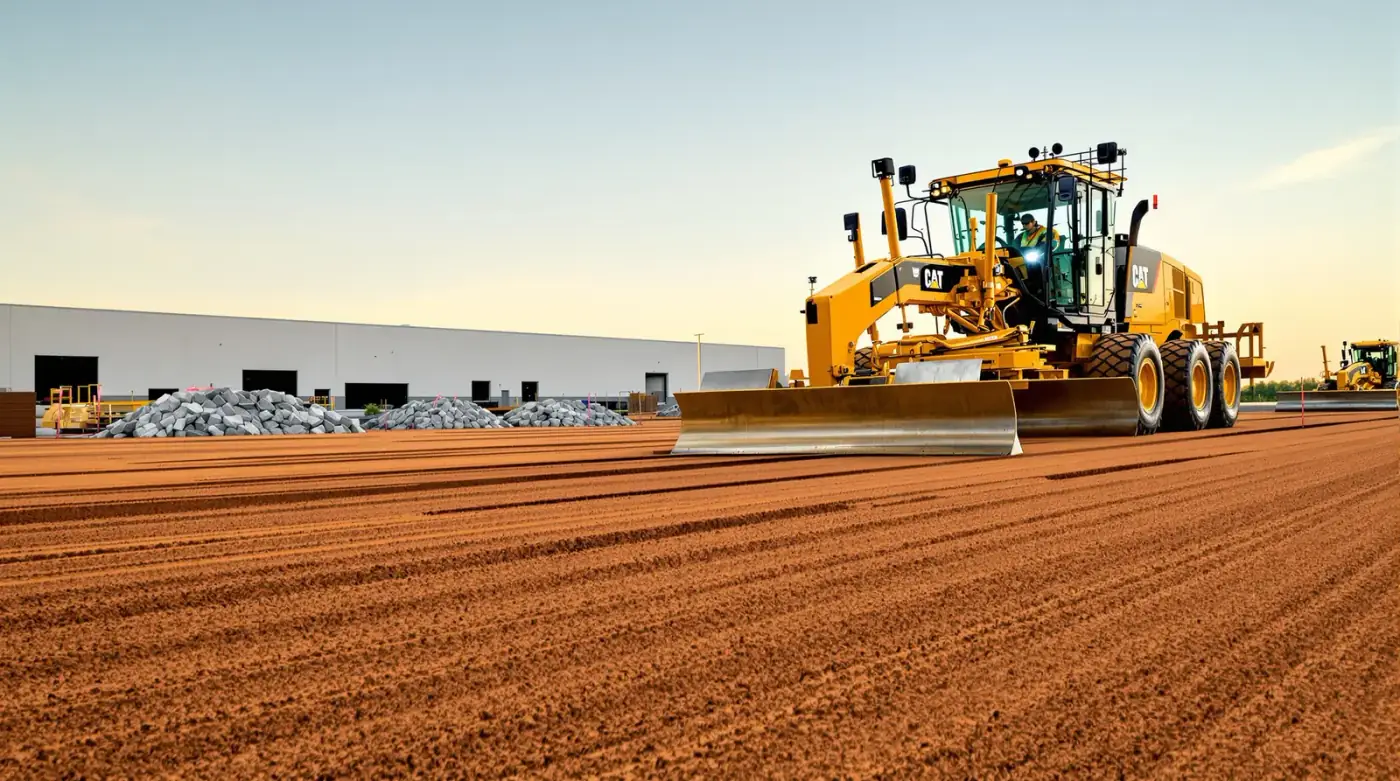
Site Grading Contractor in Kansas City
Rough grading to ±0.1 ft, fine grading to ±0.05 ft, GPS machine control, proof rolling on every building pad, and drainage engineered for KC's expansive clay — all from the same crew pouring the concrete on top.
Why Bad Grading Is the Most Expensive Mistake on a KC Construction Site — and Why It Is Always Invisible Until It Is Too Late
A graded pad either drains or it does not. A graded sub-base is either compacted to spec or it is not. A grade set on KC clay either accounts for the seasonal shrink-swell cycle or it does not. Every grading mistake looks fine the day the contractor walks off the site. The consequences show up months later when the parking lot has standing water, the building pad has a two-inch depression, or water is running toward the foundation instead of away from it. By then the grading contractor is gone, the window for warranty claims has closed, and the repair check is coming out of someone else's budget — usually the property owner's.
The damage compounds fast. Standing water at a foundation wall means hydrostatic pressure building against the concrete, water infiltrating through cold joints, and eventually a horizontal crack at mid-wall height — the classic KC basement failure that costs $20,000 to $80,000 to repair. Standing water in a parking lot means accelerated freeze-thaw damage starting in the first winter, asphalt or concrete deterioration, and ADA compliance problems when puddles cover accessible routes. A localized depression in a slab means cracked concrete at the edges of the low spot, failed joint sealant, and water infiltrating the sub-base until the base rock migrates and the slab deflects more with every truck that crosses it. Fixing the sub-base after the slab is poured costs 8–15 times more than grading it correctly the first time.
Kansas City Concrete Contractors grades pads and sites for the concrete we are about to pour. Every building pad gets proof rolled with a loaded dump truck. Every soft spot gets over-excavated and replaced before sub-base material touches the pad. Every drainage path gets engineered for KC clay — minimum 5% slope away from structures for the first 10 feet, not the "positive drainage" minimum that lets water sit against a foundation wall through every spring rain. And every grade gets set with KC's seasonal moisture movement in mind, then verified after a wet/dry cycle, because a grade set on clay that ignores the annual shrink-swell cycle will not match the design elevation by the time the slab is poured. We do this because we are the ones pouring that slab — and because we have to live with the results. Visit our full sitework services page to see how grading fits into the complete project sequence.
What Does Site Grading Cover on a Kansas City Commercial Project?
Site grading on a commercial project breaks into three sequential phases that span the project from after mass excavation through final sub-base placement. Each phase has a defined tolerance standard, and each feeds directly into the next. Rough grading follows earthwork and gets the entire site within ±0.1 feet of design elevation across all areas — building pads, parking areas, drive lanes, landscape zones, and drainage paths. The equipment at this stage is bulk-earthwork scale: CAT D6 and D8 dozers, CAT 140M motor graders, wheel loaders for material distribution, and GPS machine control on the primary grade units. GPS reads elevation data from the digital civil plan and adjusts the blade automatically as the machine moves — tighter tolerances than traditional blue-top stakes and faster cycle times because the machine self-corrects in real time.
Fine grading follows rough grading and tightens tolerance to ±0.05 feet on all areas receiving concrete, asphalt, or aggregate base. This phase is where building pad elevation is confirmed, drainage swales get their final shape, and parking sub-grade is brought to design. The motor grader (CAT 140M) and laser-controlled box scrapers handle the fine work. After fine grading, every building pad receives proof rolling — a loaded tandem dump truck driven systematically across the pad while a competent person watches for deflection. Any area that deflects under wheel load gets over-excavated to competent bearing and replaced with structural fill compacted to 95% modified proctor before sub-base placement. Proof rolling catches soft zones that density testing misses because the test gauge samples a small area while proof rolling loads the entire pad simultaneously.
Sub-base preparation closes the grading scope. Geotextile fabric — typically non-woven, 4 oz/SY — goes down first where the geotechnical engineer specifies it over KC clay to prevent fines migration. Aggregate base follows: AB-3 in Kansas, Type 5 in Missouri, placed in lifts of 4 to 6 inches for standard parking applications and 6 to 8 inches for truck courts and loading dock areas. Each lift is compacted to 95% modified proctor and tested. The final grade survey confirms elevations match the civil plan within tolerance before the concrete crew arrives to form and pour. In our case, the concrete crew is already mobilized — because the same company that just prepared the sub-base is about to pour the parking lot, the warehouse floor, or the building slab.
Drainage Grading: The Highest-Failure Point on KC Sites
Drainage grading is where most KC grading failures originate, and it deserves detailed treatment. The code minimum of "positive drainage away from structures" is not specific enough for Wymore-Ladoga clay. We establish a minimum 5% slope for the first 10 feet away from any building wall — that is approximately 6 inches of drop over 10 feet — because clay is functionally impermeable (coefficient of permeability in the range of 10⁻⁷ to 10⁻⁸ cm/sec) and water on a shallow slope will pond and slowly work at any construction joint or crack before it moves off. After the 10-foot buffer, parking areas pitch to catch basins or curb cuts at minimum 1% with 2% preferred for visual confirmation that water is flowing. Drive lanes are crowned so water sheds to both sides rather than channeling down the centerline. Swales are shaped with proper invert grades and adequate cross-section to carry the design flow rate. Every drainage path is field-verified against the storm drainage plan before we call grading complete.
The seasonal dimension adds one more layer. KC clay grades set in July dry conditions will be sitting 0.5 to 1.5 inches lower in late September after fall rains saturate the soil. Grades set in May will be sitting 0.5 to 1 inch higher come August. We account for this in two ways: setting the final grade slightly compensated for the expected seasonal move, and building in a final verification step before the concrete is poured rather than relying on a grade that was set weeks earlier under different moisture conditions. This is a routine part of our process — and it is the reason our slabs consistently match the design drainage plan rather than developing low spots after the first winter.
Your Site Grading Project in 4 Steps
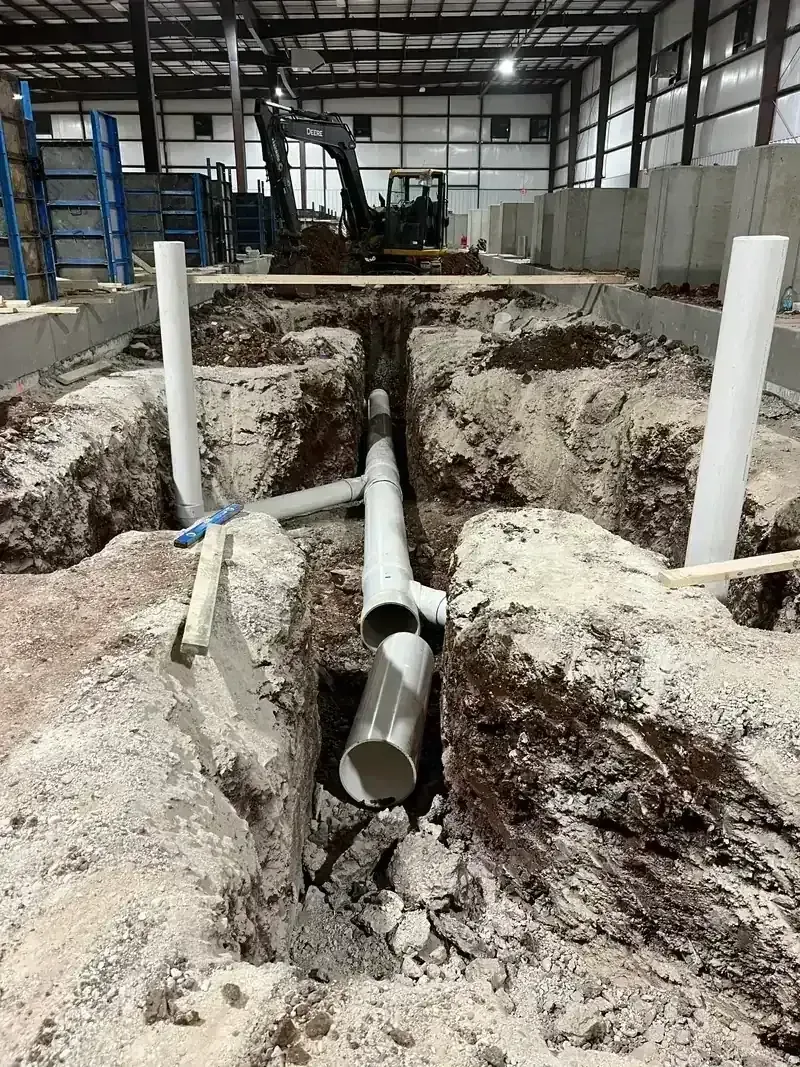
Free Consultation
We visit your property, discuss your vision, and provide a detailed estimate with no obligation. Every question answered up front.
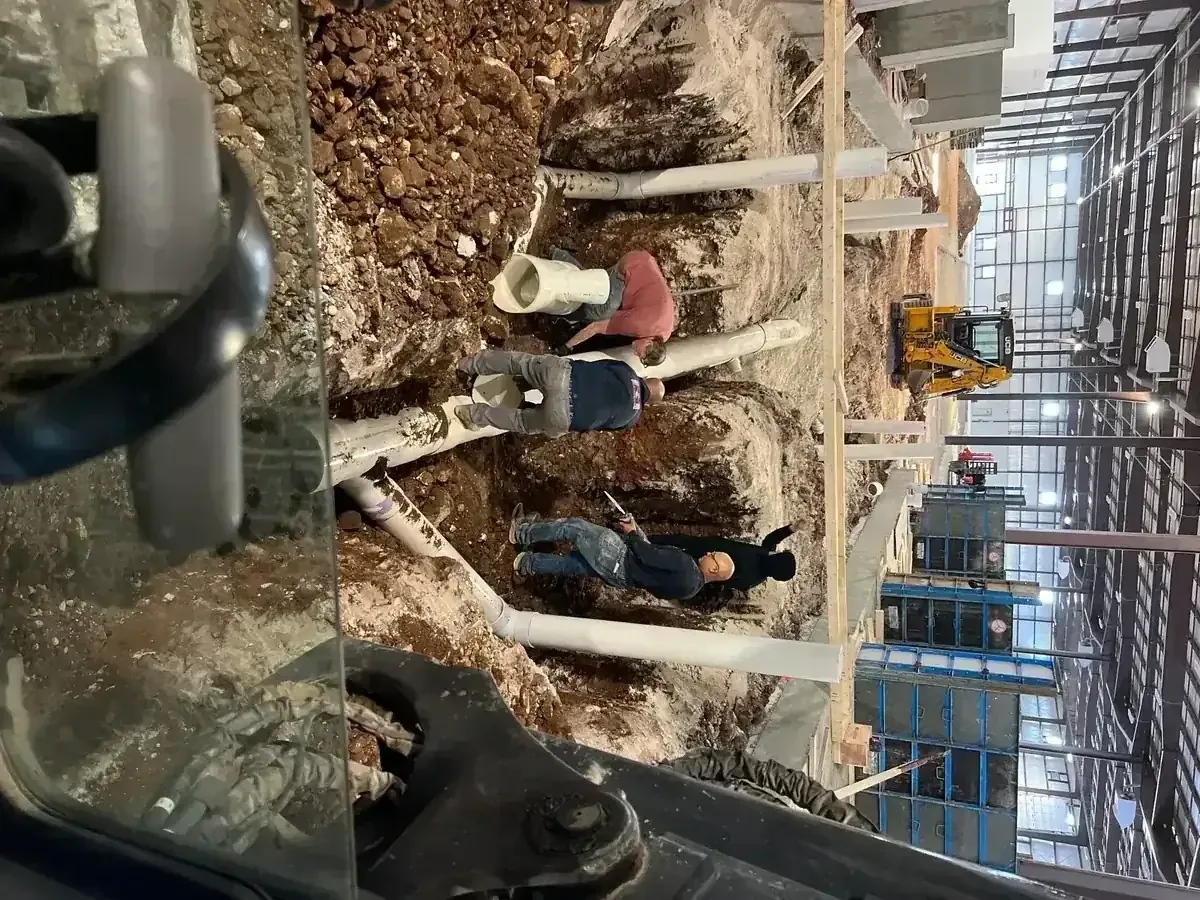
Design & Planning
Choose your materials, finish, and layout. We create a plan tailored to your property and KC's soil and climate conditions.
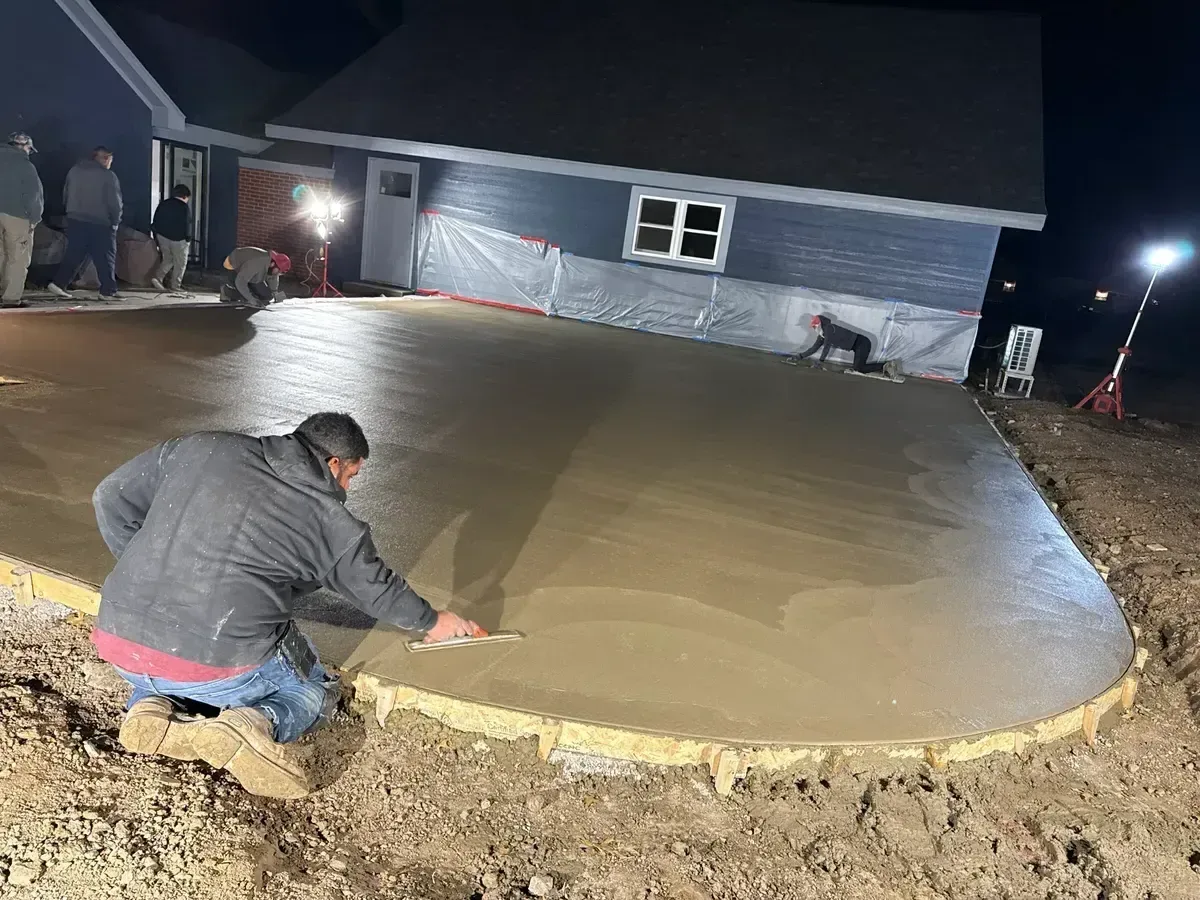
Professional Installation
Our crew preps the site, pours, and finishes your concrete with precision. Most residential projects wrap in 1-4 days.
Final Walkthrough
We inspect every inch with you. Sealant applied where needed. We don't leave until you're completely satisfied with the result.
Why Choose Kansas City Concrete Contractors for Site Grading
Rough Grading to ±0.1 ft, Fine to ±0.05 ft
Rough grading establishes building pad and parking elevations across the site. Fine grading tightens tolerance on concrete areas to ±0.05 feet. GPS machine control on CAT D6 dozers and CAT 140M motor graders delivers both phases faster than stake-and-string methods.
Proof Rolling — Every Building Pad
A loaded tandem dump truck driven across every pad before sub-base goes down. Soft spots that deflect under load get over-excavated and replaced with structural fill — not covered up with base rock and hoped for.
Drainage Engineered for KC Clay
Minimum 5% slope for the first 10 feet from any structure — significantly more than the 2% code minimum — because Wymore-Ladoga clay is functionally impermeable and needs active slope to shed water, not the minimum that lets it pond.
AB-3 / Type 5 Sub-Base to Spec
4–8 inch aggregate base compacted to 95% modified proctor. AB-3 in Kansas, Type 5 in Missouri. Geotextile fabric installed over clay when the geotechnical engineer specifies it to prevent fines migration into base rock over time.
GPS Machine Control
Dozers and motor graders running GPS machine control read elevation data from the digital civil plan and automatically adjust the blade. Fewer survey checks, faster cycle times, and tighter tolerances than traditional blue-top staking methods.
Seasonal Moisture Compensation
KC clay grades set in dry summer conditions shift when fall rains arrive — and grades set in wet spring conditions shift when summer drying begins. We compensate at the time of grading and verify after one wet/dry cycle.
What Our Customers Say
"They graded the pad for our new Lenexa restaurant on a sloped lot that two other bidders said would need an expensive retaining wall. Their grading plan redirected drainage and worked the slopes into the parking design. Saved us significant structural cost."
— Tony D., Lenexa, KS
"Our Independence parking lot had standing water in three low spots after every rain — tenants were complaining for two years. They came out, identified the grade problem, regraded the sub-base, and repoured the curb. No standing water in two winters since."
— Sandra W., Independence, MO
"Fine grading on a warehouse pad in Kansas City, KS. The slab their concrete crew poured on that sub-base is the flattest floor in our entire facility. No birdbaths, no ponding near the dock doors. Exactly what we needed."
— Bryce M., Kansas City, KS
How Much Does Site Grading Cost in Kansas City?
| Scope | Typical Range | Notes |
|---|---|---|
| Rough Grading | $0.40–0.90 / SF | ±0.1 ft tolerance, GPS machine control, commercial pads |
| Fine Grading | $0.30–0.60 / SF | ±0.05 ft tolerance, concrete and asphalt areas |
| Sub-Base Placement (4–6") | $1.50–2.75 / SF | AB-3 or Type 5, compacted to 95% modified proctor, density tested |
| Sub-Base Placement (6–8") | $2.50–3.50 / SF | Truck courts, loading docks, heavy vehicle areas |
| Residential Lot Grade | $1,500–6,500 | Quarter to half-acre lots, drainage corrections, new construction |
Proof rolling and geotextile fabric included on all commercial building pad scopes per engineer specification. Pricing varies with site access, material haul distance, and total volume. All commercial grading bids include density testing documentation.
Prices vary by project scope, site conditions, and finish selections. Contact us for your exact quote.
Frequently Asked Questions About Site Grading
What is the difference between rough grading and fine grading?
Rough grading is the initial bulk grade that establishes the site within about ±0.1 feet of design elevation across parking areas, drive lanes, building pads, and landscape zones. It follows mass excavation and earthwork and uses larger equipment — dozers, scrapers, and motor graders for large moves. Fine grading is the final pass that tightens tolerance to ±0.05 feet across areas that will receive concrete, asphalt, or aggregate base material. Fine grading is where birdbaths get created or prevented, where drainage swales get their final shape, and where the building pad elevation gets locked in before sub-base placement. Both phases are part of every commercial pad project we deliver. On smaller residential lots, rough and fine grading may blend into one operation, but the tolerance standards for areas receiving concrete remain the same.
How much slope is needed for drainage on a KC commercial site?
Code minimum for sheet flow drainage is 2% — but 2% on Wymore-Ladoga clay, which has a permeability of nearly zero, just means water moves slowly instead of ponding. Our standard for the first 10 feet immediately adjacent to any structure is 5% minimum slope: roughly 6 inches of drop over 10 feet. This ensures water actively runs away from foundation walls and does not create the slow infiltration that leads to hydrostatic pressure against foundations and horizontal wall cracks 5–10 years later. Parking areas pitch toward catch basins or curb cuts at 1–2% minimum. Drive lanes have a crown so water sheds to both sides. Storm pipe minimums per most KC standards are 1% slope for storm sewer and 0.5% minimum for sanitary. Every drainage grade we establish gets checked against both the civil plan and these minimums before we leave the site.
What is GPS machine control grading and why does it matter?
GPS machine control is a positioning system installed on the dozer or motor grader that reads the digital civil engineering plan in real time and automatically adjusts the blade to match design elevation as the machine moves across the site. The operator drives the pattern; the GPS controls the cut depth. Compared to traditional stake-and-string grading, GPS machine control delivers tighter tolerances (±0.05 ft consistently, versus ±0.1 ft on a good stake day), faster cycle times (fewer passes required), and dramatically fewer survey verification stops during the work. Errors are caught in real time rather than at the end of a pass. On a commercial pad of any meaningful size, the time savings typically offset the equipment cost, and the accuracy improvement reduces the rework that comes from grades that miss tolerance.
What is proof rolling and why does it catch problems sub-grade compaction misses?
Proof rolling is driving a loaded tandem dump truck — typically 25 tons or more — across a completed building pad while a competent person observes the surface for visible deflection under the wheels. Any area that deflects more than about 1 inch indicates inadequate compaction or a soft soil condition below the surface that a nuclear density gauge test at the pad surface would not catch. Soft spots get over-excavated to competent bearing and replaced with compacted structural fill before sub-base material goes down. Proof rolling is not a substitute for density testing — it is a full-pad check for soft zones that can hide under an otherwise passing test area. Skipping it is the most common cause of localized slab depressions that appear 6–18 months after a concrete pour and typically cost 5–10 times the proof rolling step to repair.
How does KC clay seasonal movement affect grading accuracy?
Wymore-Ladoga clay shrinks and swells through an annual moisture cycle that can move finished grades 0.5 to 2 inches vertically depending on moisture change and depth of active zone. A grade set in dry summer conditions (July–August) when clay has shrunk will rise when fall rain saturates the soil. A grade set in wet spring conditions (April–May) will drop when summer drying begins. The practical result is that fine grades set with millimeter accuracy in the wrong season can be inches off by the time a slab is poured two months later. We compensate by setting finished grade slightly high in wet conditions (expecting shrinkage) and slightly low in dry conditions (expecting swell), then verifying against design after at least one wet/dry cycle. This adjustment is KC-specific knowledge that most grade tolerances in other markets never need to consider.
Do I need a grading permit in Kansas City?
Yes — in most KC metro jurisdictions. Overland Park requires a grading permit for any ground disturbance over 5,000 square feet or 100 cubic yards; the city review typically runs 2–3 weeks. Olathe and Lee's Summit have similar thresholds with similar timelines. KCMO requires a city grading permit in addition to state NPDES filing for sites over 1 acre, and KCMO permits regularly take 4–6 weeks. Johnson County unincorporated areas require county permits for grading affecting more than 1 acre. We coordinate every permit required for your specific site and jurisdiction and start the process early — grading permit delays are the leading cause of schedule slippage on KC commercial site projects, and no amount of fast-tracking on the field side recovers from a late permit.
What sub-base material do you use for concrete in Kansas City?
AB-3 aggregate base on the Kansas side of the metro and Type 5 base rock on the Missouri side are the standard specifications for sub-base under concrete flatwork, parking lots, and building slabs. Typical placement depth is 4–6 inches for standard parking and drive lanes, 6–8 inches for truck courts, loading docks, and heavy vehicle areas. Both materials are compacted in lifts to 95% modified proctor per ASTM D1557. On sites with expansive KC clay subgrade, geotextile separation fabric — typically non-woven, 4-ounce or 6-ounce per the geotechnical engineer's recommendation — goes between the clay and the base rock to prevent clay fines from migrating up into the aggregate over time and progressively weakening the base. The sub-base spec we use matches what the slab above it requires, because we are the contractor pouring that slab.
Other Concrete Services We Offer in Kansas City
Concrete Driveways
New installation, replacement, and repair for residential and commercial driveways.
Concrete Patios
Custom patios and outdoor living spaces — standard, stamped, or decorative finishes.
Stamped Concrete
Decorative stamped patterns that replicate stone, brick, slate, and wood at a fraction of the cost.
Stained & Colored Concrete
Acid stain, water-based stain, and integral color for interior and exterior surfaces.
Concrete Overlays & Resurfacing
Refresh existing concrete without full tear-out — new surface, new look, lower cost.
Pool Decks
Slip-resistant, heat-reflective concrete surfaces surrounding pools — safe and beautiful.
Pool Installation
Full-service fiberglass and concrete pool installation — from excavation through decking
Sidewalks & Walkways
New sidewalks, walkway installation, and trip-hazard repair for residential and commercial properties.
Retaining Walls
Concrete retaining walls for erosion control, slope stabilization, and landscape structure.
Parking Lots
Commercial concrete parking lots — new construction, repair, ADA compliance, and line striping.
Warehouse & Industrial Floors
Heavy-duty concrete floors for warehouses, factories, and industrial facilities. Year-round scheduling.
Sitework & Site Preparation
Commercial excavation, grading, utility trenching, and full-scope site preparation
ADA Ramps & Compliance
ADA-compliant concrete ramps, curb cuts, and accessibility upgrades for commercial properties.
Need Grading for Your KC Site?
Call today for a free estimate. No pressure. No obligation. Just honest answers and a detailed quote within 24 hours.