
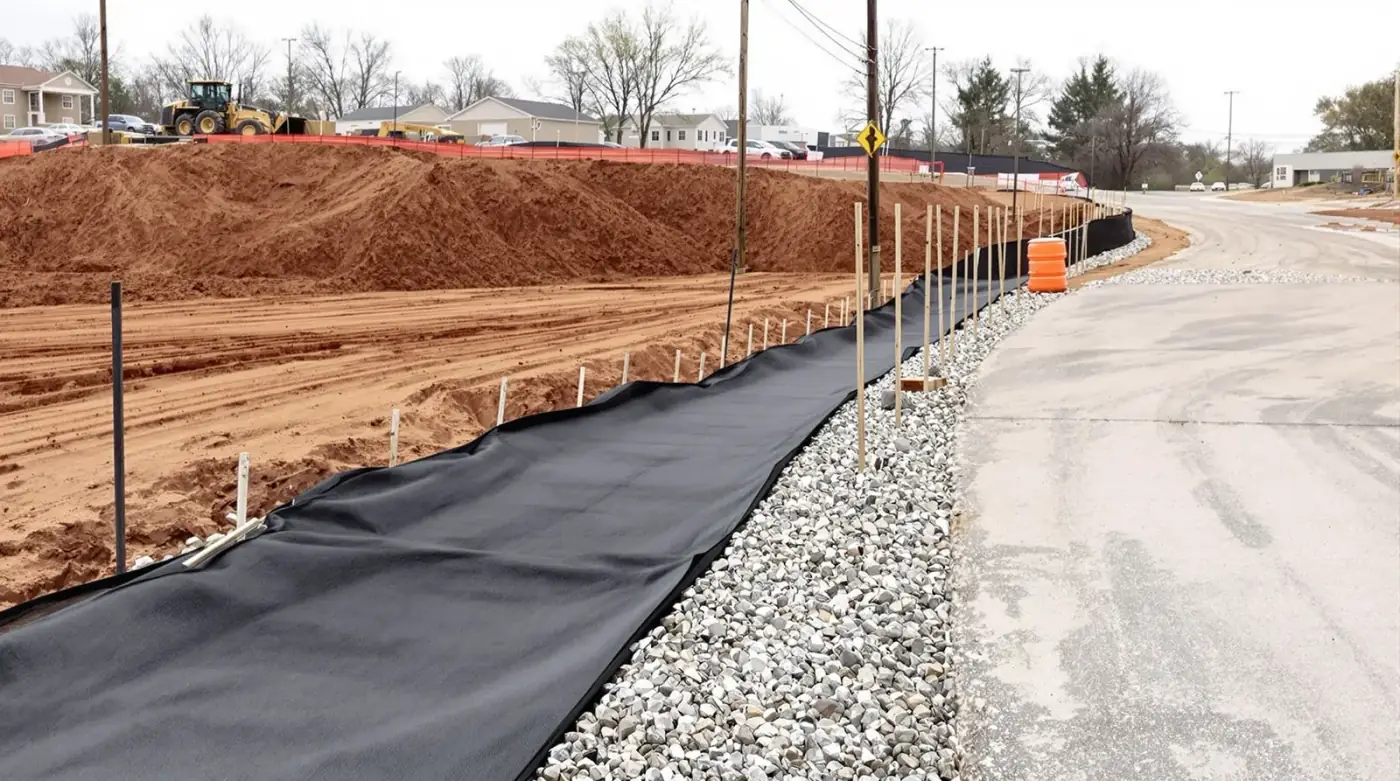
Erosion Control & SWPPP Compliance in Kansas City
NPDES permit filing with MoDNR and KDHE, SWPPP preparation, full BMP installation, required weekly and post-rain inspections, and Notice of Termination closeout — from first stake to permit closed.
Why SWPPP Violations Are the Most Expensive Mistake Nobody Budgets For
The sitework contractor installed perimeter silt fence and called the SWPPP requirement satisfied. Nobody put inlet protection on the storm drain inside the disturbance area. Nobody installed wattles at the lower end of the slope. The first significant rain came through — and KC's May average is 5.2 inches of rainfall, often delivered in multi-inch storm events — sediment washed across the site, entered the unprotected inlet, and reached the receiving stream 400 feet away. A downstream neighbor photographed the turbid water and filed a complaint with MoDNR. The inspector arrived 48 hours later, issued a stop-work order, threatened fines of up to $25,000 per day per violation, and demanded a corrective action plan with a 7-day cure deadline. The project sat idle for 11 days while BMPs were corrected, re-installed, and re-inspected. The GC held the sitework sub responsible for delay damages. Nobody had seen it coming because erosion control was treated as paperwork rather than as actual work.
SWPPP enforcement is infrequent enough that most contractors underestimate the risk — until it happens to them. EPA maximum federal civil penalties run $64,618 per day per Clean Water Act violation. MoDNR and KDHE state administrative penalties typically range from $1,000 to $25,000 per day. Stop-work orders shut projects down for days to weeks. Permit revocation removes the ability to do any further work on the site until a new permit is obtained. Every dollar of those fines comes out of project margin or owner budget — they are never covered by general liability insurance and they always appear on the wrong side of the project ledger. And the enforcement process itself, regardless of the final penalty amount, produces stop-work delays that cost far more than the fines in schedule compression costs, subcontractor remobilization, and GC overhead.
Kansas City Concrete Contractors treats erosion control as the first phase of every project, not an afterthought. The construction entrance and perimeter controls go in before any vegetation is disturbed — the permit requires it, and we follow it. Inlet protection is installed on every drain in or near the site. Inspections happen every 7 calendar days and within 24 hours of every rain event over half an inch, and they are documented in the SWPPP binder on site every time. We know how KC clay behaves in rain — this Wymore-Ladoga CH material loads a silt fence with 3 to 5 times the sediment of granular soil in the same storm — and we size BMPs for what actually happens on KC construction sites, not the minimum that passes a desk review. For the complete project sequence that this work protects, see our full sitework services overview.
What's Required for Full NPDES Compliance on a Kansas City Construction Site?
Federal NPDES requirements apply to any construction project disturbing 1 acre or more of land. The 1-acre trigger is the same on both sides of the state line, but the administering agency, filing system, timeline, and PE requirements differ. Missouri side: MoDNR administers the program. Filing is through the MoDNR online portal, and the Land Disturbance Permit review can take 30 days or more depending on the project and workload. Starting the application 6 to 8 weeks before planned land disturbance is the conservative and correct approach. Missouri does not have a statewide PE supervision requirement for the SWPPP, though many Missouri municipalities require a PE-stamped erosion control plan as a local permit condition on top of the state NPDES filing. Kansas side: KDHE administers the program through KEIMS — the electronic-only filing portal. The application fee is $90. KDHE review typically runs 10 to 20 business days. Kansas requires that a Kansas-licensed Professional Engineer supervise the SWPPP for the project duration, meaning the PE must review and approve inspection records and SWPPP amendments as the project progresses — not just sign the initial filing.
The SWPPP itself is a living document. At filing it includes the project description, the total disturbed acreage, the construction sequence, every BMP to be installed and its installation timing, the inspection schedule, the responsible parties and their contact information, the maintenance procedures for each BMP type, and the closeout protocol. The binder stays on site throughout the project and is updated after every inspection. State and city inspectors have the legal right to review the binder at any site visit, and an incomplete or out-of-date SWPPP — even if every BMP is functioning perfectly — is itself a permit violation. The document-keeping is not optional.
BMP installation is the physical work, and it must happen in the right sequence. The stone construction entrance goes in at every vehicle access point before any equipment moves dirt. Perimeter silt fence is trenched in along the entire downslope boundary of the disturbance area (not just the obvious low side — all sides unless topography clearly drains away). Inlet protection is installed on every storm drain that could receive runoff from the disturbed area. Only after these perimeter controls are in place does clearing or excavation begin. On KC clay sites, silt fence alone on any slope steeper than 5:1 is undersized — we supplement with straw wattles or fiber rolls at 100-foot spacing and ensure the fence installation includes a proper anchor trench (6 inches deep) rather than surface-stapled fabric that will blow out in the first storm.
Maintenance is where most SWPPP failures originate. A silt fence installed correctly on day one will load with sediment over time, and sediment built up to half the fence height reduces its remaining capacity to near zero. A stone construction entrance loses its effectiveness as fine KC clay packs the voids between stones within the first two weeks of heavy truck traffic. Wattles at inlets get displaced by high-velocity runoff in major storm events. Weekly inspection is the process that catches these failures before they become enforcement actions — but only if the inspector is actually looking for failure modes and not just checking a box that says "walked the site." We take photos, document specific BMP conditions, and assign corrective actions with completion dates, because that is what the permit actually requires.
SWPPP Closeout: Achieving 70% Cover for Notice of Termination
NPDES permit closeout requires achieving 70% permanent vegetative cover on all areas of the site that will support vegetation — meaning turf, seeding, or sod has established to at least 70% density with no significant bare soil patches larger than 1 square foot. Building footprints, concrete and asphalt areas, and gravel surfaces count as permanently stabilized regardless of vegetative cover. On KC clay subsoils, achieving 70% turf cover requires soil preparation: the top 6 inches of salvaged topsoil placed over the clay subgrade before seeding, a seed mix appropriate for KC's climate (tall fescue dominant), adequate soil moisture, and time — typically 4 to 8 weeks from seeding to 70% cover in the fall growing window or 6 to 12 weeks in spring. Hydromulch accelerates establishment on slopes. Once the 70% threshold is confirmed across the site, temporary BMPs are removed, a final inspection is performed and documented, and the Notice of Termination is filed with MoDNR or KDHE to formally close the permit. Without that filing, the permit stays active, the bond obligation continues, and the contractor remains exposed to compliance inspections indefinitely.
Your Erosion Control & SWPPP Project in 4 Steps
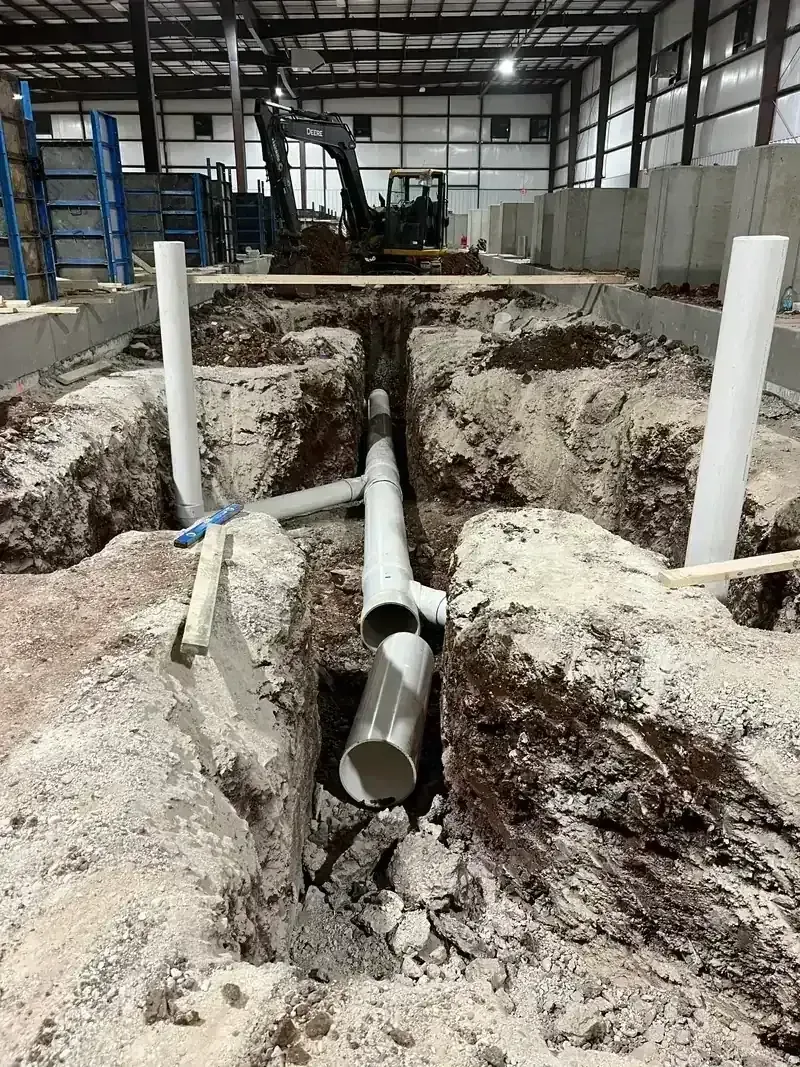
Free Consultation
We visit your property, discuss your vision, and provide a detailed estimate with no obligation. Every question answered up front.
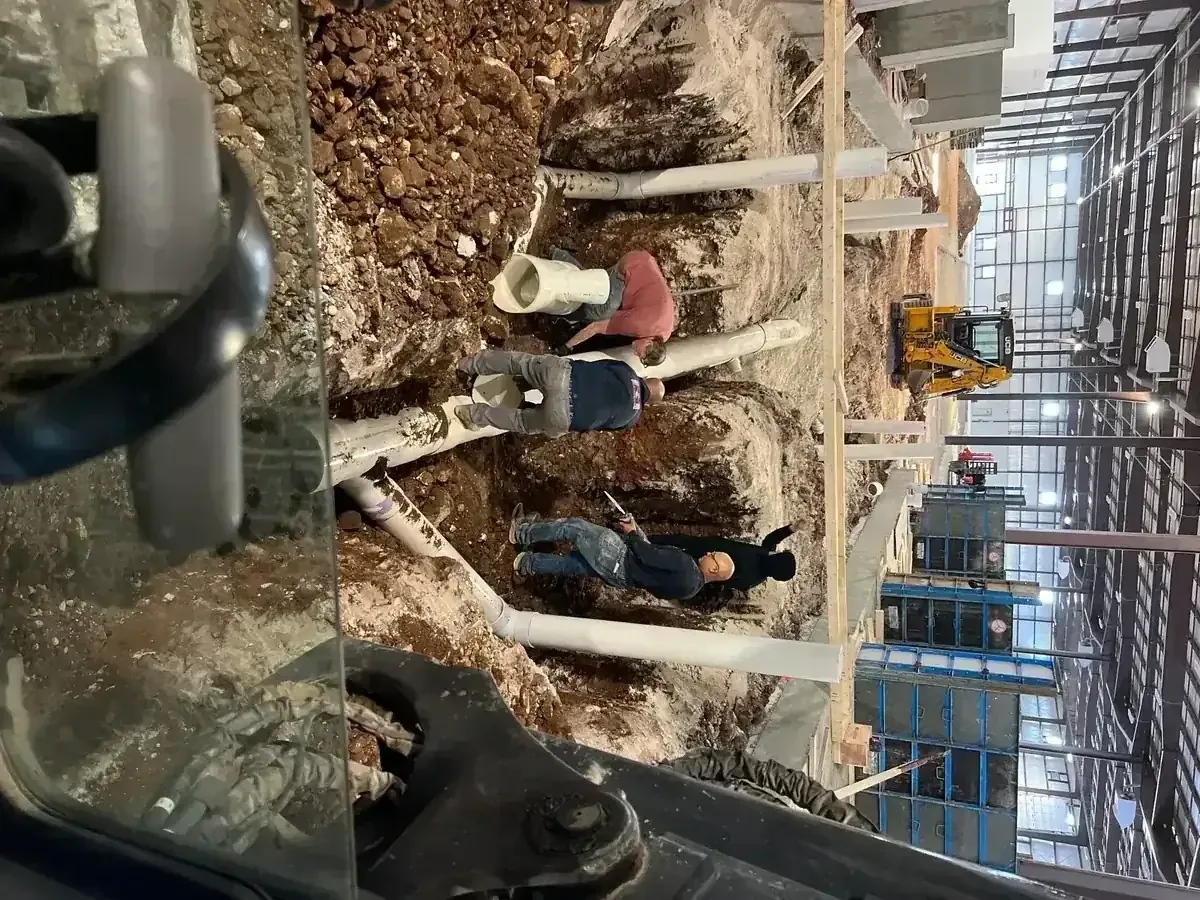
Design & Planning
Choose your materials, finish, and layout. We create a plan tailored to your property and KC's soil and climate conditions.
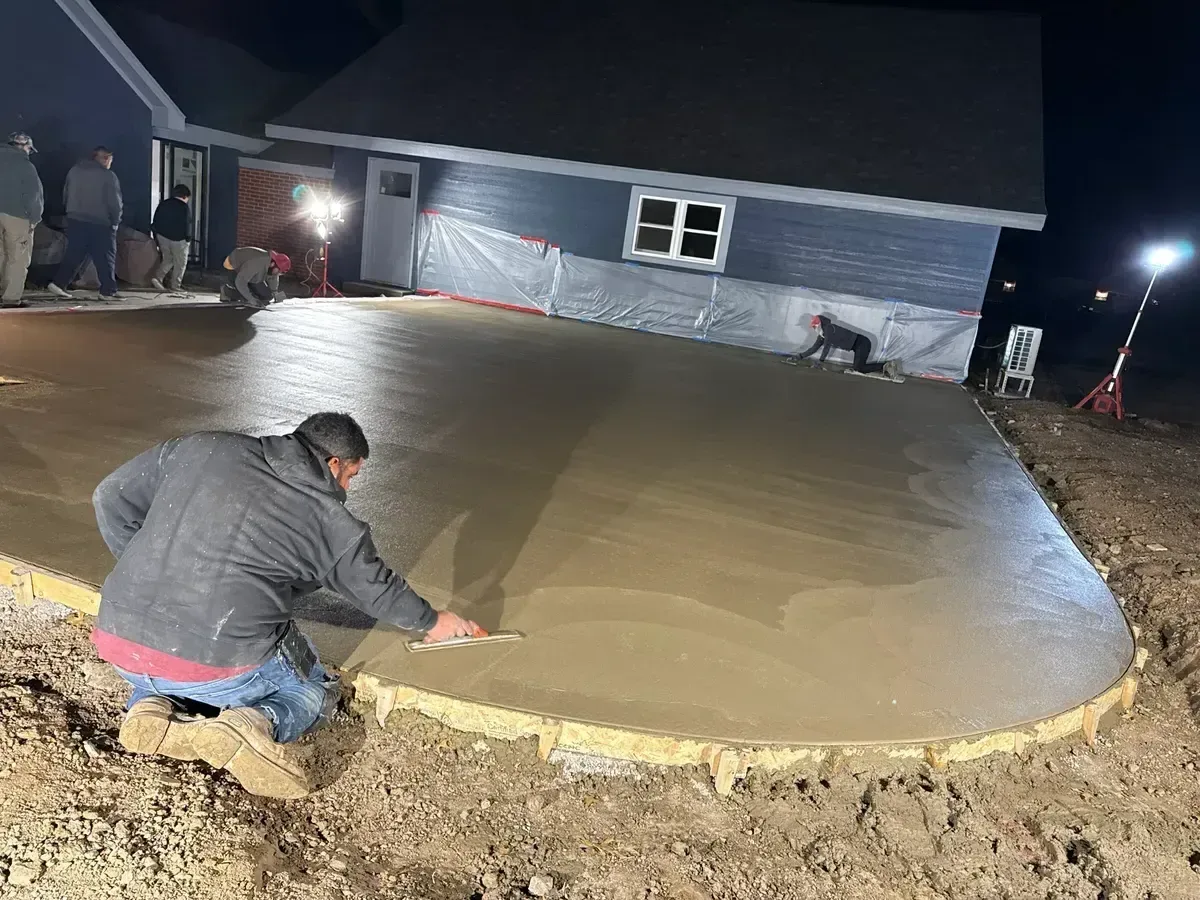
Professional Installation
Our crew preps the site, pours, and finishes your concrete with precision. Most residential projects wrap in 1-4 days.
Final Walkthrough
We inspect every inch with you. Sealant applied where needed. We don't leave until you're completely satisfied with the result.
Why Choose Kansas City Concrete Contractors for Erosion Control & SWPPP
SWPPP Preparation & NPDES Filing
Site-specific Stormwater Pollution Prevention Plans for both MoDNR (Missouri Land Disturbance Permit) and KDHE (Kansas KEIMS portal, $90 fee). NOI preparation, SWPPP document, Kansas PE supervision coordination.
BMPs Installed Before First Disturbance
Stone construction entrance, perimeter silt fence, and inlet protection installed before any vegetation is removed. The permit requires it — and every KC city grading permit requires it. We do it first on every project.
Weekly + Post-Rain Inspections
NPDES requires inspections every 7 calendar days plus within 24 hours of any rain event over 0.5 inches. Documented in writing in the SWPPP binder on site. We perform every required inspection and record it.
Permanent Stabilization to 70%
Final seeding, erosion blankets on slopes, sod, and hardscape coordination to achieve 70% permanent vegetative cover — the NPDES threshold for Notice of Termination filing and permit closeout.
Full BMP Suite for KC Conditions
Silt fence, straw wattles, fiber rolls, inlet protection, hydromulch, erosion blankets on slopes steeper than 3:1, and construction entrance. Sized and specified for KC clay's specific erosion behavior.
Closeout: NOT Filing with MoDNR or KDHE
Final inspection, temporary BMP removal, closeout documentation, and Notice of Termination filed with MoDNR or KDHE. Without the NOT, the permit stays open indefinitely and the contractor remains liable for the site.
What Our Customers Say
"Their SWPPP on our Olathe commercial development was the cleanest I have seen in 15 years of working KC projects. First inspection passed clean, permit closed without a single corrective action request from KDHE. That is extremely rare."
— Andre F., Olathe, KS
"Took over erosion control on a stalled project in KCMO where the previous contractor had let everything fall apart — silt fence down, construction entrance a mud track, inlet protection gone. They had us back into full compliance in five days and we avoided the fine threat from MoDNR."
— Kim S., Kansas City, MO
"Perimeter silt fence, wattles at the inlets, and stone construction entrance on our Lee's Summit retail pad. Installed first day on site, maintained through the whole 14-week build, removed clean at project closeout. Inspections documented every week without me having to ask."
— Reggie T., Lee's Summit, MO
How Much Does SWPPP Compliance Cost in Kansas City?
| Scope | Typical Cost | Notes |
|---|---|---|
| SWPPP Preparation & Filing | $1,500–4,500 | Site-specific plan, NOI filing with MoDNR or KDHE |
| Silt Fence Installation | $2.50–5.00 / LF | Trenched-in, 6" anchor, posts at 6 ft max spacing |
| Stone Construction Entrance | $1,500–3,500 | 50' × 12' minimum, geotextile base, 3" clean stone |
| Inlet Protection (per drain) | $150–400 | Block-and-gravel, wattle, or filter fabric system per site conditions |
| Weekly Inspections | $150–350 / week | 7-day inspections + post-rain inspections, documented with photos |
| Closeout & NOT Filing | $500–1,500 | Final inspection, BMP removal, Notice of Termination |
Pricing varies with site perimeter length, number of inlets, and project duration. KDHE $90 filing fee and any required Kansas PE supervision fees passed through at cost. Full-project SWPPP scopes (prep + installation + inspections + closeout) for 1- to 3-acre commercial sites typically total $5,000–12,000.
Prices vary by project scope, site conditions, and finish selections. Contact us for your exact quote.
Frequently Asked Questions About Erosion Control & SWPPP
What is a SWPPP and who needs one?
A SWPPP — Stormwater Pollution Prevention Plan — is the site-specific written document that describes how a construction project will prevent sediment and other pollutants from leaving the site in stormwater runoff. It identifies every Best Management Practice (BMP) to be installed, the inspection schedule, responsible parties for maintenance, and the closeout process. SWPPPs are required by the federal NPDES (National Pollutant Discharge Elimination System) program under the Clean Water Act for any construction site disturbing 1 acre or more of land. In the Kansas City metro, this requirement is enforced by MoDNR (Missouri side) and KDHE (Kansas side). Projects under 1 acre do not trigger NPDES but may still be subject to local erosion control requirements under city grading permit conditions — particularly in KCMO, Overland Park, Olathe, and Lee's Summit, which have local stormwater management ordinances with their own requirements below the NPDES threshold.
What is the difference between the MoDNR and KDHE permit processes?
MoDNR (Missouri Department of Natural Resources) administers the NPDES Construction Stormwater permit program on the Missouri side. Filing is through the MoDNR online portal, and the Land Disturbance Permit review can take 30 days or more — starting the application 6 to 8 weeks before groundbreaking is the safe timeline. Missouri does not have a statutory PE supervision requirement for the SWPPP itself, though many Missouri cities require a PE-stamped erosion control plan as a local permit condition. KDHE (Kansas Department of Health and Environment) administers the program on the Kansas side through the KEIMS electronic filing system. The application fee is $90. KDHE review typically runs 10 to 20 business days. Kansas requires that the SWPPP be supervised by a Kansas-licensed Professional Engineer for the duration of the project — this means a Kansas-licensed PE must review and approve SWPPP amendments and inspection records throughout the project, not just at filing. Both agencies require the Notice of Intent before any land disturbance begins and the Notice of Termination when 70% permanent vegetative cover is achieved.
What BMPs are required on a typical Kansas City construction site?
The specific BMPs required depend on the SWPPP prepared for your site, but standard elements on a KC construction project include: perimeter silt fence along the entire downslope boundary of the disturbance area (installed in trenched-in posts at 6-foot maximum spacing, not simply pushed into the ground); straw wattles or fiber rolls at 100-foot maximum spacing on slopes and around storm drain inlets; a stone construction entrance at every vehicle access point (50 feet by 12 feet minimum, on geotextile fabric, with 3-inch clean stone) to prevent track-out of clay mud onto public streets; inlet protection on every storm drain that could receive site runoff; temporary seeding with an appropriate seed mix on disturbed areas that will sit idle more than 14 days; and erosion blankets or rolled erosion control products on slopes steeper than 3:1. On KC clay soils in particular, silt fence alone on a steep slope is not adequate — KC clay can generate very high sediment loads in a single rain event and overwhelm the fence before the next inspection cycle.
How often do SWPPP inspections need to happen?
NPDES Construction Stormwater permit regulations require two types of inspections. Routine inspections must occur at least once every 7 calendar days throughout the duration of the permitted disturbance. Rain event inspections must occur within 24 hours of any precipitation event measuring 0.5 inches or greater. Both types of inspection must be documented in writing in the SWPPP binder kept on site, identifying the inspector's name and credentials, the date and weather conditions, each BMP inspected, any deficiencies found, and the corrective actions taken and their completion timeline. A deficiency identified in an inspection must be corrected within a reasonable timeframe — typically 7 days for standard repairs, immediately for any BMP that has failed in a way that allows visible sediment discharge. Failure to document inspections is itself a permit violation, independent of whether any BMP has actually failed. We perform every required inspection cycle, document every finding, and complete repairs before the next inspection window closes.
What are the fines for SWPPP violations and how common is enforcement?
EPA NPDES enforcement carries a maximum federal civil penalty of $64,618 per day per violation under the Clean Water Act. MoDNR typically issues administrative penalties in the $1,000 to $25,000 per day range for construction stormwater violations. KDHE has similar enforcement authority on the Kansas side. Stop-work orders are the most common immediate consequence and can halt a project for 1 to 4 weeks while corrections are made, re-inspected, and confirmed by the agency. Citizen complaints — neighbors, environmental groups, or anyone who photographs visible sediment leaving a construction site — can trigger agency inspections independent of scheduled inspection cycles. In the Kansas City metro, MoDNR and KDHE are active in responding to complaints, particularly in and near the Missouri River floodplain and in developed suburban areas with active homeowner associations. The cost of proper erosion control implementation on a 1-acre commercial site is typically $5,000 to $15,000 total. The cost of a stop-work order and corrective action process can easily reach $25,000 to $75,000 in delay costs and fines. The math is not complicated.
What is hydromulch and when is it used instead of seeding?
Hydromulch (also called hydraulic mulch or hydroseed) is a slurry of seed, wood fiber mulch, tackifier, and fertilizer applied by a hydroseeder pump unit directly onto disturbed soil. It provides immediate ground cover after application, germination typically begins within 7 to 14 days under good conditions, and the fiber matrix holds the seed and initial germination in place on slopes where conventional seeding and straw mulching would wash off in rain. In the KC metro, hydromulch is standard practice on slopes steeper than 3:1, on larger disturbed areas where straw mulch application would be impractical, and on any disturbed area that needs to achieve temporary cover quickly to satisfy the 14-day idle-area seeding requirement. Hydromulch does not eliminate the need for perimeter silt fence and inlet protection — it addresses the source (exposed soil) while other BMPs manage the runoff pathway. Permanent seeding mixes for KC typically include tall fescue as the primary species for its drought tolerance and ability to establish on the clay-dominated subsoils common across the metro.
How does SWPPP closeout work and what is a Notice of Termination?
SWPPP closeout begins when the project has achieved permanent stabilization across all disturbed areas. NPDES defines this as 70% permanent vegetative cover on areas that will have permanent vegetation, plus hardscape (concrete, asphalt, building) covering portions that are permanently impervious. Once the 70% threshold is met across the full disturbance area, the temporary BMPs — silt fence, wattles, inlet protection — can be removed. A final inspection documents the permanent cover and BMP removal, and the closeout documentation is assembled. The contractor then files the Notice of Termination (NOT) with MoDNR (Missouri) or KDHE (Kansas), which officially ends the NPDES permit obligation. Without filing the NOT, the permit remains active in perpetuity — the state can conduct compliance inspections at any time, and the contractor remains legally responsible for the site regardless of whether construction ended months or years earlier. We handle the final inspection, prepare the closeout documentation, and file the NOT as a standard deliverable on every SWPPP scope we manage.
Other Concrete Services We Offer in Kansas City
Concrete Driveways
New installation, replacement, and repair for residential and commercial driveways.
Concrete Patios
Custom patios and outdoor living spaces — standard, stamped, or decorative finishes.
Stamped Concrete
Decorative stamped patterns that replicate stone, brick, slate, and wood at a fraction of the cost.
Stained & Colored Concrete
Acid stain, water-based stain, and integral color for interior and exterior surfaces.
Concrete Overlays & Resurfacing
Refresh existing concrete without full tear-out — new surface, new look, lower cost.
Pool Decks
Slip-resistant, heat-reflective concrete surfaces surrounding pools — safe and beautiful.
Pool Installation
Full-service fiberglass and concrete pool installation — from excavation through decking
Sidewalks & Walkways
New sidewalks, walkway installation, and trip-hazard repair for residential and commercial properties.
Retaining Walls
Concrete retaining walls for erosion control, slope stabilization, and landscape structure.
Parking Lots
Commercial concrete parking lots — new construction, repair, ADA compliance, and line striping.
Warehouse & Industrial Floors
Heavy-duty concrete floors for warehouses, factories, and industrial facilities. Year-round scheduling.
Sitework & Site Preparation
Commercial excavation, grading, utility trenching, and full-scope site preparation
ADA Ramps & Compliance
ADA-compliant concrete ramps, curb cuts, and accessibility upgrades for commercial properties.
Ready to Get Your Site Compliant?
Call today for a free estimate. No pressure. No obligation. Just honest answers and a detailed quote within 24 hours.