Concrete & Structural Demolition Contractor in Kansas City
Concrete slab demolition, structural removal, surgical selective demo, and complete haul-off with concrete recycling — paired with the replacement concrete pour under one contract, one warranty, one crew.
Why Demolition Is the Phase Everybody Underestimates — Until It Shuts the Project Down
Demolition looks simple from the outside. Knock it down, haul it off, done. The reality is that demo is where permits get missed, utility disconnects get forgotten, asbestos surveys get skipped, dust complaints come from neighboring tenants, debris gets diverted to unpermitted disposal, and the concrete contractor arriving to pour the replacement discovers that the old slab was 8 inches thick with double-mat rebar instead of 4 inches unreinforced as the original drawings showed. The phase that was supposed to take two days takes a week. The city inspector stops the project for an unpulled demo permit. The utility company shows up to find the gas line was not properly disconnected. The rest of the schedule cascades.
The hidden cost of incomplete demolition shows up in the phase that follows. Slab debris and old aggregate left in the sub-grade prevents uniform compaction and creates voids under the new concrete. Old foundation footings that were not fully removed obstruct excavation for the new pour and require day-labor hand work at contractor rates. Stubs of old utilities that were not cut and capped properly create obstructions and potential compliance issues. Concrete sent to a landfill instead of a crusher costs 2 to 3 times more in tipping fees and generates zero recycled aggregate value. Every shortcut on the demo phase becomes a documented problem on the phase that follows — and it always costs more to fix the downstream problem than the original shortcut saved.
Kansas City Concrete Contractors handles demolition as the first phase of a contract that almost always includes the replacement concrete. We pull the city permit. We coordinate every utility disconnect and verify each one on the ground before equipment is staged. We arrange the asbestos pre-demolition survey on any pre-1980 structure. We wet-saw-cut clean edges where the new work ties into the existing. We haul concrete to KC crushing facilities for recycling. And then we transition directly into sub-base preparation and the replacement pour — whether that is a new concrete driveway, a commercial parking lot, or a sidewalk and walkway system. One contract, one schedule, one warranty. See our sitework services page for how demolition fits into the full project sequence.
What Kinds of Demolition Work Do You Handle in Kansas City?
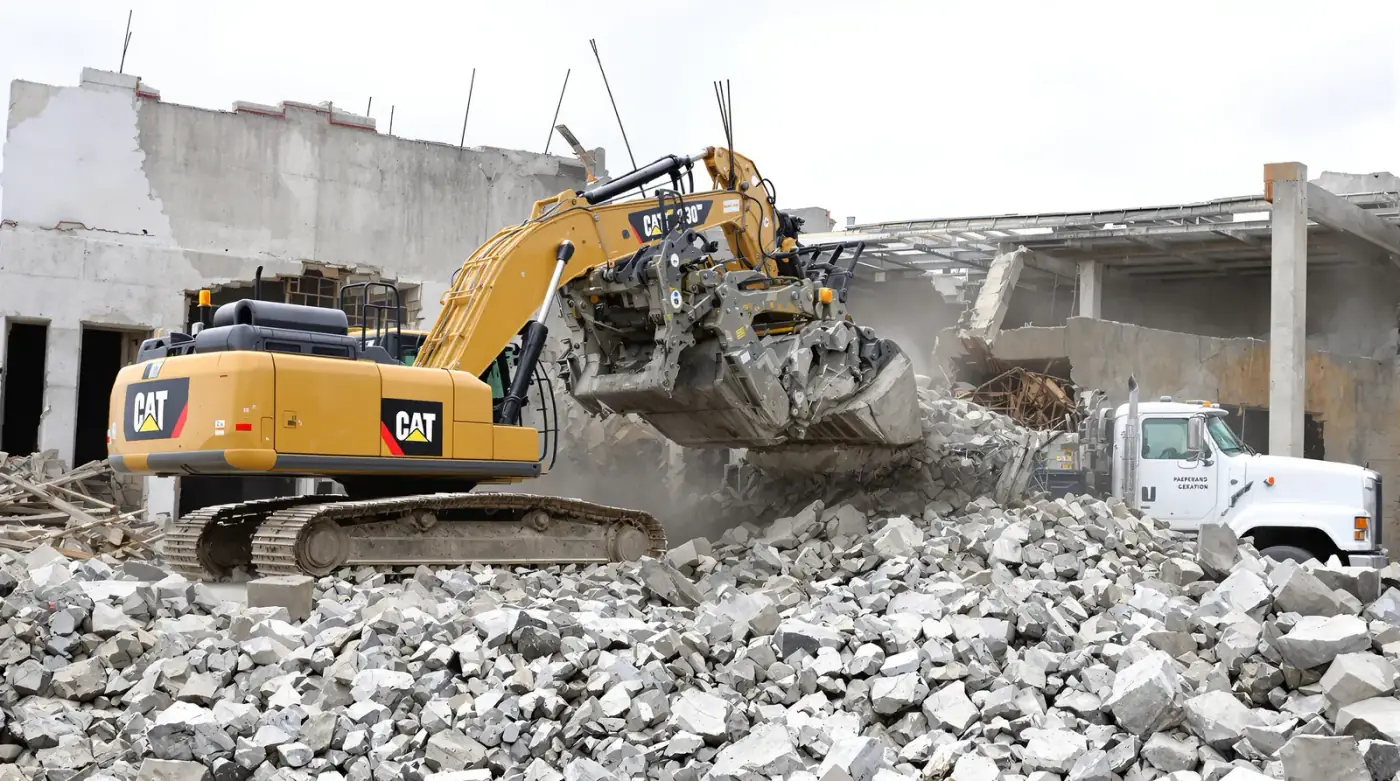
Our demolition scope covers three primary categories, each with its own process, equipment, and permit requirements. Concrete slab and flatwork demolition is the highest-volume work — driveways, sidewalks, patios, parking lots, loading docks, and commercial slabs that have reached end of life or need to be removed for site redevelopment. Breakout is performed with hydraulic breaker attachments on mini excavators or skid steers for residential scale, and CAT 320 or 330 excavators with hoe-ram for larger commercial pads. Saw cutting establishes clean edges at the perimeter and at any tie-in points where new concrete will meet existing. Rebar is separated from the concrete debris on site — metal to recyclers, concrete to KC crushing facilities for recycling into RCA (recycled concrete aggregate). The separation step is important: mixed concrete-and-rebar loads are rejected by most KC crusher operators and must go to landfill at significantly higher tipping cost.
Foundation and structural demolition covers existing foundation walls, grade beams, footings, and retaining wall sections along with outbuildings, garages, carports, and small accessory structures. Before anything comes down, utility disconnects are verified in writing with each utility company. Electric meter pulled by the utility. Gas capped at the street by the distribution company. Water disconnected at the curb stop. Only after written confirmation from each utility does equipment stage on site. KCMO and most Johnson County cities require a demolition permit filed with the building department before any structure comes down — and for structures with pre-1980 construction dates or with suspect materials, an asbestos inspection per EPA NESHAP regulations must be completed and the report reviewed before the permit is issued. We pull every permit, coordinate every disconnect, and arrange every required survey.
Selective demolition is the precision version of the work — removing defined elements while leaving adjacent construction completely undisturbed. The primary technique is wet diamond saw cutting, which uses a water-cooled diamond blade to cut concrete without the cracking and spalling that a breaker produces. Wet cutting also suppresses concrete dust, which is an OSHA silica exposure concern (PEL is 50 µg/m³ as an 8-hour time-weighted average under 29 CFR 1926.1153). After saw cutting establishes clean perimeter lines, breakout proceeds with compact equipment — mini excavators, jackhammers, or demolition robots for indoor applications — that can operate without transmitting destructive vibration to the surrounding slab. Protection boards or plywood sheets cover any adjacent finished concrete during the breakout phase. Selective demolition is the only option for tenant buildouts, partial parking lot panel replacements, and any project where active areas must remain in service throughout construction.
Permit Timelines: KCMO vs. Johnson County
Demolition permit timelines vary across the KC metro and need to be built into the project schedule from day one. KCMO Development Permits typically takes 2–4 weeks to issue a demolition permit; projects requiring plan review (larger structures, complex sites) can run 4–6 weeks. KCMO also requires a separate asbestos clearance letter from a licensed inspector before the permit is issued if the structure is pre-1980. Overland Park Building Services typically runs 2–3 weeks for standard demolition permits and does not require a pre-permit asbestos letter, though the NESHAP survey is still required before demolition begins. Olathe and Lenexa are similar to Overland Park. Lee's Summit's Public Works department handles demo permits with review timelines of 2–3 weeks. Starting the permit application the day the project scope is confirmed — not the week demolition is scheduled to begin — is the only way to avoid permit-driven schedule delays. We start the permit process early on every demo project we bid.
Your Demolition Project in 4 Steps
Free Consultation
We visit your property, discuss your vision, and provide a detailed estimate with no obligation. Every question answered up front.
Design & Planning
Choose your materials, finish, and layout. We create a plan tailored to your property and KC's soil and climate conditions.
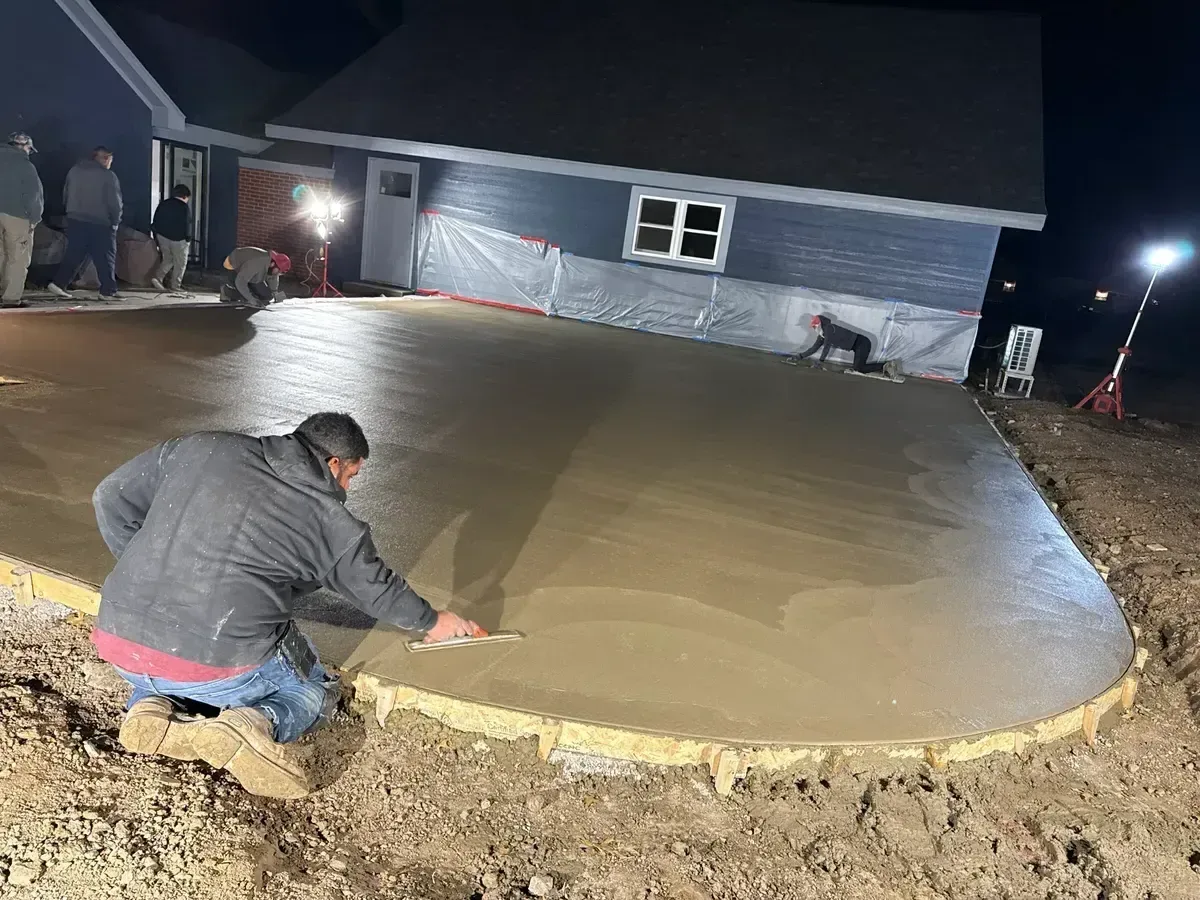
Professional Installation
Our crew preps the site, pours, and finishes your concrete with precision. Most residential projects wrap in 1-4 days.
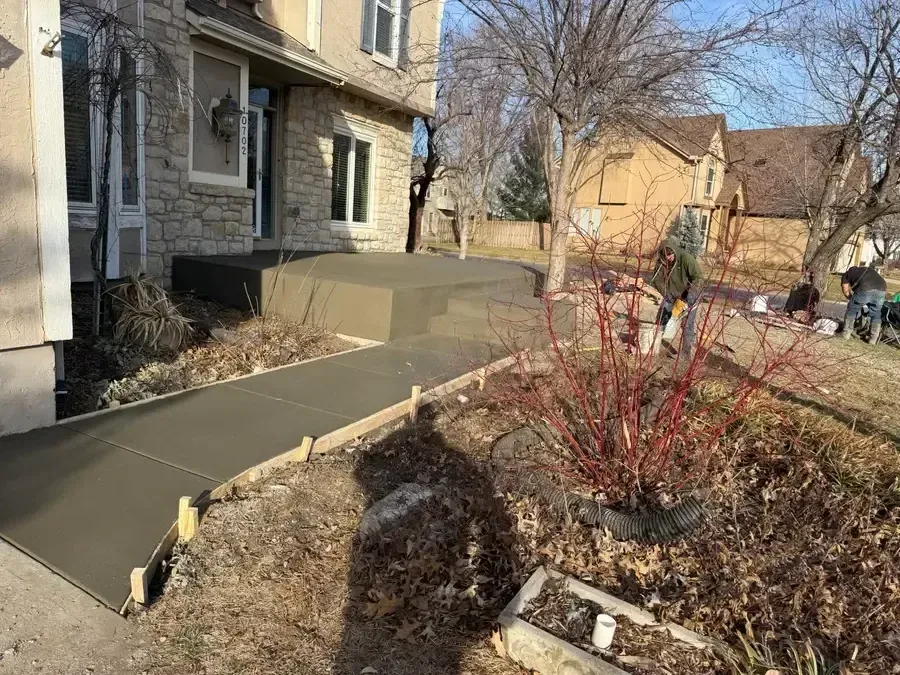
Final Walkthrough
We inspect every inch with you. Sealant applied where needed. We don't leave until you're completely satisfied with the result.
Why Choose Kansas City Concrete Contractors for Demolition
Concrete Slab & Flatwork Demolition
Driveways, sidewalks, parking lots, patios, loading docks, and building slabs broken up, rebar separated, concrete hauled to KC crushing facilities for recycling, metal to recyclers. Replacement pour on the same contract.
Structural & Foundation Demolition
Outbuildings, garages, accessory structures, foundation walls, and footings demolished with full utility disconnect coordination and KCMO or Johnson County demolition permit filing.
Selective Demolition
Surgical removal of specific concrete, asphalt, or structural elements while protecting adjacent work. Wet diamond saw cutting, controlled breakout with compact equipment, and protection systems for preserved surfaces.
On-Site Concrete Recycling
Demoed concrete is hauled to permitted KC crushing facilities and processed into recycled concrete aggregate (RCA) for reuse as base rock. Lower disposal cost, lower landfill impact, and a usable material on the next project.
Permits, Disconnects & Asbestos Coordination
City demolition permits filed before any structure comes down. Utility disconnects coordinated with each utility company. Asbestos Containing Building Material (ACBM) pre-demolition surveys arranged on pre-1980 structures.
Demo + Replacement Under One Contract
Most demolition work we perform is followed immediately by the replacement concrete pour. Same crew, no gap, no sub-grade correction needed between contractors, one warranty covering both removal and replacement.
What Our Customers Say
"They demoed our old parking lot in Independence over a single weekend, hauled everything off, and the rebuild started Monday morning. Customers lost one weekend of access and never knew a complete parking lot replacement had happened."
— Vince R., Independence, MO
"Selective demo on a tenant buildout in midtown Kansas City. They wet-saw cut around the existing column footings and isolated the demo area perfectly. Not a crack in the adjacent slab we wanted to keep. That kind of surgical work is rare."
— Patricia M., Kansas City, MO
"Old detached garage and cracked driveway in Shawnee — one contract covered the demo permit, utility disconnects, knockdown, breakup, haul-off, and new concrete pour. Compared to coordinating two separate contractors, it saved me a month of schedule headache."
— Greg L., Shawnee, KS
How Much Does Demolition Cost in Kansas City?
| Demo Type | Typical Cost | Notes |
|---|---|---|
| Residential Driveway / Walkway | $4–7 / SF | 4" unreinforced, breakout, rebar separation, concrete recycled |
| Commercial Slab / Parking Lot | $6–10 / SF | 6"+ reinforced, rebar sorted, large-volume haul-off |
| Foundation Walls & Footings | $8–18 / SF | Wall depth and reinforcement dependent; utility disconnects included |
| Detached Garage / Structure | $3,500–9,500 | Structure size; includes city demo permit and utility coordination |
| Selective Demo (saw cutting) | +$30–60 / LF | Wet-cut edge premium; adjacent protection included |
Pricing includes concrete haul-off and recycling. City demolition permit fees and asbestos survey cost passed through at cost when required. Asbestos abatement, lead paint, hazardous material remediation, and specialty disposal are scoped and priced separately through licensed contractors when applicable.
Prices vary by project scope, site conditions, and finish selections. Contact us for your exact quote.
Frequently Asked Questions About Demolition
How much does concrete demolition cost in Kansas City?
Residential concrete slab demolition — 4-inch unreinforced driveways, walkways, and patios — typically runs $4–7 per square foot in the KC metro, including breakout, rebar separation, and haul-off to a crushing facility. Commercial slabs at 6 inches or thicker with rebar reinforcement run $6–10 per square foot, reflecting higher breakout time and greater debris weight. Foundation walls and footings are priced at $8–18 per square foot depending on wall depth, reinforcement density, and whether pile removal is involved. Detached garages and small structures run $3,500 to $9,500 including the structure itself, the slab, and haul-off. Selective demolition using saw cutting commands a premium of $30–60 per linear foot for clean cut lines. Asbestos abatement, utility disconnects, and permit fees are priced separately from the demolition scope itself.
Do I need a demolition permit in Kansas City?
Yes — for any structure demolition in KCMO and most surrounding municipalities. KCMO requires a demolition permit issued by the Development Permits Division before any structure can be torn down, including detached garages, sheds, carports, and accessory structures. Review timelines in KCMO typically run 2–4 weeks. Johnson County cities (Overland Park, Olathe, Shawnee, Lenexa) have similar requirements. Concrete flatwork demolition that does not involve a structure typically does not require a separate demolition permit, but it may require a grading permit if significant ground disturbance follows. Asbestos Containing Building Material (ACBM) pre-demolition surveys are required by federal NESHAP regulations on any structure that may have been built before 1980 or that contains suspect materials — the survey must be completed before demolition begins and before any permit is issued. We pull the permits, coordinate the survey, and manage the process.
What is a pre-demolition asbestos survey and when is it required?
EPA NESHAP (National Emission Standards for Hazardous Air Pollutants) regulations and state requirements in both Missouri and Kansas require an asbestos inspection before demolition of any structure that may contain asbestos-containing building materials (ACBM). The threshold is not age alone — while structures built before 1980 are at higher risk, materials installed in repairs or renovations can be present in newer buildings. A licensed inspector must survey the structure and collect samples for laboratory analysis. If regulated ACBM is found above threshold quantities, abatement by a licensed asbestos contractor is required before structural demolition begins. We do not perform abatement — that requires specific EPA licensing and Missouri or Kansas asbestos abatement contractor certification — but we coordinate the survey and the abatement contractor's scope on every structure demolition project, and we document everything for the project closeout binder. Skipping the survey is an EPA violation that carries penalties of up to $25,000 per day.
What is the difference between demolition and selective demolition?
Demolition refers to complete removal — a total operation performed as quickly as practical using the largest appropriate equipment. A parking lot demolition, a garage removal, or a full foundation demolition are all demolition: the entire element is removed without concern for what surrounds it beyond OSHA safety and the property line. Selective demolition removes specific elements while protecting adjacent work that must remain intact. Common KC applications: removing a failing section of a commercial parking lot while the adjacent sections remain in service, demoing only the interior slab of a building while the foundation walls stay, or cutting out a deteriorated driveway section at the street while the section near the garage remains. Selective demo requires wet diamond saw cutting for clean, spall-free edges, smaller breakout equipment that can work without transmitting vibration to adjacent concrete, and physical protection systems over the surfaces being preserved. It runs 40–80% more per square foot than total demolition — the precision costs more, but it is the only option when adjacent elements cannot be disturbed.
How does the recycled concrete aggregate process work in Kansas City?
Demoed concrete is hauled from the job site to permitted concrete crushing facilities in the KC metro, where hydraulic crushers reduce the broken slabs into aggregate gradations similar to ASTM C33 coarse aggregate or standard base rock. The resulting recycled concrete aggregate (RCA) is used as sub-base material on road projects, parking lot sub-base, drainage bedding, and structural fill. Using RCA instead of virgin aggregate is typically 10–20% cheaper in material cost and eliminates landfill tipping fees that can run $40–60 per ton for concrete waste. For projects where we demo and replace on the same site, the RCA from the demolition sometimes comes back as the sub-base for the new pour — reducing the net material cost of the full project. Rebar and other embedded metals are separated from the concrete debris before crushing and sent to metal recyclers, where the scrap value often partially offsets haul-off cost on larger projects.
How do you coordinate utility disconnects for structure demolition?
Before any structure is demolished, all active utilities must be disconnected and verified dead at the service entrance. Electric service is disconnected and the meter pulled by the electric utility company (KCPL/Evergy or Westar depending on the side of the metro). Gas service is disconnected and capped at the street by Spire or Atmos Energy. Water service is turned off and disconnected at the curb stop by the local water utility. Sewer service does not typically require disconnection for the structure, but the lateral may need to be capped or removed from the building during demo. We coordinate with each utility directly, schedule the disconnect appointments in the correct order, and confirm disconnection on the ground before demolition equipment is staged. Demolishing a structure before electric or gas is confirmed off is the type of mistake that creates fires and fatalities and cannot be undone. We treat utility disconnect verification as a non-negotiable pre-condition to starting any structural demo.
Can you demo and replace concrete in one project?
Yes — and for most projects, bundling demolition and replacement into one contract is the most efficient way to deliver the work. We demo the existing slab, haul off the debris, prepare the sub-base (including any grading corrections that contributed to the original failure), and pour the replacement concrete, all under one contract. The transition from demo to replacement happens the same day or the next morning without a mobilization gap, because the same crew transitions directly from breaking out the old concrete to grading the base for the new. The sub-base we prepare meets the specification for the new slab we are about to pour — not the minimum that a separate grading sub would provide. And if the new concrete develops a problem within the warranty period, there is one phone call and one contractor responsible for the entire scope: the demolition, the sub-base, and the concrete.
Other Concrete Services We Offer in Kansas City
Concrete Driveways
New installation, replacement, and repair for residential and commercial driveways.
Concrete Patios
Custom patios and outdoor living spaces — standard, stamped, or decorative finishes.
Stamped Concrete
Decorative stamped patterns that replicate stone, brick, slate, and wood at a fraction of the cost.
Stained & Colored Concrete
Acid stain, water-based stain, and integral color for interior and exterior surfaces.
Concrete Overlays & Resurfacing
Refresh existing concrete without full tear-out — new surface, new look, lower cost.
Pool Decks
Slip-resistant, heat-reflective concrete surfaces surrounding pools — safe and beautiful.
Pool Installation
Full-service fiberglass and concrete pool installation — from excavation through decking
Sidewalks & Walkways
New sidewalks, walkway installation, and trip-hazard repair for residential and commercial properties.
Retaining Walls
Concrete retaining walls for erosion control, slope stabilization, and landscape structure.
Parking Lots
Commercial concrete parking lots — new construction, repair, ADA compliance, and line striping.
Warehouse & Industrial Floors
Heavy-duty concrete floors for warehouses, factories, and industrial facilities. Year-round scheduling.
Sitework & Site Preparation
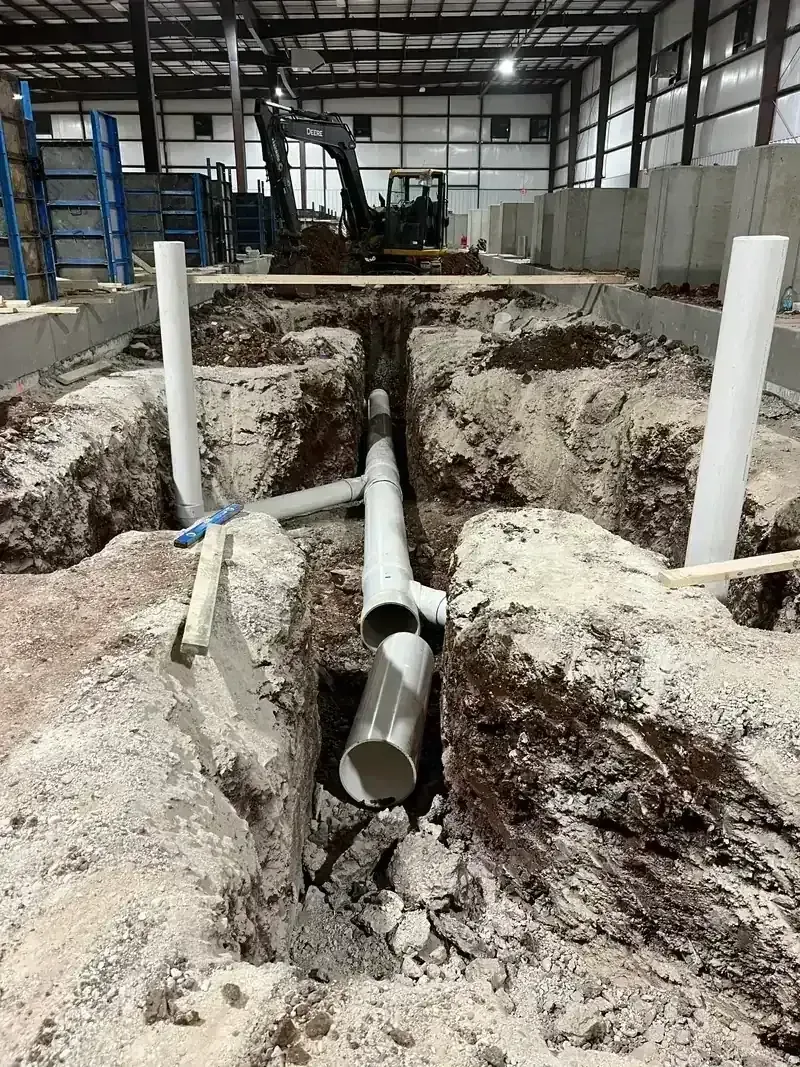
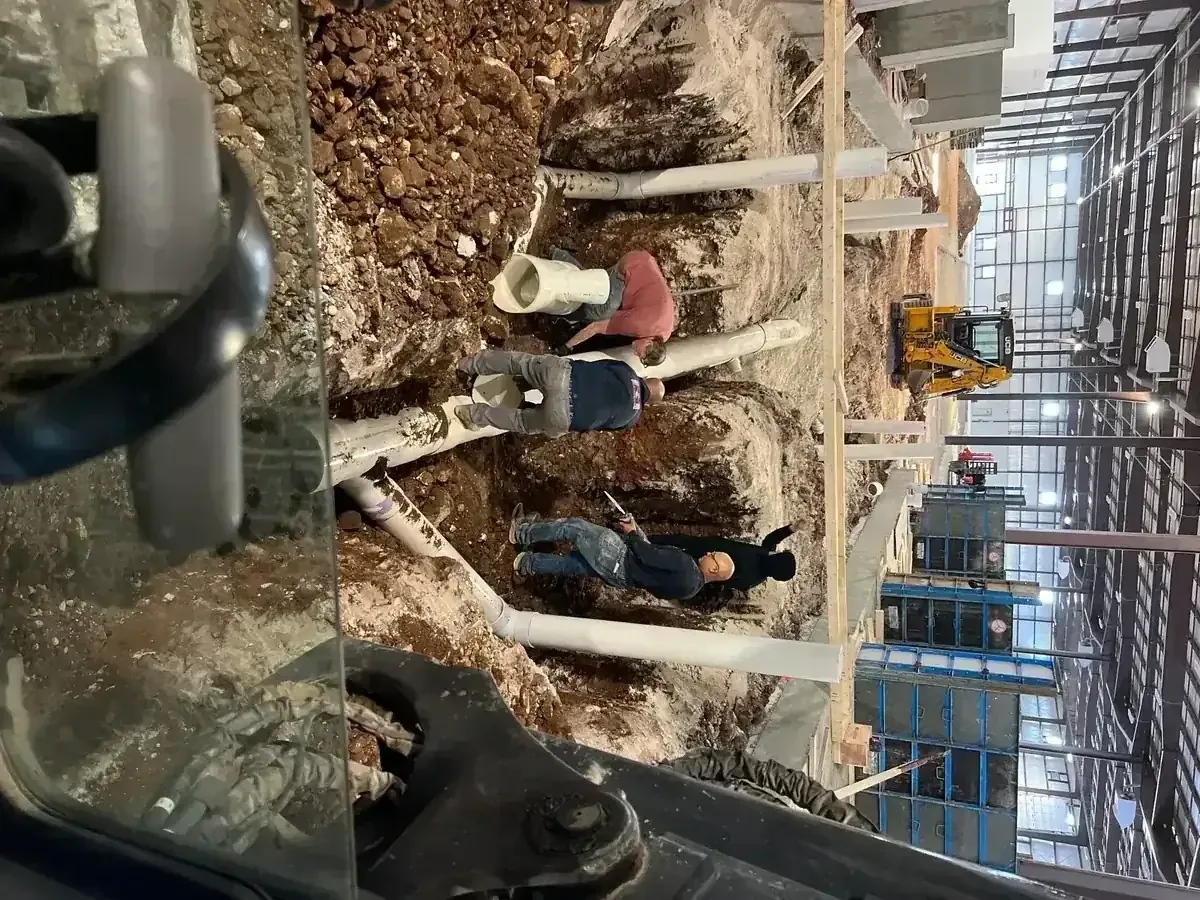
Commercial excavation, grading, utility trenching, and full-scope site preparation
ADA Ramps & Compliance
ADA-compliant concrete ramps, curb cuts, and accessibility upgrades for commercial properties.
Ready to Demo and Replace?
Call today for a free estimate. No pressure. No obligation. Just honest answers and a detailed quote within 24 hours.