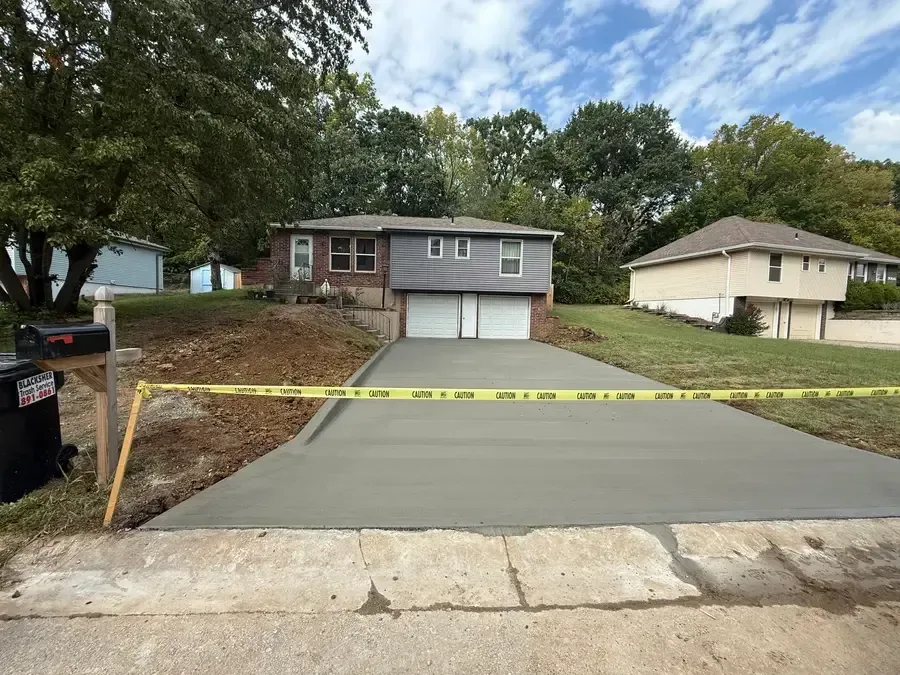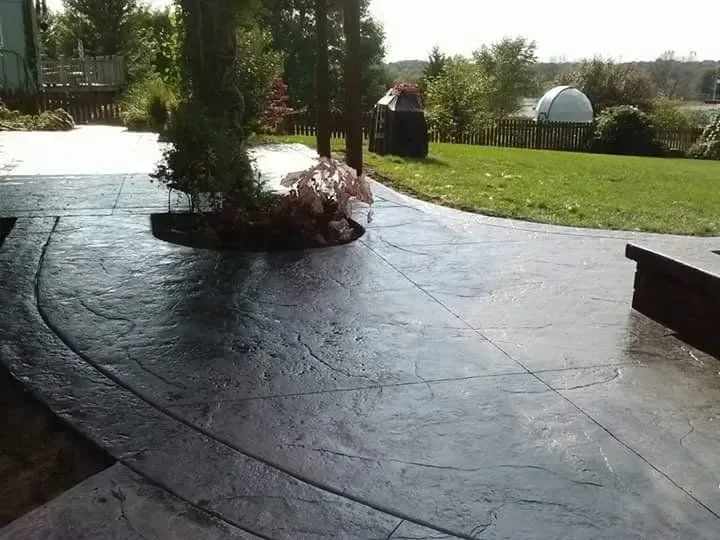
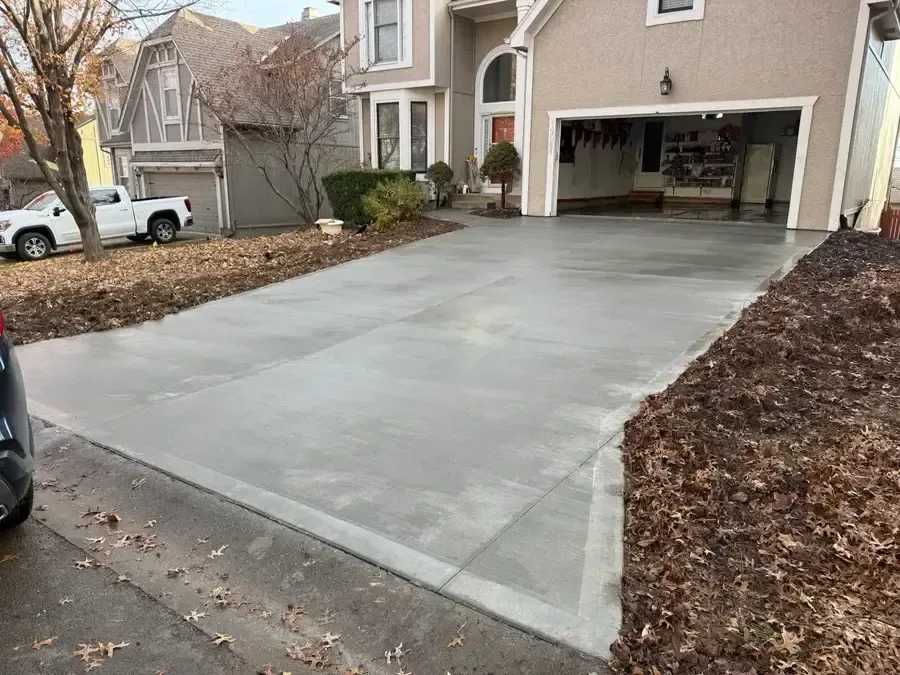
Concrete doesn't fail all at once. It sends warning signs — small ones at first, then bigger ones that get expensive fast. Kansas City's climate is especially hard on concrete. The freeze-thaw cycles, expansive clay soil, and seasonal storms create conditions that accelerate damage if you don't catch it early.
Here are five signs that your driveway, sidewalk, patio, or parking lot needs professional attention — and what happens if you ignore them.
1. Hairline Cracks That Keep Spreading
What it looks like: Thin cracks — sometimes barely visible — that appear on the surface and slowly grow wider or longer over months. You might notice them after winter, after a heavy rainstorm, or during a dry stretch in late summer.
What causes it in KC: Kansas City's clay soil is the primary culprit. The soil expands when it absorbs moisture and contracts during dry periods, creating ground movement underneath the slab. Freeze-thaw cycles accelerate the process — water enters hairline cracks, freezes, expands, and widens the crack from the inside out. A crack that was 1/8 inch in October can be 1/2 inch by March.
Repair or replace? Hairline cracks under 1/4 inch can usually be sealed with a flexible concrete caulk or epoxy injection. Once cracks exceed 1/2 inch, are actively growing, or run through the full depth of the slab, partial or full replacement is the better long-term solution.
If your cracks are spreading, get an estimate now — not after another winter makes them worse.
2. Spalling and Flaking Surface
What it looks like: The top layer of the concrete is peeling, flaking, or chipping away. The surface looks rough and pitted instead of smooth. You might see exposed aggregate (small stones) where the paste has worn off. It often starts in patches and spreads across the slab over time.
What causes it in KC: Spalling is freeze-thaw damage. Water penetrates the surface, freezes, expands, and pops off the top layer of concrete. The number one cause is concrete that wasn't air-entrained during the original pour — a critical mix design step for any concrete in Kansas City's climate. De-icing salts (rock salt, calcium chloride) accelerate spalling dramatically. If you're treating your driveway or sidewalk with salt every winter, you're speeding up the damage.
Repair or replace? Minor surface spalling on a structurally sound slab can sometimes be addressed with a concrete overlay or resurfacing. If spalling covers more than 30% of the surface or the slab is also cracked or settled, replacement is the more cost-effective path.
Seeing flaking or chipping on your concrete? We'll assess the damage for free.
3. Heaving and Uneven Sections
What it looks like: One section of your slab is higher than the adjacent section. You can feel a lip or step where the two sections meet. Doors might not close properly. Water might flow toward your foundation instead of away from it. On a sidewalk, the raised edge creates a trip hazard.
What causes it in KC: Three things. First, tree roots — mature oaks, maples, and sweetgums throughout KC neighborhoods push up concrete from below. Second, clay soil expansion — when the clay absorbs moisture, it swells upward with enormous force. Third, frost heave — in winter, frozen groundwater expands and lifts slab sections. All three are common across the KC metro, particularly in older neighborhoods with established trees.
Repair or replace? Slabs that have shifted more than 1 inch typically need replacement. The underlying cause (roots, soil, drainage) needs to be addressed before new concrete is poured, or the problem will return. Mudjacking or foam leveling can work for minor settling (under 1 inch) if the slab is otherwise sound.
Uneven concrete is a liability risk. For commercial properties, ADA non-compliance can trigger fines up to $75,000.
4. Water Pooling and Drainage Problems
What it looks like: Standing water after rain that doesn't drain within a few hours. Puddles that form in the same spots every time. Water flowing toward your foundation, garage, or building instead of toward the street or drainage system.
What causes it in KC: The original concrete may have settled unevenly over time, disrupting the intended drainage slope. Kansas City's clay soil is a major factor — as the soil shifts seasonally, it creates low spots where water collects. Poor original grading, root intrusion, and erosion near the slab edges all contribute. The problem compounds itself: pooling water softens the soil beneath the slab, which causes more settling, which creates bigger pools.
Repair or replace? If the drainage issue is caused by minor settling, regrading or adding a drainage channel might solve it. If the slab has shifted significantly or the grade is fundamentally wrong, replacement with proper slope engineering is the permanent fix. Water flowing toward a foundation is never something to ignore — it leads to basement flooding, foundation damage, and mold.
Water pooling on your concrete? We'll diagnose the drainage issue and give you options.
5. Rebar or Wire Mesh Showing Through
What it looks like: Rust-colored stains on the surface, or actual metal reinforcement visible through cracks, chips, or worn areas. You might see thin wires, rebar rods, or rust marks bleeding through the surface.
What causes it in KC: Exposed reinforcement means the concrete cover has been compromised — either by surface wear, spalling, cracking, or the concrete being poured too thin over the metal. Once the rebar is exposed to moisture and air, it rusts. Rust expands to 7–10 times the volume of the original steel, creating internal pressure that accelerates cracking and spalling from the inside out. KC's wet springs and freeze-thaw winters speed up the corrosion cycle significantly.
Repair or replace? Exposed rebar almost always means replacement. The structural integrity of the slab is compromised. Patching over exposed reinforcement is a temporary fix that delays the inevitable. The rebar will continue to rust and expand, pushing the patch off within a season or two. Full replacement with properly placed reinforcement at the correct depth is the only permanent solution.
Visible rebar is a structural failure. Don't wait on this one.
The Bottom Line: Early Repair Saves Money
A $300 crack seal today prevents a $5,000 slab replacement next year. A $1,500 partial repair now avoids a $12,000 full driveway tear-out later. Kansas City's climate doesn't give concrete a break — every winter makes existing damage worse. The best time to address concrete problems is before the next freeze-thaw cycle, not after.
Frequently Asked Questions
When should I repair vs. replace cracked concrete?
Hairline cracks under 1/4 inch can be sealed and monitored. Cracks wider than 1/2 inch, growing cracks, or cracks with vertical displacement usually mean partial or full replacement.
What causes concrete to spall and flake in Kansas City?
Freeze-thaw damage is the primary cause. Water enters the surface, freezes, expands, and pops off the top layer. Concrete that wasn't air-entrained during mixing is especially vulnerable. De-icing salts accelerate the process.
Is uneven concrete dangerous?
Yes. It creates trip hazards that cause injuries. For commercial properties, uneven surfaces are a leading cause of liability claims. ADA non-compliance can trigger fines up to $75,000.
Can a concrete overlay fix damaged concrete?
Overlays work for surface-level damage (minor spalling, discoloration) on structurally sound slabs. If the slab has shifted, heaved, or has deep structural cracks, the base issue must be fixed first.